
 Baku 22° C
Dispute over Morocco's role in Ceuta migration crisis intensifies in Spain
- 03 September, 2026
- 15:34
Stay up to date with the top news!
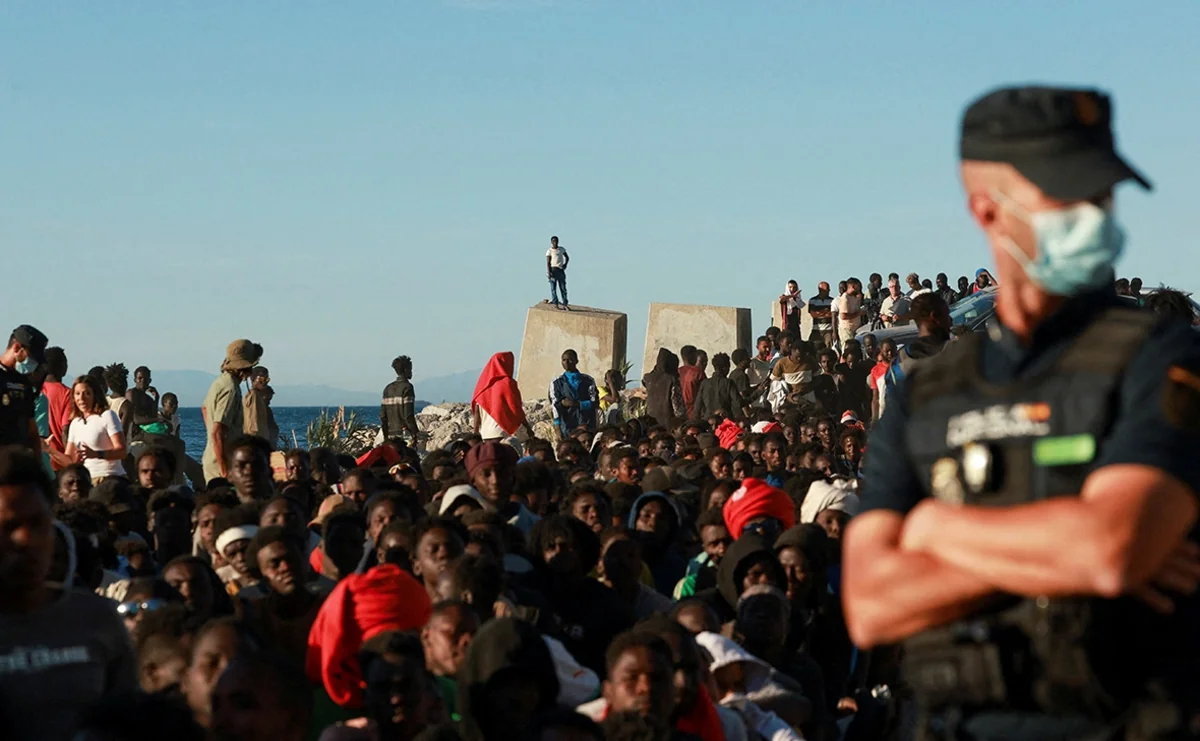
Spanish police have concluded that the mass influx of migrants from Morocco into the Spanish enclave of Ceuta on July 30 and 31 was not spontaneous, but was accompanied by "unusual passivity" and inaction by Moroccan security forces.
According to Report's European bureau, the document obtained by Spanish media was prepared by CENIF, a Spanish National Police unit responsible for migration-related matters.
The response of Moroccan security forces was described in the document as "complete acquiescence," with no serious attempts to stop or push people back from the border. The document also states that some uniformed and plainclothes officers directed people toward specific border areas, including the maritime crossing near El Tarajal, El País reports.
At the same time, the document does not directly claim that Moroccan authorities planned or carried out the crisis.
The police findings have put pressure on the government of Prime Minister Pedro Sánchez, which had previously rejected the existence of evidence of Morocco's involvement. On the morning of September 3, the prime minister again told parliament that the authorities had no evidence that the mass crossing had been planned or carried out by Moroccan authorities. Sánchez said that if there were "solid" evidence, Spain would act accordingly.
EC: We do not comment on leaks
A European Commission spokesperson declined at a briefing in Brussels to assess the contents of the document or Morocco"s possible role in the crisis.
"We do not comment on leaks," Markus Lammert said, adding that the investigation was ongoing and that the matter fell within the jurisdiction of the Spanish authorities.
Asked whether the Commission was satisfied with the Spanish government's explanations regarding Morocco"s role, Lammert declined to comment, referring to the ongoing national investigation.
He stressed, however, that from the EU's migration policy perspective, Morocco remains an "important strategic partner," particularly in combating irregular migration and migrant smuggling.
According to Lammert, the EU welcomes close cooperation between Spain and Morocco on managing the situation and ensuring the swift return of migrants who have no right to remain in the country. He also noted that Commissioner for the Mediterranean Dubravka Šuica maintains regular contacts with Moroccan Foreign Minister Nasser Bourita.
Lammert added that in recent years the EU had strengthened cooperation with Morocco on migration, border management and combating smuggling, and intends to develop this cooperation as part of a comprehensive strategic partnership.
Madrid requests financial and operational assistance from EU
Against this backdrop, Spain has already asked the European Commission for emergency financial and operational assistance to address the consequences of the crisis in Ceuta.
Lammert said the Commission had received official requests from the Spanish authorities both for emergency funding and for support from the European agencies Frontex, Europol and the EU Agency for Asylum (EUAA). The Commission is considering the requests as a priority.
Madrid has separately requested an increased Frontex presence in Ceuta. Sánchez announced that he intends to seek a permanent presence of the agency in the city.
Lammert clarified that Frontex personnel are already working at the port of Ceuta and that discussions are underway on where else the agency could provide assistance and how its existing presence could be continued.
According to official Spanish government data, Madrid had previously requested an extension of Operation Minerva, which Frontex conducts at the ports of Ceuta, Algeciras and Tarifa. Spain also asked Frontex to continue satellite monitoring of the border with Morocco through the EUROSUR system. In addition, Madrid requested Europol's assistance in investigating migrant-smuggling networks and EUAA support for conducting interviews and providing interpreters.
On August 24, Spain requested more than €32 million in emergency assistance from the Asylum, Migration and Integration Fund (AMIF) and the Border Management and Visa Instrument (BMVI).
The Commission said it was ready to provide Spain with additional support, but Lammert stressed that its priority remained the swift return to Morocco of people who were staying illegally in Ceuta.
Author