
 Baku 28° C
WUF13 discusses housing problems in islands, high-risk areas
- 19 May, 2026
- 22:16
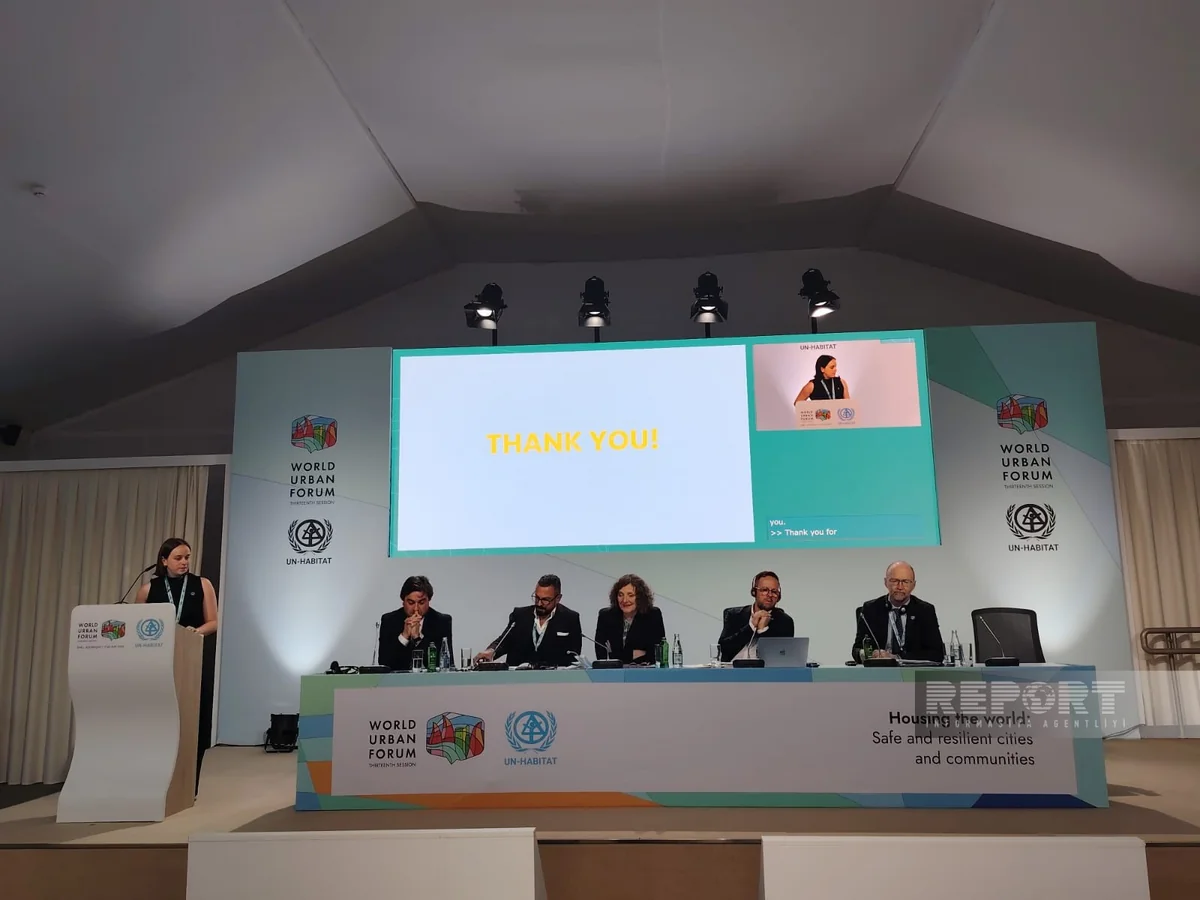
An event titled "Housing Solutions in Islands and High-Risk Areas: From Challenges to Opportunities" was held as part of the 13th session of the World Urban Forum (WUF13) in Baku.
Report informs that Matthew Robert Baldwin, deputy director-general of the European Commission's Directorate-General for Energy (ENER) and head of the Housing Task Force, said there is a housing crisis in Europe.
According to him, this crisis exists across much of the world:
"Larger population groups are now being affected by the housing crisis. In most cases, people do not have access to housing. In the second half of 2024, this crisis deepened further."
Octavio Caraballo de Leon, vice-president of the Government of the Canary Islands, said there is no single solution for everyone:
"Forty-eight percent of our territory is protected area, and all of this affects the development of a housing market that is very limited. We have managed to protect our territory, and this is our main priority. But this creates an additional challenge for young people trying to enter the market. In addition, the Canary Islands are a very attractive tourist destination, and home purchases by non-residents account for a very high percentage. Therefore, nurses, doctors and police officers are forced to live in caravans in order to do their daily work because they do not have access to suitable housing."
Brian Micallef, executive head for policy and research at the Malta Housing Authority, noted that the situation in the housing market has a serious impact on the economy:
"Malta has followed a strong economic path in recent years, with its population growing by 30% over 10 years. We are also seeing problems related to housing affordability. These are the main groups facing housing difficulties, and there are various programs and initiatives in this area. The main groups also include homeowners and parents in difficult situations. Social housing allocation and rent subsidy schemes are applied for them to make rents more affordable. For example, there are various support programs for first-time homebuyers. Schemes helping with down payments, grants, as well as other tax incentives are applied."
Daniel Martins Pavao, regional director for housing in the Government of the Azores, stressed that new generations of the middle class face a problem that previous generations did not have:
"That is home ownership. If new generations of the middle class cannot buy a home, if they cannot afford to buy a home, they are no longer considered middle class. So, if new generations can buy a home or pay rent but are still not middle class, then they are considered poor. The government must help these people. Conditions must be created for people so that rent is low."
Michaela Kauer, head of the Vienna House Brussels office, said 35% of people in Austria live in rented accommodation:
"In Vienna, this figure is higher. About 80% of Vienna residents are tenants. Therefore, we have strict rental legislation. This law regulates issues such as how rents are determined, how they are collected and what protection mechanisms are applied. At the same time, an open-ended contract is considered the main option in our rental legislation. In other words, a normal contract is always open-ended, even in private rental housing. We take a very broad and comprehensive approach to housing."


Author