
 Baku 25° C
ESCAP: Central Asia's energy connectivity potential remains untapped
- 25 June, 2026
- 09:41
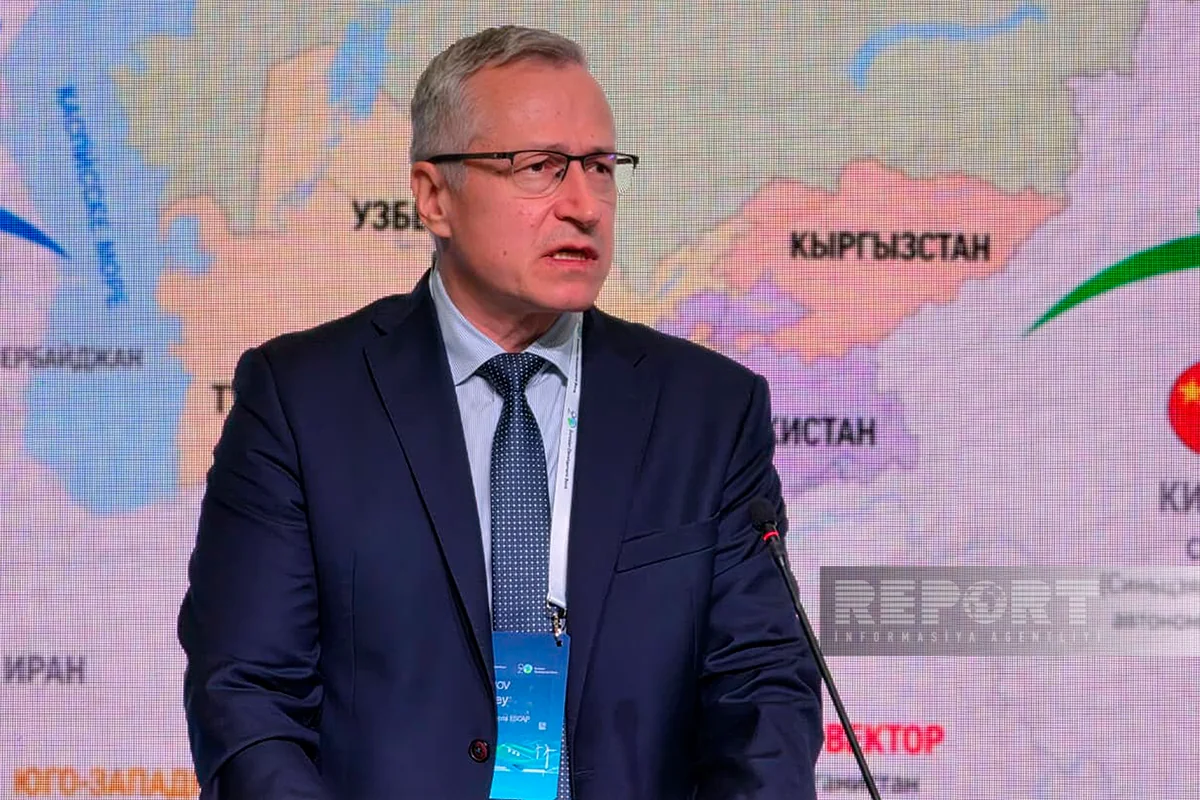
The potential for regional connectivity in the renewable energy sector in Central Asia remains far from fully realized, Sergey Tulinov, Project Manager for the Secretariat of the United Nations Economic and Social Commission for Asia and the Pacific (ESCAP), said at the Annual Meeting and Business Forum of the Eurasian Development Bank (EDB), Report informs.
According to him, the reliability of energy supply for each country in the region today increasingly depends on the operating modes and stability of the power systems of neighboring states.
"Installed capacity alone does not guarantee reliability. Generating capacity must be accessible, supported by grid infrastructure, and manageable at the right time. Regional electricity trade is certainly recovering, but the potential for energy connectivity has not yet been realized. The share of cross-border exchanges in total consumption remains lower than in many other integrated energy systems around the world," noted Tulinov.
He emphasized that the limitations are not solely related to commercial conditions.
"Grid capacity, congestion at individual points, fuel and hydrological factors are of great importance, especially given that hydropower remains the backbone of the Central Asian power system," said the ESCAP representative.
Particular attention, he said, should be paid to grid constraints.
"In some sections of the Central Asian power system, flow volumes are already approaching maximum permissible levels, and in some cases even exceed them. Congestion in internal grids, especially in winter, limits not only electricity trade but also the transmission of hydropower, the connection of new renewable energy facilities, transit capacity, and the provision of emergency support to neighboring countries," said Tulinov.
He noted that when implementing new infrastructure projects, it is important to evaluate not only the construction of power lines but also their practical impact on the power system.
"Each new project must deliver measurable systemic results: increasing transmission capacity, reducing congestion, expanding opportunities for connecting renewable energy sources, improving the reliability of energy supply, and enhancing the readiness of energy systems to form a fully-fledged regional electricity market," he added.
Author