
 Baku 17° C
NATO Industry Forum: At least $50B announced in new deals
- 08 July, 2026
- 10:55
Stay up to date with the top news!
At least $50 billion (€43.7 billion) in new defence deals were announced at NATO's Defence Industry Forum on Tuesday, a NATO official confirmed, including the launch of a new multinational strategic airlift fleet and plans to replace the alliance's ageing early-warning aircraft with a European platform, Report informs via Euractiv.
Swedish aircraft-maker Saab is to build up to 10 GlobalEye early-warning and surveillance aircraft to replace the ageing Boeing E-3 Sentry AWACS fleet. The deal will be signed by Belgium, Canada, Denmark, Germany, Latvia, Lithuania, Luxembourg, the Netherlands, Norway, and Romania.
The announcement comes after reports that NATO allies were abandoning Boeing's E-7A aircraft for surveillance, after the US Air Force moved to cancel its own procurement of the Boeing capability.
NATO chief Mark Rutte described GlobalEye as "a proven system, with a demonstrated ability to detect, track, and identify complex threats, including drone swarms, ballistic missiles, and cruise missiles" and praised it as a "transatlantic programme delivered by European and Canadian industries with essential contributions from US industries".
Belgium, Croatia, France, Poland, Spain, Türkiye and the United Kingdom launched a new multinational High Visibility Project for a fleet of Airbus A400M military aircraft. The seven allies will share costs and pool the aircraft, which is capable of carrying strategic loads and delivering them to unprepared airfields.
The Multinational Multi-Role Tanker Transport (MRTT) Fleet (MMF) is meanwhile expanding, with Finland joining Belgium, Czechia, Denmark, Germany, Luxembourg, the Netherlands, Norway, and Sweden. Together, they announced the imminent delivery of the 10th Airbus A330 MRTT aircraft, which has a dual role (air-to-air refuelling and transport), bringing the fleet closer to its full capacity of 12 aircraft.
Additionally, Denmark, Finland, Germany and Norway announced the procurement of up to five Northrop Grumman MQ-4C Triton high-end, high-altitude and long-endurance uncrewed aircraft. This is to enhance NATO's Intelligence, Surveillance and Reconnaissance (ISR) Force.
"These additional aircraft will provide persistent surveillance over large maritime areas, day and night. They can fly for long periods at high altitude and cover large areas, including over open water, more efficiently than most other aircraft can," Rutte said. "The Triton will help us detect threats early, protect our sea lines of communication, and support operations in demanding regions, such as the High North."
NATO allies have pledged to invest more than $40 billion (€35 billion) in counter-drone capabilities over the next five years and to increase the number of trained drone operators fivefold by the end of 2027, the alliance announced.
NATO will also launch a counter-drone marketplace to speed up procurement by ensuring approved systems are tested, compatible with alliance standards and readily available for purchase.
The alliance said it would expand its multinational Flight Training Europe programme to include drone operator training, with Finland, France and Sweden joining the initiative alongside 17 existing members.
Separately, NATO's Supply and Procurement Agency awarded a contract worth hundreds of millions of dollars for surveillance drones.
Four different space initiatives were announced on Tuesday, including an eight-nation effort by Canada, Denmark, Finland, Germany, Norway, the Netherlands, Sweden and Türkiye to explore a shared military satellite constellation to improve communications, intelligence sharing and missile tracking.
Separately, Spain joined NATO's Alliance Persistent Surveillance from Space (APSS), Canada became the 15th member of the STARLIFT space launch initiative, and Türkiye announced plans to develop new Earth observation and military communications satellites.
The two initiatives by the US manufacturer include a memorandum of understanding with Rheinmetall to establish what the companies describe as Europe's first manufacturing, integration and distribution hub for the ATACMS tactical missile system at Unterlüß, Germany, subject to approvals.
Separately, the US, Germany, the Netherlands, Poland and Sweden have agreed to explore establishing a European maintenance facility for PAC-3 Missile Segment Enhancement and Cost Reduction Initiative interceptors, with Lockheed Martin saying the centre would improve missile readiness and reduce maintenance turnaround times for NATO operators.
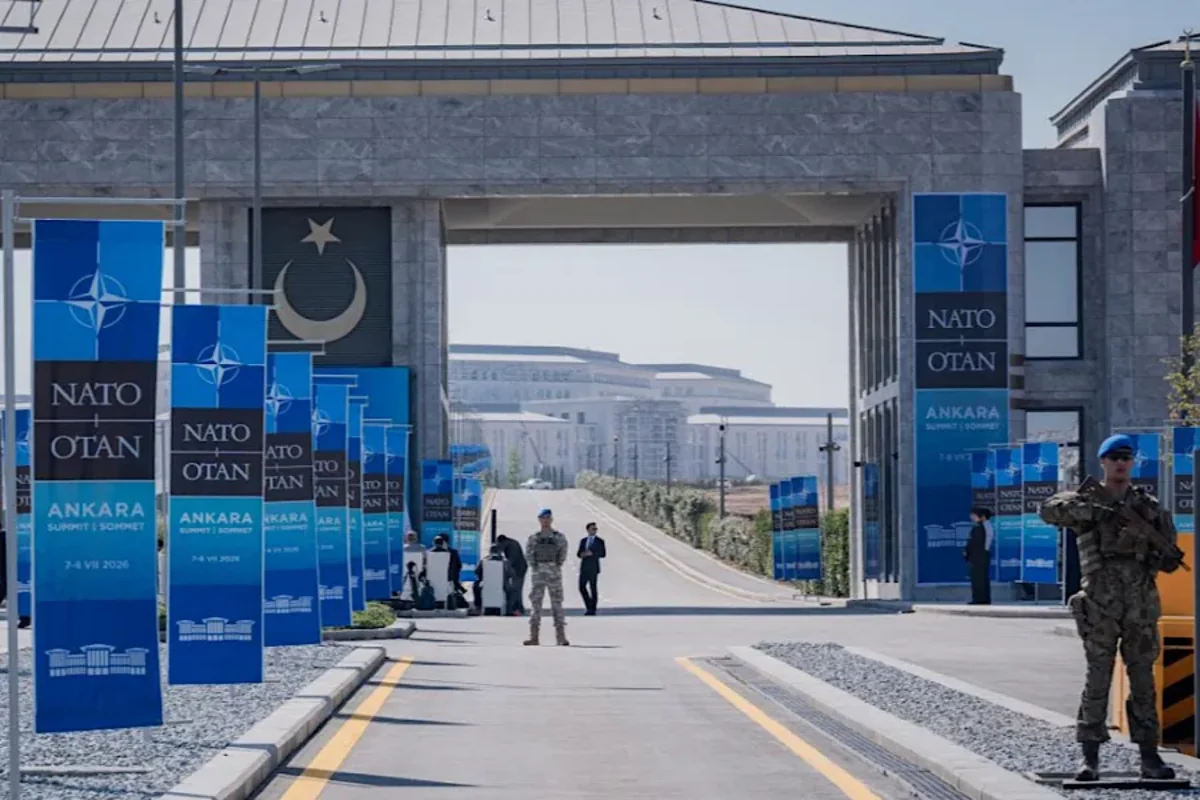
Nine allies will work together to develop a prototype for a generic NATO 155mm munition, as announced in Ankara.
The allies are Canada, Czechia, Denmark, Finland, Greece, Norway, Slovakia, Sweden and Türkiye for a total value of $1.6 billion (€1.4 billion).
Six allies (Denmark, France, Italy, Norway, Türkiye, and the United Kingdom) also launched NATO's multinational Ground-Based Precision Strike Capabilities High Visibility Project to explore the development of novel deep precision strike capabilities, including new launchers and missiles.
Author