Baku 18° C
Germany fails to meet gas storage target as winter approaches
- 01 November, 2026
- 17:55
Stay up to date with the top news!
Germany is entering the winter with gas stores well below target, leaving Europe's biggest economy and potentially other EU countries vulnerable to further price surges and market shocks, Report informs referring to the Financial Times.
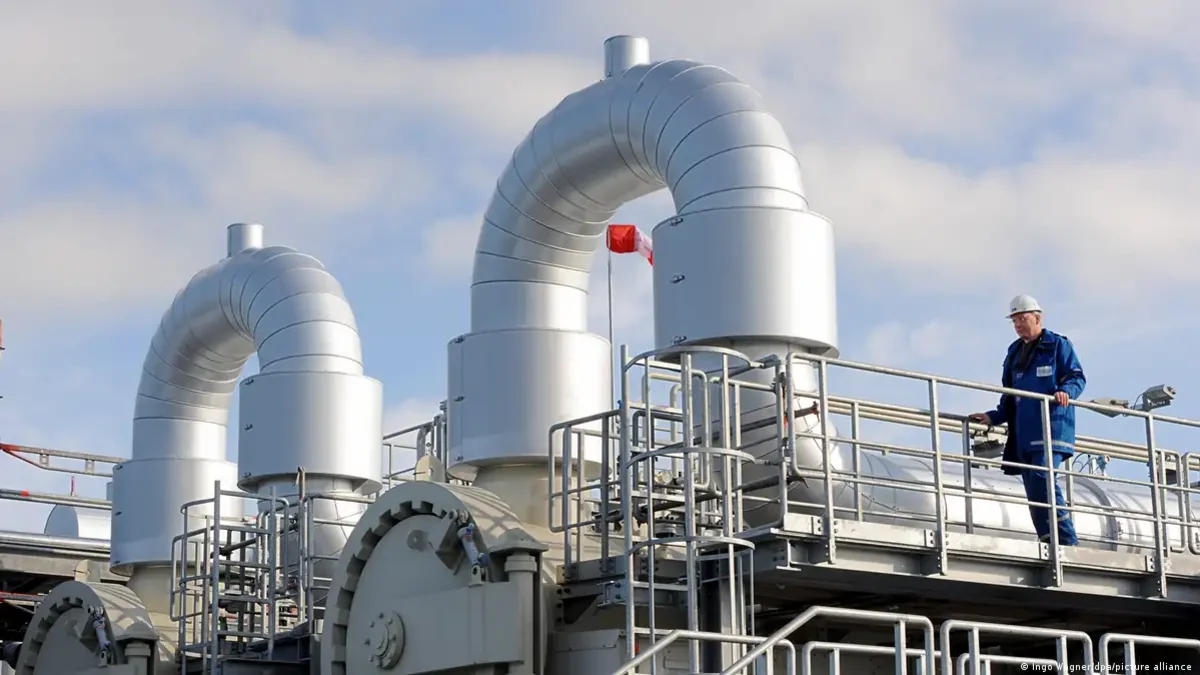
Germany's 250 TWh of gas storage facilities are about 62 percent full, well behind a statutory requirement for infrastructure operators to fill them to 80 percent before the heating season.
The EU as a whole is entering the winter with gas reserves well below historic norms, with stores across the bloc just below 75 percent full.
Germany is the EU's biggest gas user and has the largest storage facilities, meaning its need to continue to buy gas on spot markets could push up prices for other countries.
Gas storage typically provides up to a third of EU gas demand during winter.
While policymakers insist the 27-country bloc does not face gas shortages this winter, benchmark European prices on Wednesday surged above €100 a megawatt-hour for the first time since December 2022, when the continent was in the throes of the energy price shock unleashed by Russia's full-scale invasion of Ukraine.
"We do not expect a security of supply issue as such but for citizens that are struggling to pay their bills, that might not matter," the EU's energy commissioner Dan Jørgensen told a meeting of energy ministers in Luxembourg on Thursday.
A senior Italian official earlier this week accused Germany of burdening the rest of the bloc by failing to meet its 80 percent storage target. Italy's gas stores are 91 percent full after the country paid €300 million to ensure sufficient reserves.
Unlike some other EU countries, Germany decided not to force storage operators to fill up over the summer, instead relying on market incentives.
Storage owners normally fill facilities during the summer months when prices are typically lower, but continued disruption to supplies through the Strait of Hormuz and demand for gas to generate electricity during the heatwave in Europe meant that prices remained high throughout the summer months this year.
"We are getting hit twice: we paid €300 million to fill the storage facilities, and we are paying more for gas because the Germans are buying it now . . . this is something that really makes me angry," Alessandro Noce, an Italian energy official, told a conference in Milan on Thursday, in remarks reported by Reuters. Germany's economy ministry acknowledged on Friday that the country would miss its storage target.
"Of course, it would have been better if the storage facilities had been filled to a higher level," a spokesperson said. "But there were reasons why that did not happen, including the conflict in the Strait of Hormuz and the subsequent price increases."
The ministry added that, unlike 2022, when the country feared blackouts after Moscow cut pipeline gas supplies to Europe, Germany now had far more options thanks to liquefied natural gas terminals built following the crisis and "a closely interconnected European system."
It also rejected the accusation from Italy that it had let down the rest of the EU by delaying the refilling of its gas storage. Germany's energy and economy minister Katherina Reiche in September ordered state-owned energy company Sefe to purchase and store more gas by mid-December.
But Sebastian Heinermann, managing director of INES, the German association of gas storage system operators, said that the country's "failure to meet the storage targets demonstrates that gas storage for future winters must be secured through more binding measures."
Heinermann welcomed indications that Germany's Federal Ministry for Economic Affairs and Energy could introduce a "supplier obligation" to ensure the country has a strategic reserve of gas and urged the government to quickly pass laws to deliver this.
Despite its historically low level of gas stores, European gas demand has fallen by roughly 20 percent since 2021, leaving it less exposed than in previous years to high prices.
Jørgensen has stressed that the EU will not reconsider plans to ban Russian LNG from the start of 2027 despite concerns over the high prices.