
 Baku 15° C
UN official: Private capital essential for sustainable housing in Thailand
- 20 May, 2026
- 16:21
Stay up to date with the top news!
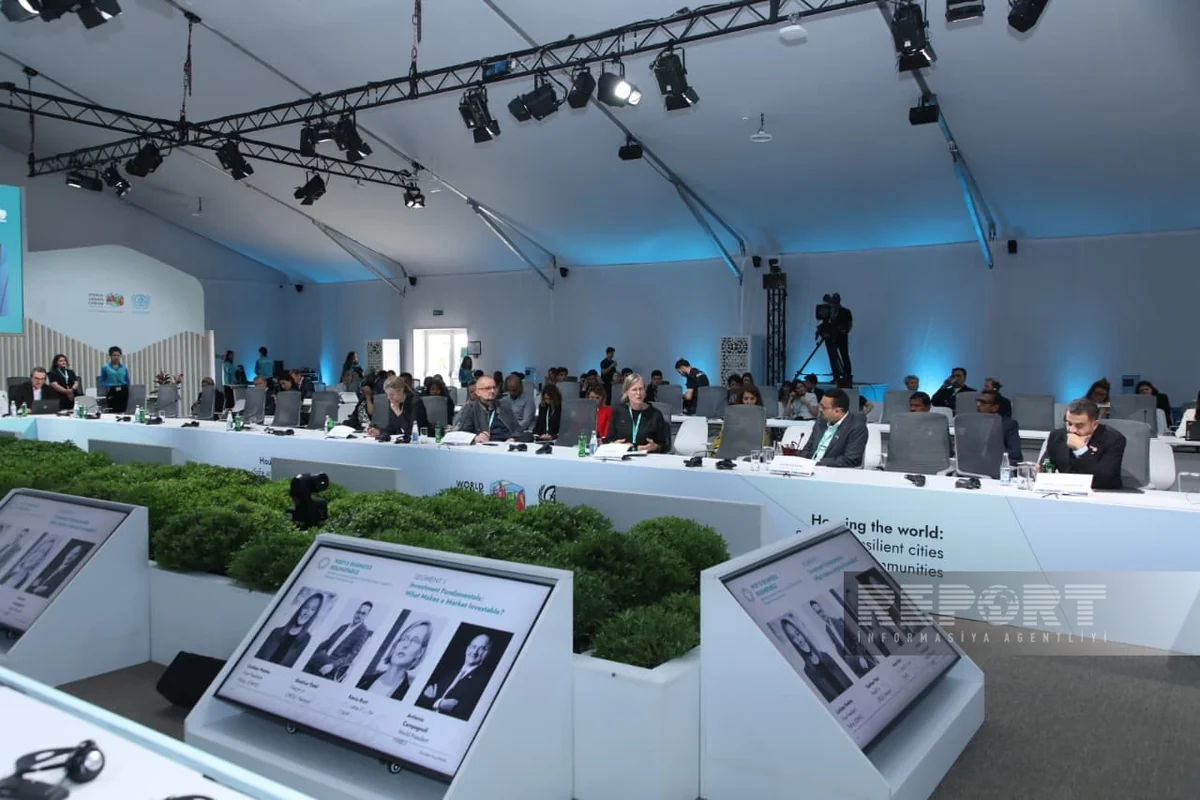
The implementation of sustainable housing projects in Thailand requires large-scale mobilization of private capital, Michaela Friberg-Storey, UN Resident Coordinator in Thailand, said during the Business Roundtable at the 13th Session of the World Urban Forum (WUF13) in Baku, Report informs.
The official noted that climate risks directly affect housing provision: "Floods occur frequently in Thailand, not only in Bangkok but across the country. Recently, the southern provinces experienced one of the strongest floods in 300 years, affecting millions of people. The key question is not whether climate change impacts housing, but how it affects financing."
She explained that as Thailand is an upper-middle-income country, concessional financing is limited, and the financing gap for the Sustainable Development Goals (SDGs) reaches trillions annually: "Bridging the gap in housing and climate infrastructure requires significant private capital. This situation underscores the importance of strengthening investment, planning, and coordination for climate-resilient housing and infrastructure."
She emphasized the role of government regulation and local-level financing in building a sustainable investment ecosystem: "Thailand has institutionalized a unified reporting system reflecting ESG, human rights, and emission reduction, and has begun standardizing a green taxonomy. Under the UN Joint SDG Fund, we developed a local-level financing accelerator to turn regional priorities into investment projects. I believe localization will be the key to achieving success in the 2030 Agenda."
Author