
 Baku 24° C
Chairman: Alat Free Economic Zone emerging as international logistics hub
- 11 June, 2026
- 13:21
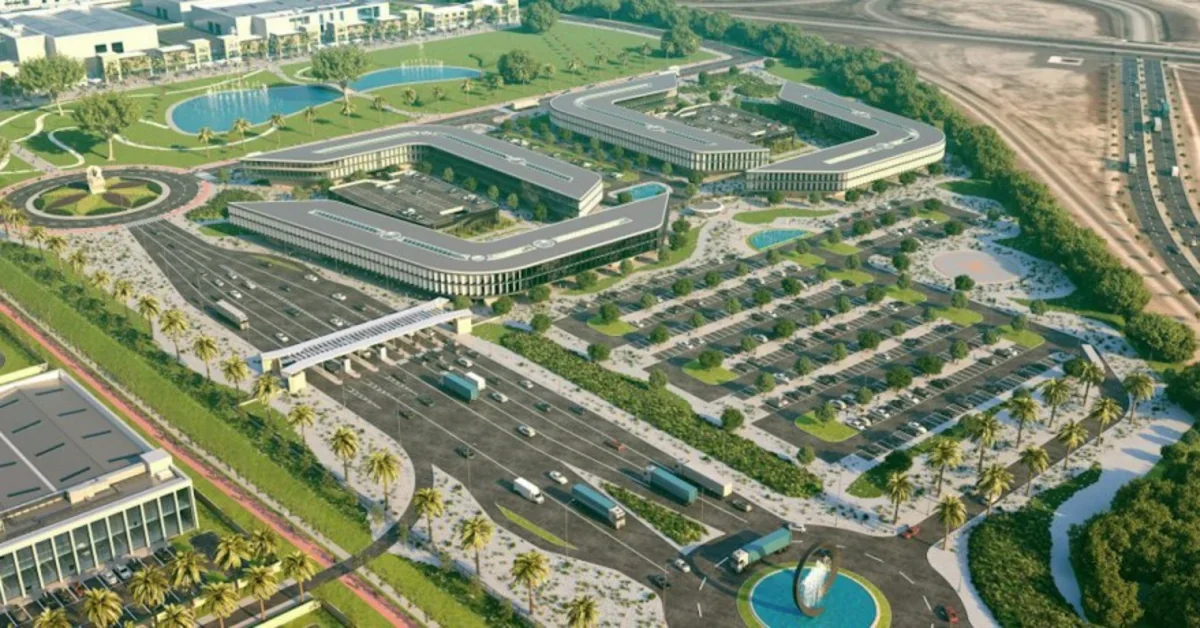
The Alat Free Economic Zone (AFEZ) in Azerbaijan is taking shape as an international logistics hub, Valeh Alasgarov, Chairman of the Board of the Authorized Body of the AFEZ, said at the Technovation Forum in Baku under the theme Resilience and Energy Transformation, Report informs.
"We must be more attractive than any free economic zone operating not only in neighboring countries but across a wider geography. We must be competitive so that investors choose the Alat Free Economic Zone. That is why a special location was chosen for Alat – at the intersection of international transport corridors, East–West and North–South routes, near the Baku International Sea Trade Port. This allows us to provide investors and clients with extensive logistics services via water, rail, and sea transport," he said.
He added that a new logistics infrastructure model is being formed in the zone for high-tech industries: "The presence of a cargo airport near production areas is of particular importance for the development of the high-tech industry. For this purpose, an agreement has been reached with local carrier Silk Way Airlines to build a cargo airport in the zone. This will be the first airport built within a free economic zone in Azerbaijan and beyond. Construction began in March 2024, and the airport is planned to be fully operational next year. This infrastructure will create additional opportunities for high-tech companies to establish their businesses in the zone."
Alasgarov also noted that investors will be provided with fully serviced industrial land plots prepared in advance: "Even before demand arises, we prepare these plots with infrastructure and utilities. It is not easy to make such proactive investments when demand has not yet formed, but without this approach, attracting investors is impossible. In this regard, Ireland's Shannon Free Zone and Singapore's Jurong experience are important examples. Particularly, the creation of an entire island for Jurong shows the scale of this approach. Another major advantage is tax and customs incentives – no taxes, customs duties, or other official payments are applied here."
He emphasized that the zone's legal framework creates a stable and predictable environment for investors: "One of the most important factors of attractiveness is its legal basis. The zone is governed by the Law on the Alat Free Economic Zone, which has prevailing law status over other legislation. Such special regimes are not new in the history of free zones – similar approaches were applied in Ireland in 1959, later in Singapore, China, and other countries. The existence of such a superior legal framework is crucial for the investment climate. Under this law, general domestic legislation does not apply to the zone or its residents. All relations are regulated solely by this law and the zone's internal rules. For example, planning and construction permit procedures are specially simplified. In many countries, obtaining such permits is a lengthy process lasting months. In Alat, if project documents are prepared in line with European codes, permits can be issued and construction can begin within just 3–5 days."
Author