
 Baku 19° C
UN official: Infrastructure deficiency, housing shortage remain serious problems in African cities
- 22 May, 2026
- 10:50
Stay up to date with the top news!
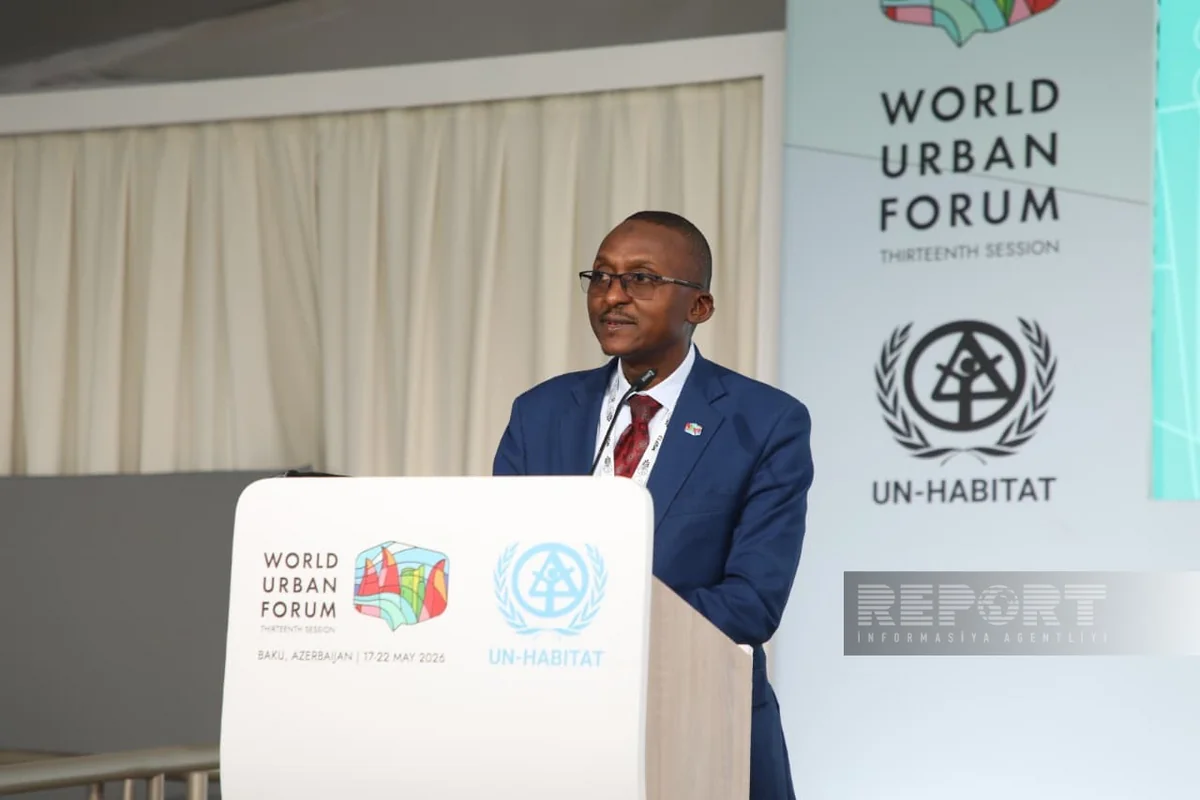
African cities have informal settlements, infrastructure deficiencies, housing shortages, and climate sensitivity prevails, stated Issaka Garba Abdou, Head of the Governance and Human Rights Division of the United Nations (UN) Economic Commission for Africa, at the Commission's event, Report informs.
He noted that clear messages have been delivered at continental platforms such as the Africa Climate Summit, the Africa Urban Forum, and the Africa Regional Sustainable Development Forum:
"The problem is no longer defining the vision, but ensuring its implementation. The consensus is firm - we must move from commitment to implementation, from frameworks to financing, from coordination to measurable results."
Isaka Garba Abdou stated that this is why the Second Africa Urban Forum prioritized the preparation of Africa's position.
The Commission official called on relevant bodies at WUF13 to develop profitable urban projects and investment plans, as well as to scale up digital solutions yielding results in Africa's cities and to ensure accountability for implementation.
He also outlined priorities for the sustainable development of cities:
"Cities need the right tools and supportive systems to achieve the set targets. Local governance bodies must be strengthened, sustainable urban finance must be activated, and the budget capacities of municipalities must be expanded. Additionally, domestic resources must be mobilized, and innovative tools ranging from climate financing to public-private partnerships must be utilized. Furthermore, digital transformation must be accelerated. According to the 2024 report on the state of urbanization in Africa, digital technologies are no longer a choice but a fundamental necessity. E-government and data systems enhance service quality and transparency. However, infrastructure and digital skills deficiencies still limit this potential."
Author