
 Baku 20° C
Israel Barouk: Azerbaijan, Armenia demonstrating alternative to protracted conflicts
- 08 October, 2026
- 17:53
Stay up to date with the top news!
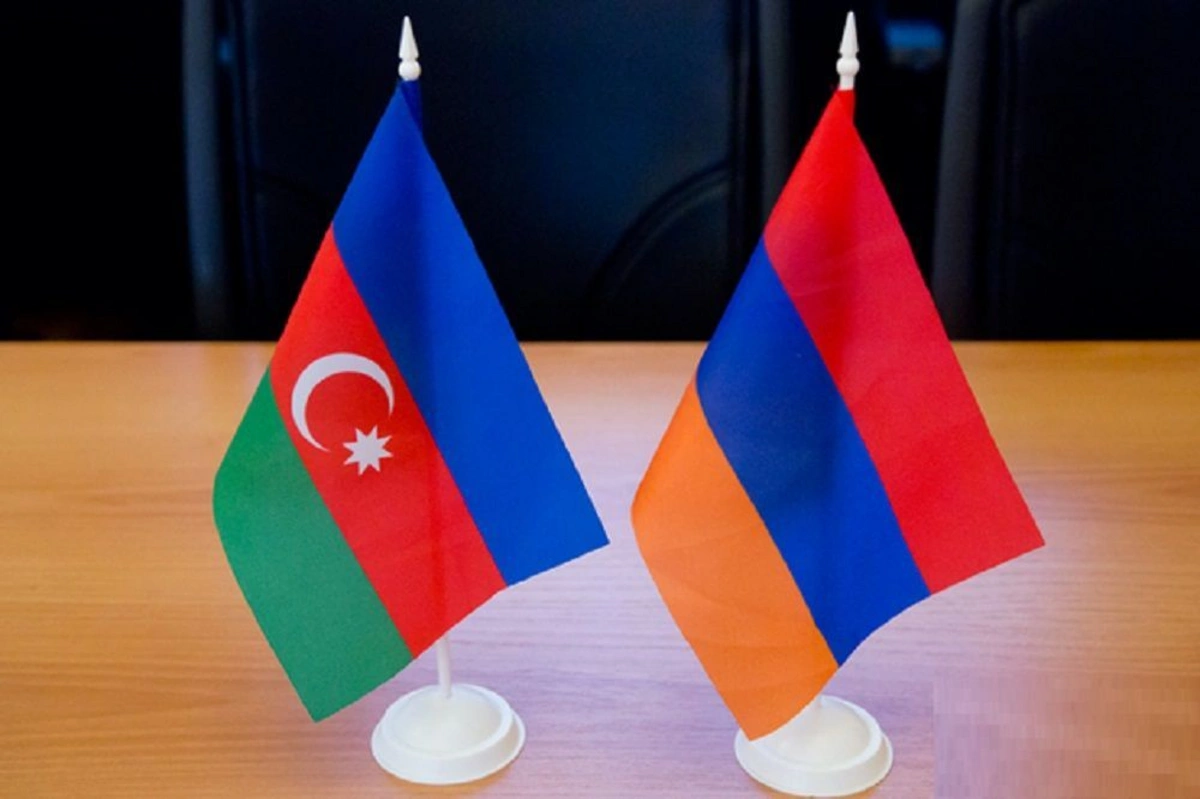
The ongoing peace process in the South Caucasus deserves recognition, support, and protection; the rapprochement between Azerbaijan and Armenia demonstrates that even conflicts that seemed eternal can give way to cooperation, American Rabbi Israel Barouk wrote in an article for the Jewish Journal, Report informs.
He noted that for more than three decades, Armenia and Azerbaijan remained locked in a conflict that was perceived as an almost immutable reality.
"Borders hardened, generations grew up knowing one another primarily as enemies, and war repeatedly appeared easier to imagine than reconciliation," he wrote. "On August 8, 2025, Azerbaijani President Ilham Aliyev and Armenian Prime Minister Nikol Pashinyan met at the White House with President Donald Trump. Their foreign ministers initialed an agreement establishing peace and interstate relations, while the leaders signed a joint declaration intended to turn decades of confrontation toward normalization, connectivity and economic cooperation.
A year later, the Armenia-Azerbaijan border has remained stable, while the two governments have continued taking steps toward normalization, border delimitation and confidence building.
Perhaps most significant is what is happening with the Trump Route for International Peace and Prosperity, or TRIPP."
"The potential projects go well beyond a single road. The framework contemplates railways, roads, oil and gas pipelines, electricity infrastructure and fiber-optic networks.
That matters because peace becomes far more powerful when it moves from paper to infrastructure," the author wrote.
"Azerbaijan has already demonstrated how consequential such connectivity can become. The Southern Gas Corridor stretches approximately 3,500 kilometers, carrying natural gas from Azerbaijan's Caspian fields through Georgia and Türkiye into Europe. Azerbaijani gas has become an increasingly important part of Europe's effort to diversify its energy supplies and reduce dependence on Russia.
The emerging Trans-Caspian, or Middle Corridor, could similarly strengthen an East-West commercial route connecting Central Asia and the Caspian region with Europe while reducing dependence on transportation corridors controlled by Russia or Iran.
And there are already tangible signs of what greater regional connectivity can mean. Since Azerbaijan unilaterally lifted transit restrictions last October, more than 65,000 tonnes of goods have passed through Azerbaijan to Armenia, while Azerbaijan has exported around 20,000 tonnes of gasoline and diesel to Armenia.
TRIPP could become another crucial piece of that architecture.
This should matter greatly to Israel.
Israel and Azerbaijan have developed a strategic relationship encompassing energy, trade, security and diplomacy. Located next to Iran, Azerbaijan is a Muslim-majority nation where a longstanding Jewish community has lived with an unusual degree of security and acceptance.
In a world where relations between Jews and Muslims are too often discussed exclusively through the language of conflict, Azerbaijan represents something worth noticing," reads the article.
"There remain difficult questions, political disagreements and painful memories. Implementation will take years, and no infrastructure project can erase generations of conflict.
But history should also teach us not to become so accustomed to war that we fail to recognize progress when it appears.
At a moment when much of the world seems consumed by expanding conflict, Armenia and Azerbaijan offer another possibility: former enemies attempting to replace a geography of confrontation with a geography of connection.
For Israel, and for everyone who believes that seemingly permanent conflicts need not remain permanent, what is unfolding in the South Caucasus deserves to be recognized, encouraged and protected," the author wrote.
Author