
 Baku 20° C
From C5 to C6: New common platform expands cooperation opportunities for Central Asia and Azerbaijan
- 08 October, 2026
- 15:39
Stay up to date with the top news!
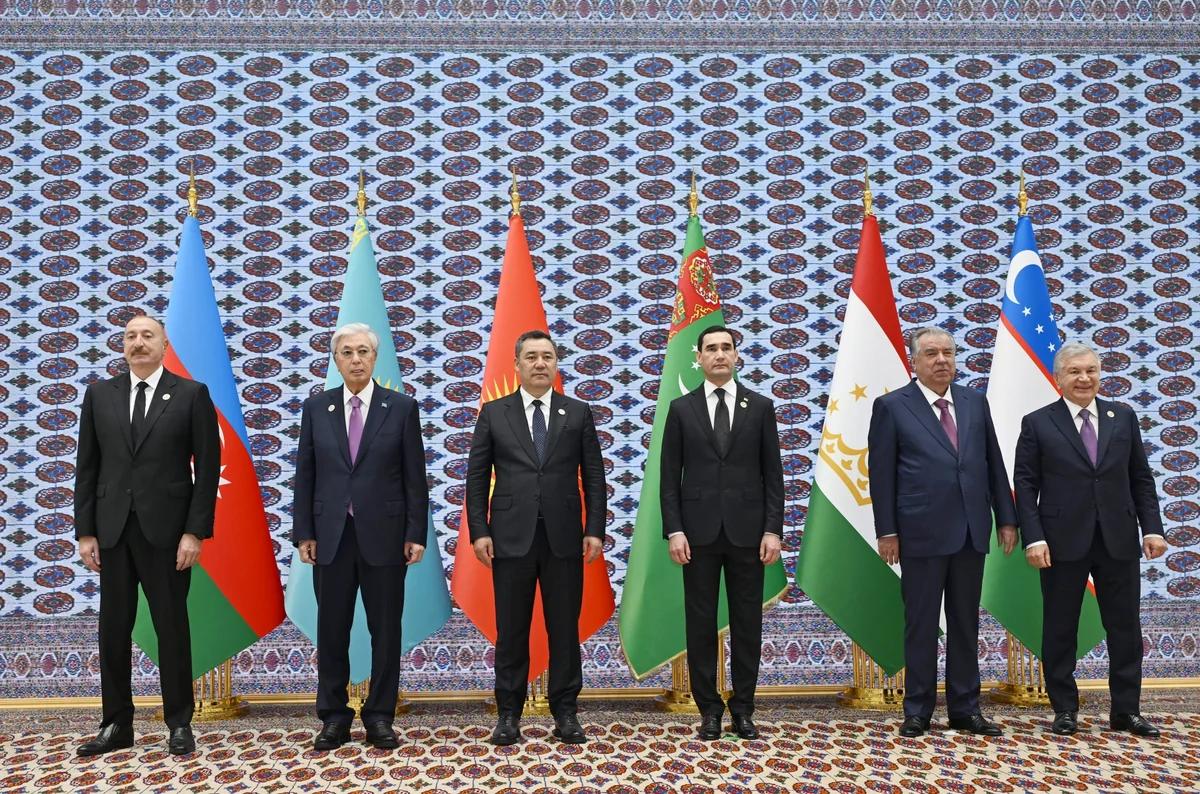
Azerbaijani President Ilham Aliyev attended the 8th Consultative Meeting of the Heads of State of Central Asia and the Republic of Azerbaijan on October 8 during his working visit to Turkmenistan. The visit can be regarded as a logical continuation of Azerbaijan's rapidly deepening relations with Central Asian countries and its growing role in the region in recent years.
In November 2025, at the 7th Consultative Meeting of the Heads of State of Central Asia held in Tashkent, Uzbekistan, Azerbaijan was admitted as a full participant in the platform. This effectively transformed the C5 format - the Central Asian cooperation framework - into C6, a broader political, economic and geopolitical format that now also includes Azerbaijan.
This marked a new stage in relations between Azerbaijan and the Central Asian countries, with Baku becoming a decision-making participant in shaping the regional agenda.
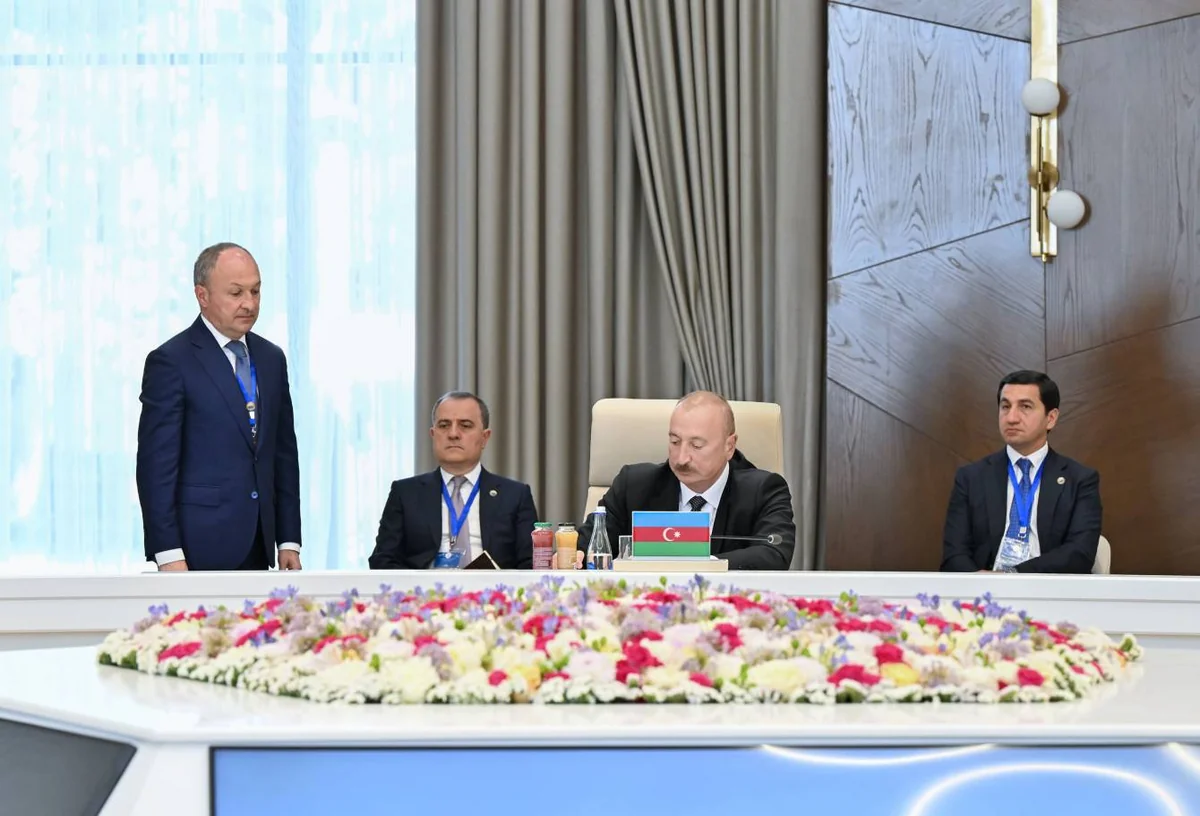
The Cholpon-Ata Declaration, signed in Cholpon-Ata, Kyrgyzstan, on July 31, 2026, strengthened the political and legal foundations of this process. The document helped transform Azerbaijan's relations with Central Asian countries from a collection of separate bilateral ties into a framework of regional cooperation.
President Ilham Aliyev had said at that meeting that Azerbaijan would be an active member. This demonstrated that official Baku's objective was not merely to participate in meetings, but also to contribute its political and economic capabilities to shaping the regional agenda.
At the 8th Consultative Meeting held in Turkmenbashi on October 8, 2026, Azerbaijan participated for the first time as a full member.
The key development was not simply an increase in the number of participants, but the inclusion in the cooperation platform of Azerbaijan, a country located beyond the geographical boundaries of Central Asia.
Situated on the western coast of the Caspian Sea, Azerbaijan thus serves as an important link connecting Central Asia with the South Caucasus and Europe.
Azerbaijan's participation not only broadens the geographical scope of the platform but also expands its opportunities in transport, energy, investment and access to foreign markets.
The agenda of the 8th Consultative Meeting covered a wide range of issues, including energy, sustainable transport and logistics corridors, political and diplomatic cooperation, environmental issues, water resources, the Aral Sea, culture, education and scientific ties.
This shows that cooperation now extends beyond the economy, energy and transport to areas ranging from security and the environment to humanitarian affairs.
The assessments given by the participating heads of state to Azerbaijan's regional role are also particularly significant.
At the opening ceremony, Turkmen President Serdar Berdimuhamedov welcomed Azerbaijan's participation and noted that it opened broad prospects for cooperation with partners in Asia and Europe.
This indicates that the format is increasingly addressing a broader geo-economic space and reflects Azerbaijan's growing role in regional and global processes as an important logistics and energy hub.
Azerbaijan's location on the western shore of the Caspian complements Central Asia's westward access through transport, energy and trade links.
The President of Kazakhstan also drew attention in his remarks to the growing role of Central Asia and Azerbaijan in Eurasia, presenting the parties as an increasingly important space for development and geopolitical interaction.
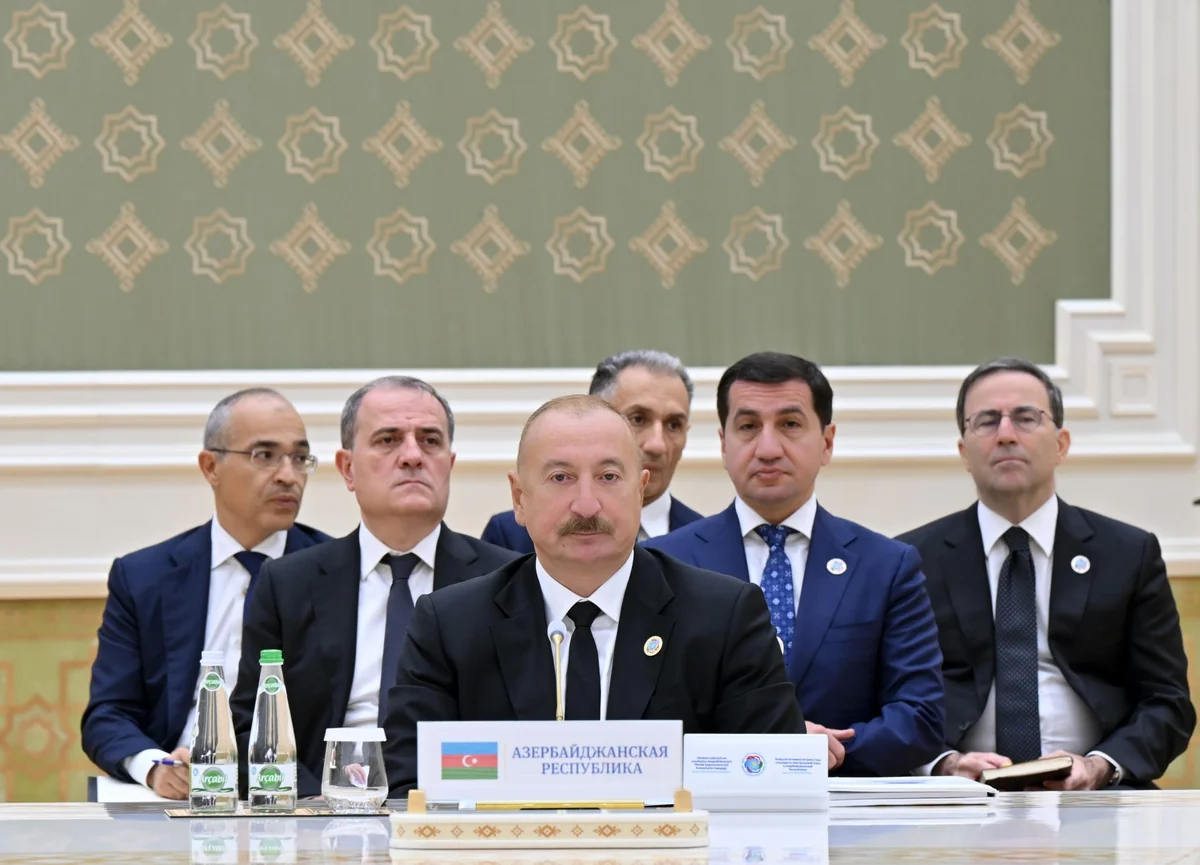
Speaking at the Consultative Meeting, President Ilham Aliyev said that peace, security, and political and economic stability formed the basis for the successful development of the Central Asian countries and Azerbaijan.
This position is closely linked to regional stability, as transport corridors, energy routes and other investment projects currently attracting global attention, particularly from the West, are long-term in nature and therefore depend directly on political stability.
By emphasizing this issue, the president underlined that security and the economy should not be viewed as separate agendas, but as complementary elements of the same regional strategy.
In other words, strengthening the political environment needed to safeguard regional cooperation is of particular importance for official Baku.
Against this background, it is no coincidence that transport and logistics cooperation has emerged as one of the main areas of discussion.
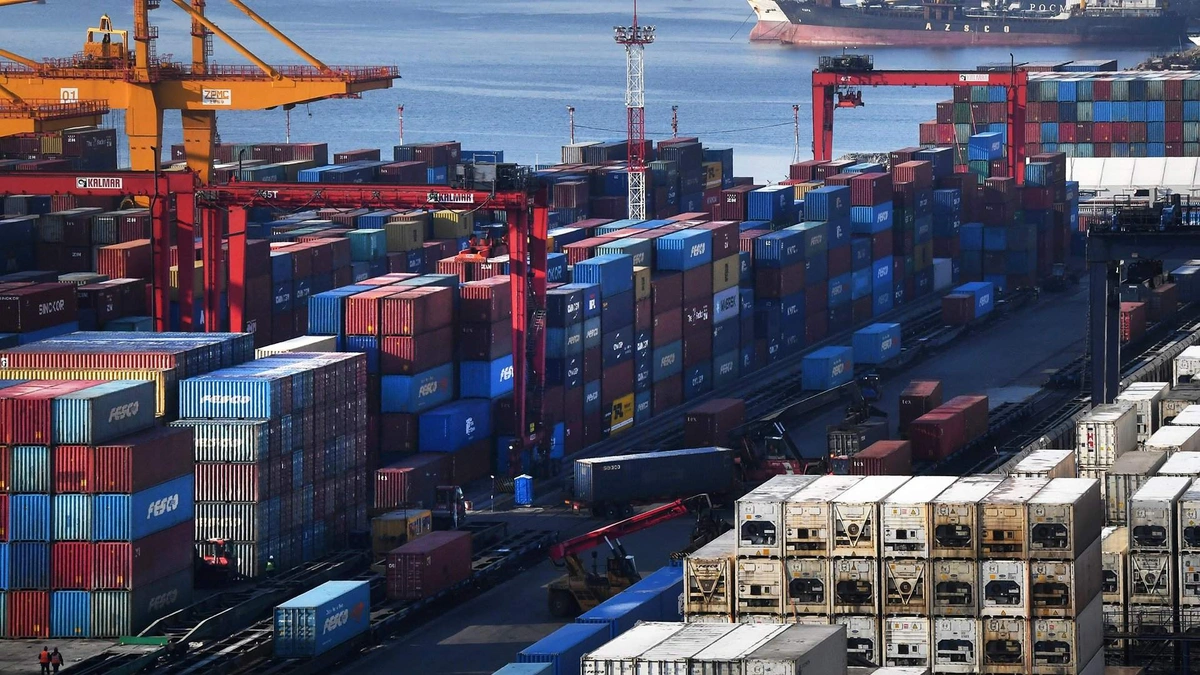
The Baku International Sea Trade Port, Azerbaijan's railway infrastructure and transport links extending toward Europe are of major importance for transporting Central Asian cargo to Western markets.
Further developing these routes would expand Central Asian countries' access to alternative foreign markets.
This development includes the digitalization and synchronization of customs procedures and simplification of border crossings, all of which can improve the efficiency of the Middle Corridor by speeding up cargo movement and reducing transit times and costs.
President Ilham Aliyev said at the meeting that the Caspian Sea was playing an increasingly important role in transport links among the participating countries and that transport infrastructure on both shores was crucial for connecting Central Asia with Azerbaijan and, subsequently, with international markets.
For Azerbaijan, the key issue is not merely the transit of cargo through its territory, but also the transformation of infrastructure on both sides of the Caspian into a single logistics chain.
Making that chain faster and more cost-effective would further strengthen Azerbaijan's role as a transit hub.
Speaking at the meeting in Turkmenbashi, President Ilham Aliyev said Azerbaijan's trade turnover with Central Asian countries had increased by more than 50% last year.
He added that more than 400 companies with Central Asian capital were actively operating in Azerbaijan and that Azerbaijan had established joint investment funds with Kazakhstan, Uzbekistan and Kyrgyzstan in recent years, each with capital amounting to hundreds of millions of dollars.
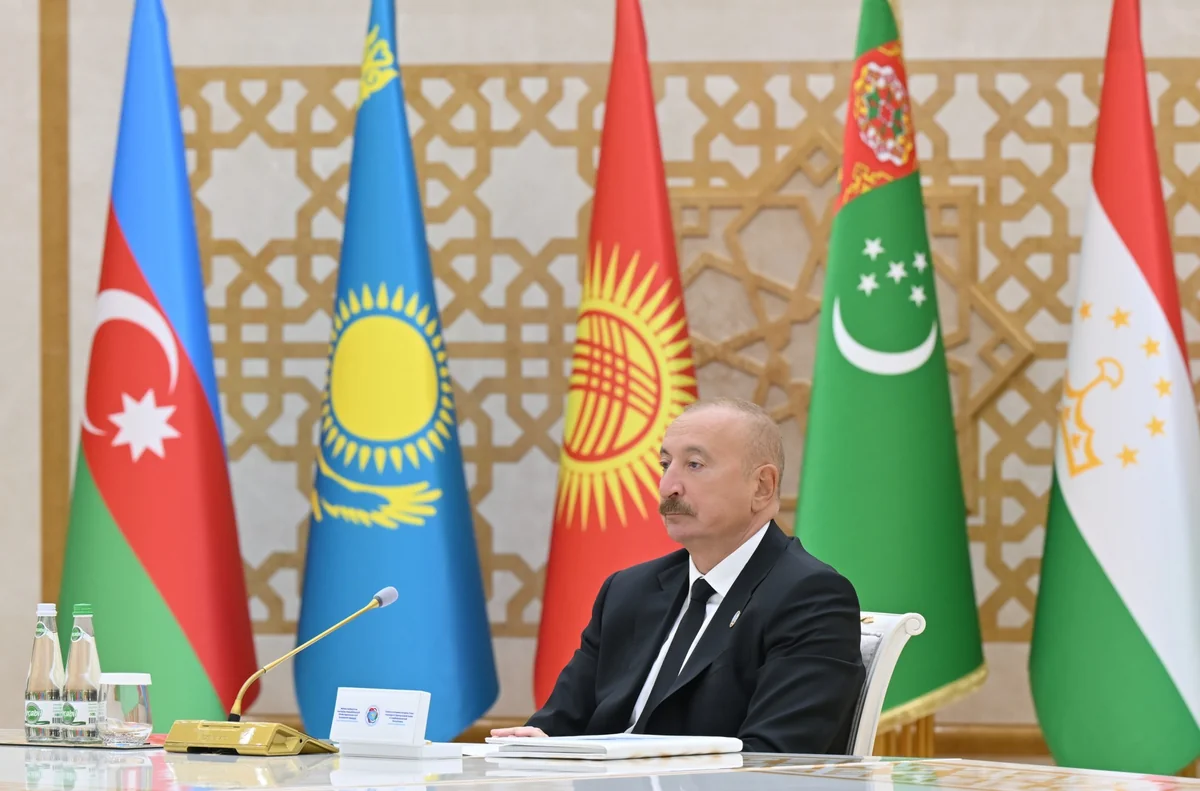
The Azerbaijani president also stressed the need to make more active use of these investment funds to implement joint projects, establish new production facilities and expand industrial cooperation.
He said the countries should not limit themselves to increasing mutual trade, but should also invest and produce together and jointly enter foreign markets.
It is therefore significant that in the final statement of the meeting, the heads of state described the development of integrated regional transport infrastructure as a priority and stressed the importance of the East-West and North-South international transport corridors as key factors for sustainable economic growth and stronger interregional links.
The leaders also reaffirmed the importance of further developing transit and transport corridors passing through their countries.
Energy is another major area of regional cooperation.
Azerbaijan plays an important role in transporting the Caspian region's abundant energy resources to world markets, while its energy cooperation with Central Asia has acquired a broader dimension.
Steps to establish a green energy corridor with Kazakhstan and Uzbekistan demonstrate this shift and could make Azerbaijan a potential connection point for transmitting electricity generated in Central Asia to Western markets.
President Ilham Aliyev said at the 8th Consultative Meeting that cooperation in renewable energy was steadily expanding and added that Azerbaijan was working with Kazakhstan and Uzbekistan to create a green energy corridor.
In other words, while Azerbaijan's energy ties with Central Asian countries were previously centered primarily on oil and gas transportation, renewable energy transmission has now also entered the agenda.
Central Asia, in turn, gains an opportunity to bring its energy potential to broader markets through Azerbaijan.
Another important element of the C6 format is the expansion of Azerbaijan's trade and economic ties with Central Asian countries, growth in mutual investment and implementation of joint projects.
President Ilham Aliyev noted that Azerbaijan's trade turnover with Central Asian countries had risen by more than 50% last year, that more than 400 companies with Central Asian capital were operating in Azerbaijan and that joint investment funds had been established with Kazakhstan, Uzbekistan and Kyrgyzstan.
These funds create opportunities to move cooperation to a higher level through joint production and the establishment of industrial facilities, which in turn can contribute to economic growth, employment and increased cargo flows to Western markets.
The 8th Consultative Meeting was also marked by a new proposal.
The President of Kyrgyzstan proposed creating a unified e-commerce platform between the Central Asian countries and Azerbaijan.
Such a platform could allow countries already physically interconnected through transport and energy projects to extend that connectivity to businesses and consumers.
It could also facilitate access to regional markets for small and medium-sized enterprises. While the Middle Corridor ensures the physical movement of goods, an electronic platform could accelerate interaction among buyers, sellers and markets.
One of the key outcomes for Azerbaijan as a full participant in the C6 format was that the next meeting was entrusted to official Baku.
The Joint Statement signed following the Consultative Meeting emphasized the importance of Azerbaijan's full participation in the format and noted that the heads of state highly appreciated the preparations for the 7th Summit of the Conference on Interaction and Confidence Building Measures in Asia (CICA), scheduled to be held in Baku on October 15, 2026.
Kyrgyz President Sadyr Japarov announced that Azerbaijan would chair the Consultative Meeting of the Heads of State of Central Asia and Azerbaijan in 2027.
This will give Azerbaijan an opportunity to transform the agenda currently taking shape into concrete projects, new investment mechanisms and more efficient regional connectivity.
In other words, if 2026 is remembered as the year Azerbaijan became a full participant in Central Asia's regional cooperation platform, 2027 may become the stage at which Baku demonstrates how actively it can shape initiatives and practical cooperation within that platform.
Kamil Mammadov
Author