Baku 22° C
Von der Leyen expands European Commission's political presence: from economic issues to security
- 03 July, 2026
- 20:22
Stay up to date with the top news!
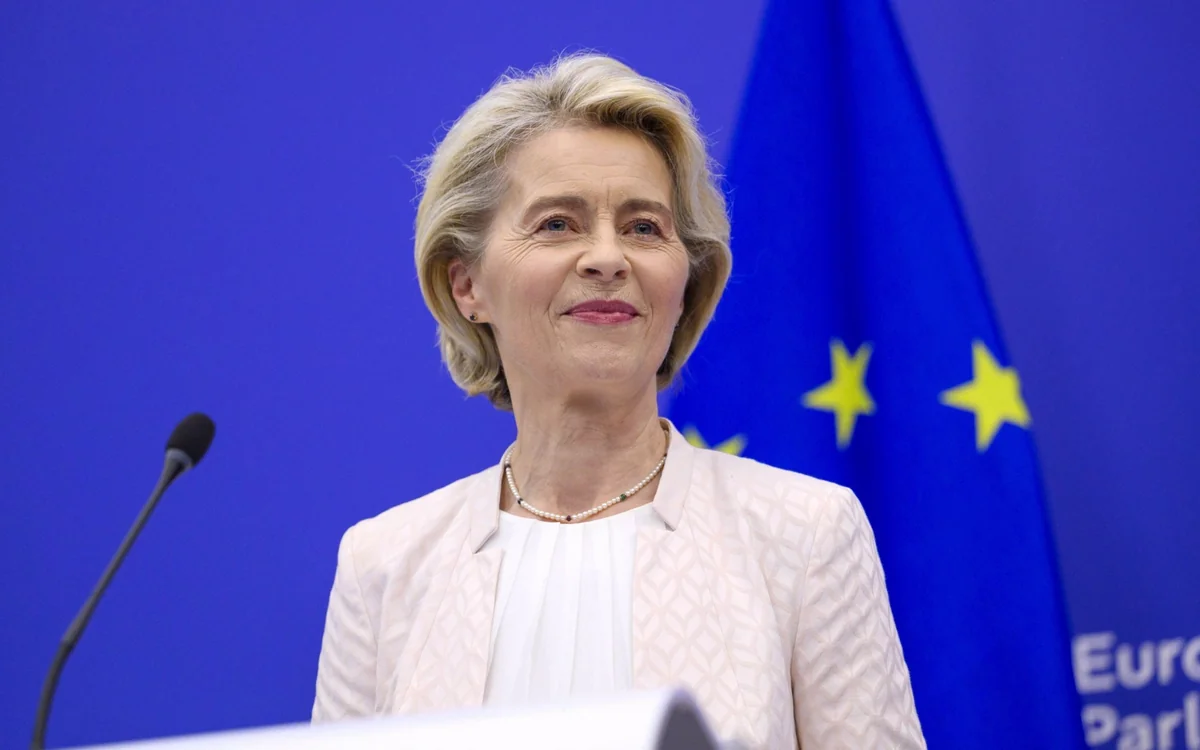
European Commission President Ursula von der Leyen will attend the NATO summit in Ankara next week. Just a few years ago, such participation by the head of the European Commission would have been considered an exception. Today, however, it is becoming the new norm, reflecting the expanding political role of the European Commission within the European Union's institutional architecture.
According to the European bureau of Report, the Commission President will speak at a plenary session of the Defense Industry Forum alongside NATO Secretary General Mark Rutte.
In addition, von der Leyen will take part in a working dinner hosted by Turkish President Recep Tayyip Erdoğan, together with European Council President António Costa, the European Commission spokesperson Paula Pinho said at a briefing.
The participation of the Commission President in NATO summits has itself become a defining feature of von der Leyen's tenure. Before her appointment, such practice was rare: the last recorded participation of the European Commission head at a NATO summit was in 2016.
At the NATO summit in Warsaw in 2016, the EU was represented by European Council President Donald Tusk and European Commission President Jean-Claude Juncker.
Since von der Leyen took office in December 2019, she has attended nearly all NATO summits, except during the COVID-19 pandemic period when meetings were held online.
This reflects a broader trend in recent years-the noticeable expansion of the European Commission's political role. Traditionally, the Commission President was associated primarily with internal market regulation, competition policy, trade, and the enforcement of EU law. Today, however, the head of the EU's executive body is increasingly involved in discussions on foreign policy, security, and defense.
Following the start of Russia's war against Ukraine, the European Commission has become one of the key actors in shaping a pan-European defense policy. It coordinates support programs for the defense industry, promotes joint arms procurement mechanisms, contributes to the development of new financial instruments, and presents many of the EU's security initiatives. On the international stage, Ursula von der Leyen increasingly acts as one of the EU's main representatives alongside the President of the European Council.
The expansion of her participation in NATO events illustrates a deeper institutional process. Although defense matters remain primarily within the competence of member states, the European Commission is gradually strengthening its influence in related areas-from the development of the defense industry and financing of military-industrial projects to coordination of security policy.
Thus, von der Leyen's participation in NATO summits is not merely a matter of diplomatic protocol. It reflects a shift in the internal balance within the European Union itself: the Commission is gradually moving beyond its traditional role as an economic and regulatory institution, becoming one of the EU's key political centers, including in foreign and defense policy.
Author