
 Baku 16° C
Baku to host Black and Caspian Freight Forum 2026
- 27 July, 2026
- 17:32
Stay up to date with the top news!
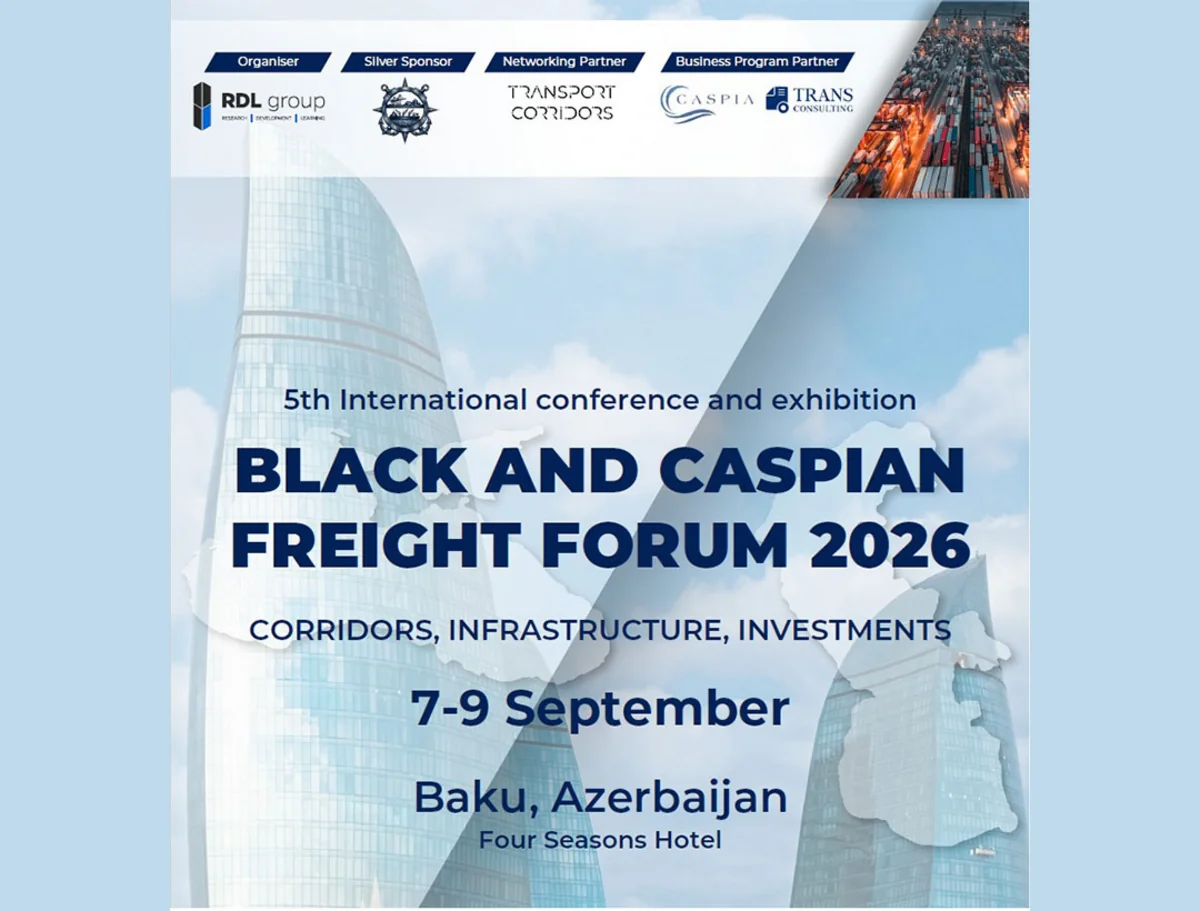
On September 7–9, Baku will host the international conference and exhibition Black and Caspian Freight Forum 2026: corridors, infrastructure, investments, Report informs.
This is the fifth edition of the forum, and this year's theme is corridors, infrastructure and investments.
The forum brings together the people who actually run the infrastructure and the cargo flows between Asia, the Caspian, the Black Sea and Europe: seaports and terminals, shipping and ferry operators, railways, freight forwarders and cargo owners, regulators, international financial institutions and investors.
More than 150 delegates from 100 companies and over 20 countries are expected to attend the forum.
The upcoming international transport forum in Baku will focus on the future development of the Middle Corridor, which is already operating as a key freight route linking Asia and Europe.
Participants will discuss the corridor's expected cargo volumes and delivery times in 2026-2027, as well as the investments needed to further expand its capacity.
A separate session will examine emerging transport routes and geopolitical factors shaping regional infrastructure, including the Zangazur Route (TRIPP), the Trans-Afghan corridor, and the evolving strategic role of the Middle Corridor in international logistics.
China's role in increasing the corridor's capacity will also feature prominently on the agenda. Discussions will cover ongoing and planned infrastructure projects, the expansion of container train services, and measures to improve return cargo volumes.
The forum will also address shipping and ferry transport on the Caspian Sea, including the construction and operation of higher-capacity vessels, the development of containerization, the expansion of Ro-Ro services, and tariff trends.
Another key topic will be the modernization of port infrastructure through 2030. Participants will review plans to expand berthing facilities, install modern crane systems, carry out dredging works, and strengthen transport links between ports and inland regions.
The structure of freight flows between Asia and Europe will also be discussed, with particular attention to the transportation of energy resources, grain, fertilizers, metals, critical minerals, and project cargo.
Digitalization of the transport corridor will be another major theme. Participants will examine the creation of unified data exchange platforms, the harmonization of customs procedures, the development of electronic documentation systems, and the progress achieved in these areas.
A special session will focus on the role of international financial institutions and development banks in financing regional transport infrastructure. Discussions will include projects supported by the European Bank for Reconstruction and Development, the Asian Development Bank, the World Bank, the Asian Infrastructure Investment Bank, and the European Investment Bank, as well as their financing mechanisms.
The forum will also explore the EU's Global Gateway initiative and its investment package for the Trans-Caspian Transport Route. Participants will assess how announced investment plans are being translated into concrete projects, the level of funding already secured, and opportunities for public-private partnerships and blended finance.
Legal and insurance aspects of regional logistics will also be on the agenda, including risk management for multimodal transport and the role of insurance, legal, and surveying companies in ensuring resilient international supply chains.
Organizers noted that the Middle Corridor continues to expand as cargo volumes increase and infrastructure projects advance across several sectors. They said the next stage of development will require further investment in ferry fleets, port capacity, customs infrastructure, and digital integration.
The forum is expected to bring together representatives of Black Sea and Caspian ports, terminals and stevedoring companies, shipping, ferry and Ro-Ro operators, shipowners, agents, brokers, railway companies, and container train operators.
Freight forwarders, multimodal operators, 3PL and 4PL logistics companies, cargo owners, international financial institutions, development banks, infrastructure funds, private and strategic investors, transport and economy ministries, regulators, customs authorities, and industry associations are also expected to attend.
Companies specializing in dredging, engineering solutions, port technologies, as well as legal, insurance, and surveying services will also participate.
According to the organizers, Baku was selected as the venue because of its strategic position within the regional transport network, serving as one of the main hubs where the maritime and land routes of the Middle Corridor intersect and where infrastructure operators, logistics companies, and investors are concentrated.
The organizers expect the forum to provide a platform for discussing concrete investment projects, infrastructure development, and ways to further improve transport connectivity between Asia, the Caspian and Black Sea regions, and Europe.
The Report News Agency is the information partner of the conference.
Author