Baku 19° C
Anaclaudia Rossbach: WUF13 in Baku to strengthen UN-Habitat's presence in region - INTERVIEW
- 26 December, 2025
- 10:31
Stay up to date with the top news!
Azerbaijan is actively preparing to host the UN's 13th World Urban Forum (WUF13) in Baku on May 17–22, 2026.
The forum will focus on the theme "Housing the world: safe and resilient cities and communities" and will highlight the issues of housing, urban transformation, smart city initiatives, sustainable development efforts, and post-conflict reconstruction. These efforts aim to integrate historical heritage with forward-looking urban planning.
Recently, President Ilham Aliyev has declared 2026 the "Year of Urban Planning and Architecture," underscoring this national priority and aligning Azerbaijan's development agenda with global goals for resilient, green, and inclusive cities.
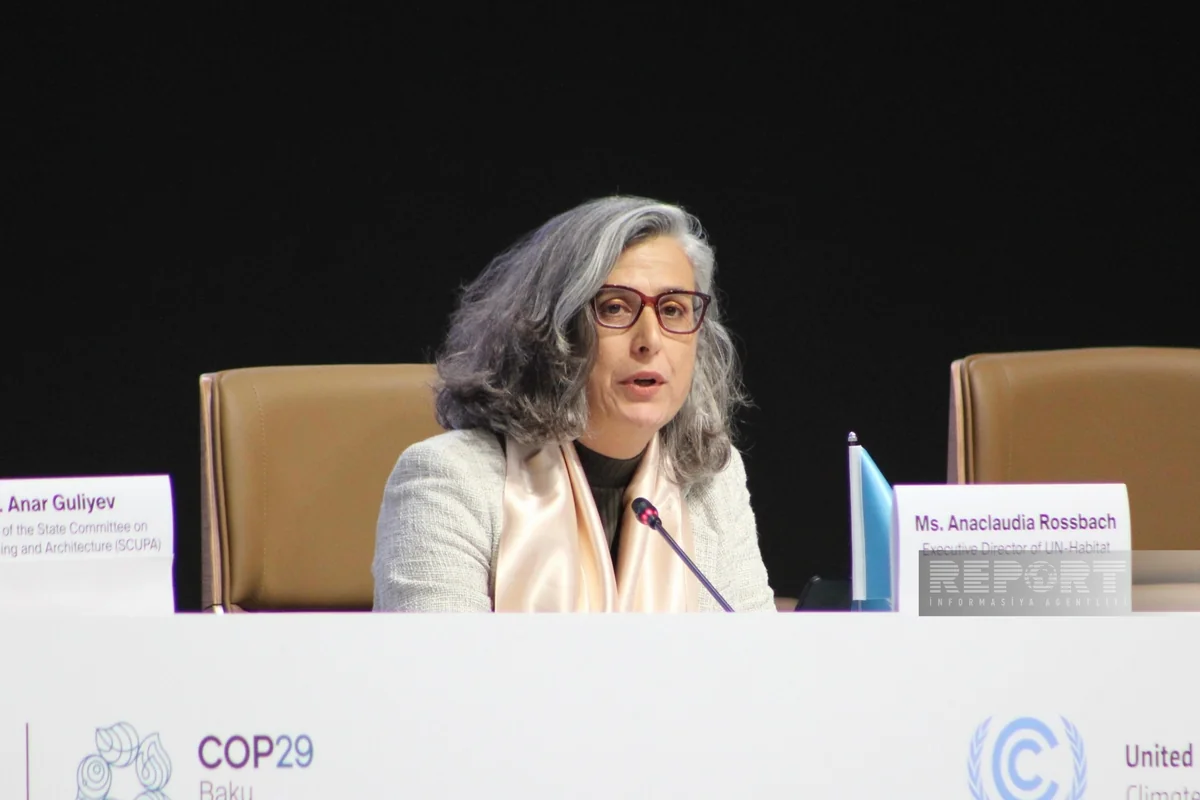
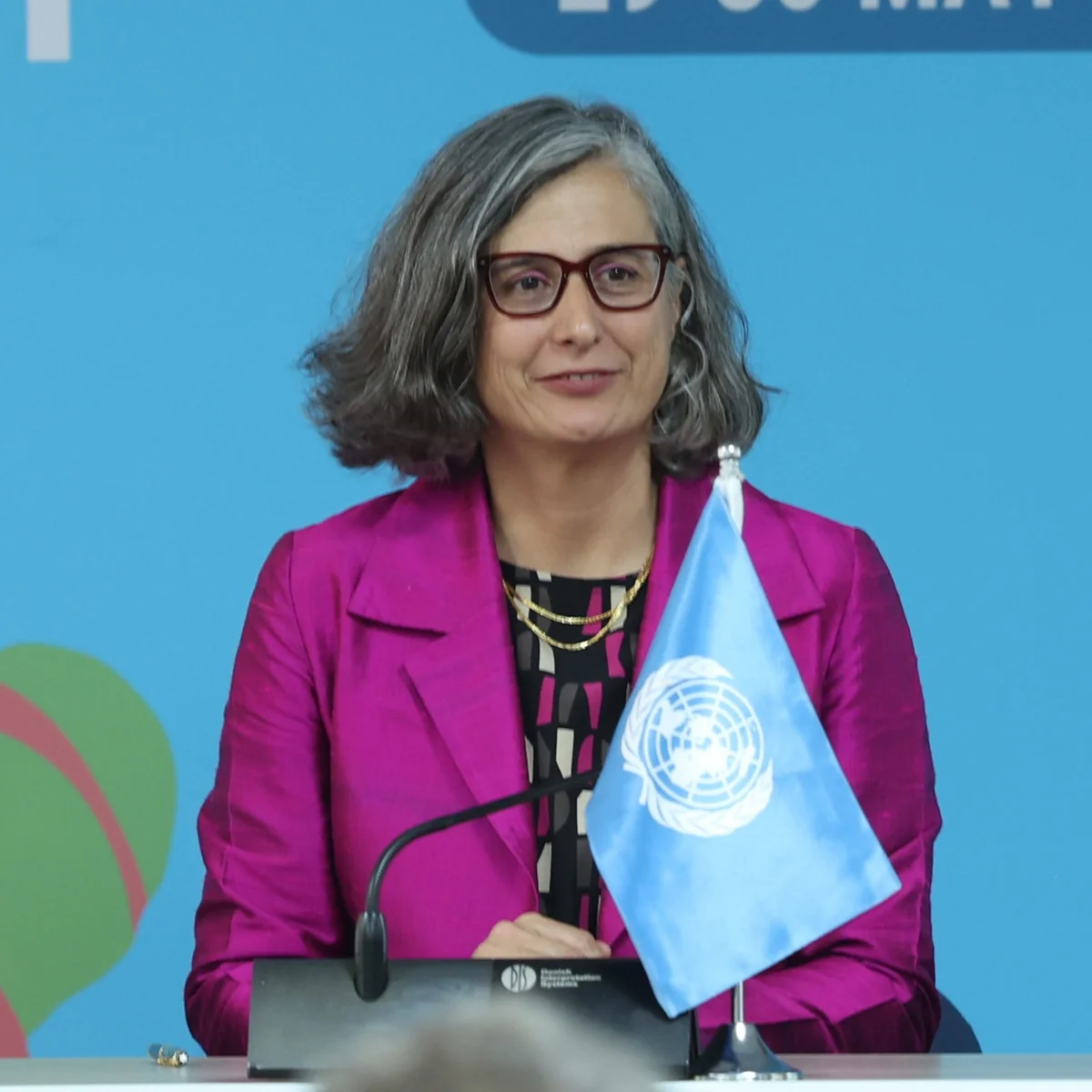
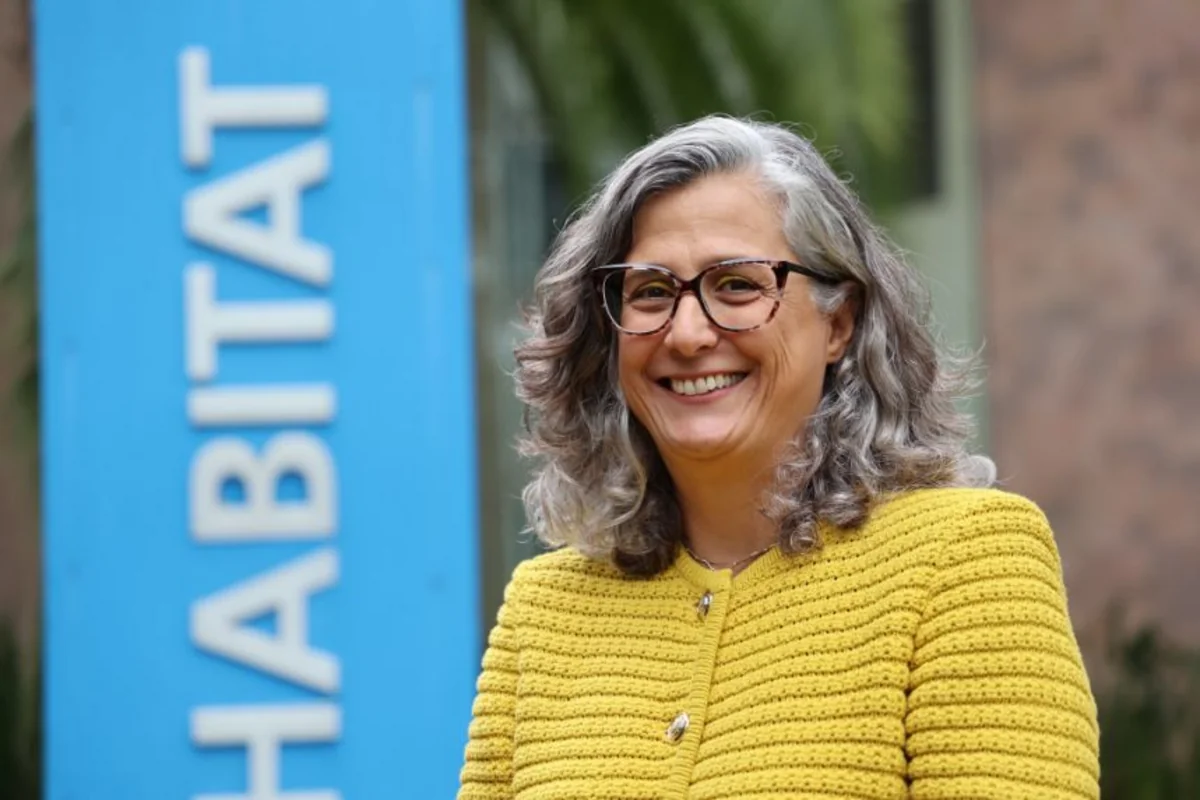
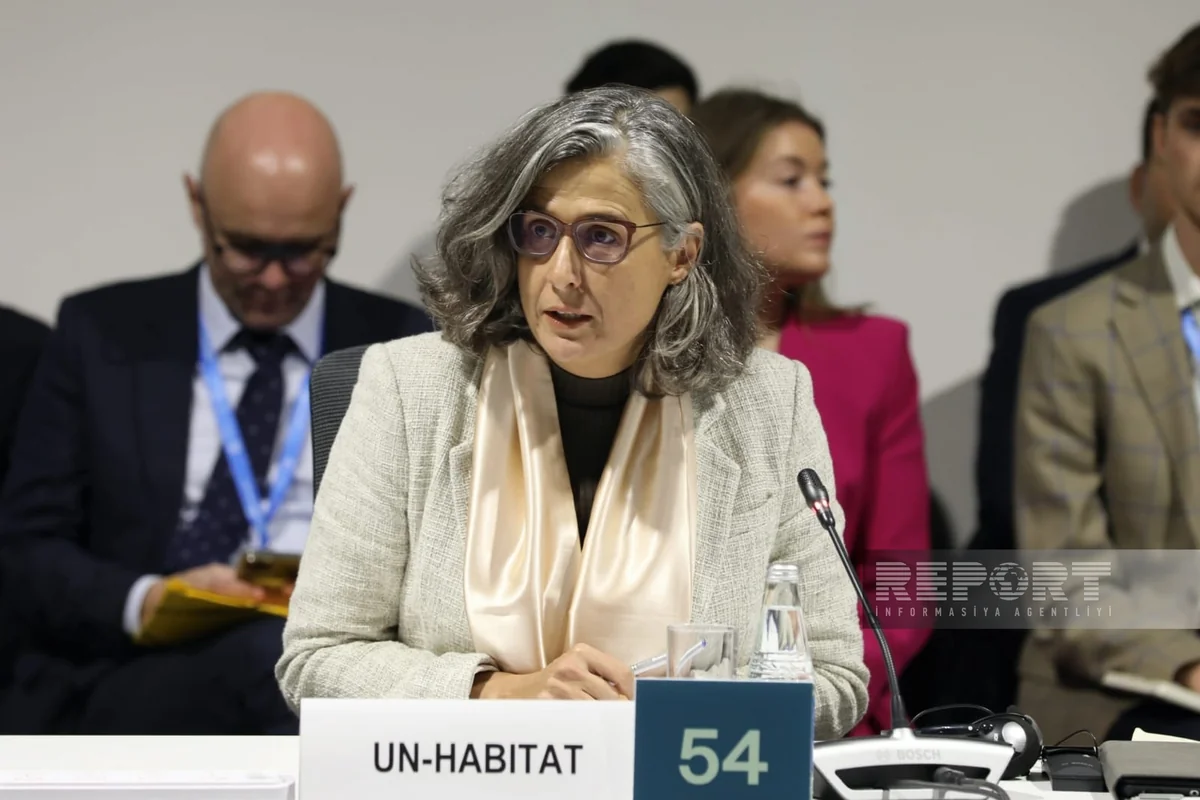
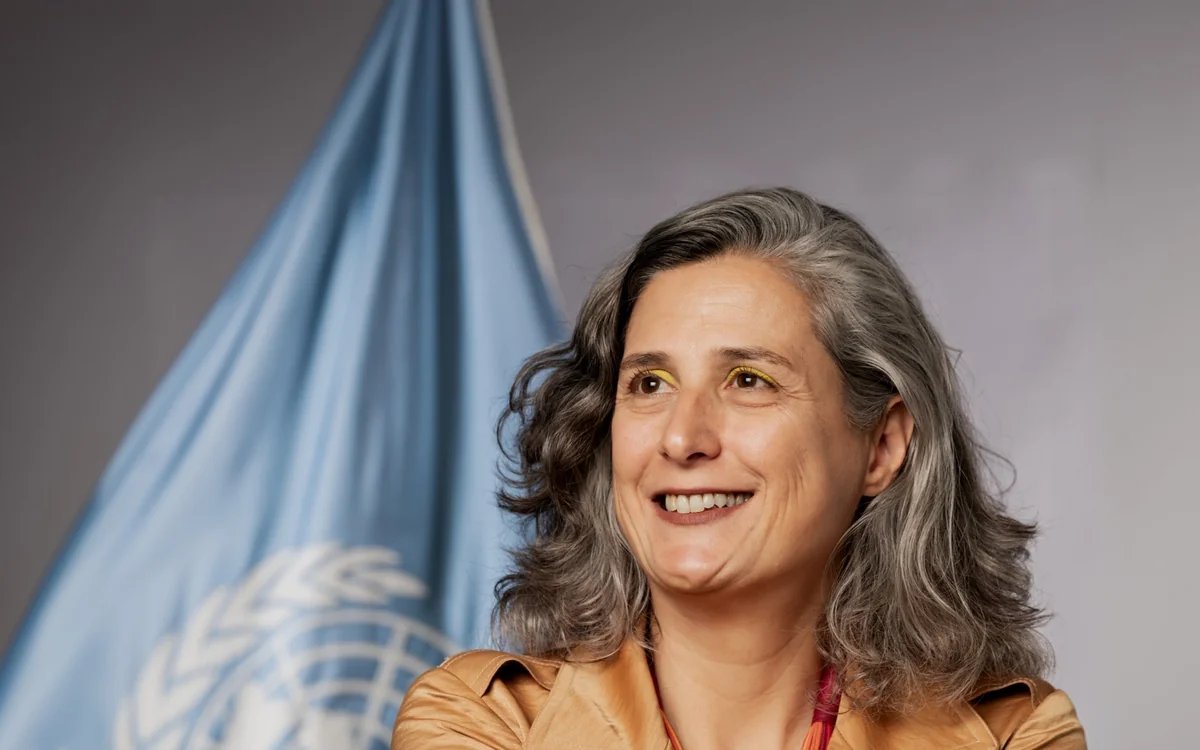
Ahead of WUF13, we spoke with Anaclaudia Rossbach, United Nations Under-Secretary-General and Executive Director of the United Nations Human Settlements Program (UN-Habitat), who shared her insights in an exclusive interview with the US bureau of Report News Agency.
– Executive Director Anacláudia Rossbach, thank you for your time and for the interview. First, could you briefly tell us about the UN-Habitat program and explain its main mission and objectives?
UN-Habitat was created 50 years ago, right after an international conference called Habitat I. It took place in 1976 in Vancouver, Canada. At this conference, Member States and global stakeholders realized the pace of urbanization and the need to have a strong entity dedicated to urbanization and dedicated to supporting the process of urban development, understanding that more people were coming to cities and that one specific thing they would need more of is housing, shelter.
UN-Habitat was upgraded to a full-fledged programme under the Secretariat. Shelter has been at the core of our mandate, dealing with the international shelter crisis. So, UN-Habitat is, within the UN system, the entity, the organization, responsible for looking at the urbanization process and supporting cities and communities. And also dealing with the global housing crisis that we are living in.
We are also custodians of SDG 11, which is the SDG focused on cities and communities. There is a strong emphasis on housing. The document that is key to UN-Habitat's mandate was approved and endorsed by Member States almost 10 years ago at the Habitat III Conference in Quito, Ecuador. It is called the New Urban Agenda. It also foresaw housing at the center. Now, our newest Strategic Plan, adopted by the Member States in May 2025, focuses on housing, land and basic services. We also work with cities and communities supporting local action on the ground.
– How many countries do you work with this program?
We have a presence in more than 70 countries. Of course, really, we work with all Member States as we are the United Nations. For example, we had our UN-Habitat Assembly this year in May in Nairobi, and we had the presence of 108 Member States. Our Strategic Plan was endorsed by 105 Member States. So, all Member States can be engaged with UN-Habitat. But we have a presence, a physical presence, through liaison offices, country offices, and program or project offices in more than 70 countries.
-What are the core objectives of WUF13, and why is Baku a significant choice to host this global event?
Since I'm going back to the genesis of everything, and this is the model of the UN right now, as we are reforming after 80 years. Looking at the genesis, how everything started, going back to basics. The World Urban Forum was created in 2001, and in this process that I was just mentioning, there was recognition by Member States that UN-Habitat needs to be stronger. So, it became a full-fledged program under the Secretariat back then, and then the World Urban Forum was established by the UN General Assembly.
It was envisaged as a platform where experts in the field of urban development and human settlements would convene, understanding that our capacity as an organization needed to be expanded to deal with the scale of the challenges. So, it's actually a different kind of UN conference. It's a UN conference that serves as a platform for stakeholders to engage in our work. I think this is very important information, and we want WUF13 in Baku to really strengthen this feature.
We want to have a strong presence from local and regional governments, from academia, from civil society, and from different groups, and make sure we hear their input at the midterm of the New Urban Agenda, which I mentioned earlier. The New Urban Agenda was approved in 2016. Next year marks 10 years of the New Urban Agenda, which goes until 2036. We still have 10 years to implement it. This WUF should really serve as a critical point where we build a coalition, where we build critical mass, where we look at solutions and practices that are working, and convene around that.
Baku is very interesting because many of the areas that we are tackling as part of current challenges are related to experiences in Baku and Azerbaijan. We cannot just build houses; we need urban planning. How we plan the city is critical. We need to maximize existing areas. For example, you have in Baku, the White City, which is an example of urban regeneration, urban transformation. And this is very important, because we cannot keep growing as cities. We grow more in territory than in population. And this has been very oppressive for nature, very oppressive for the people, for the government to manage all that. It's also very expensive. It doesn't make sense. So, urban regeneration experiences, as well as recovery and reconstruction, are critical. There are a series of experiences that we can connect in Baku.
Also, the whole region is emerging as a very strong region for UN-Habitat. It's a region where UN-Habitat hasn't had a very strong presence, but we have been receiving a lot of demand. So, the regional aspect is also of extreme relevance for UN-Habitat.
-What major thematic areas will shape the agenda for WUF13, and how is UN-Habitat collaborating with the Government of Azerbaijan in the preparation process? Could you also highlight the key milestones achieved so far?
First of all, we have a theme, and it's housing, safe and resilient cities and communities. It speaks directly to our newest Strategic Plan that was approved at the United Nations Habitat Assembly in May, which put priority on housing and was endorsed by Member States. So, we have an agreed theme. This is very good. UN-Habitat is working very closely with the Government of Azerbaijan at all levels to move forward both the substantive programme and the operational preparations for WUF13, together with the National Coordinator, Anar Guliyev, who also serves as the Chairman of the State Committee on Urban Planning and Architecture (SCUPA) of Azerbaijan.
The Organizing Committee, National Coordinator, and Operating Company are in place and working closely with us. We cannot forget it's a big, big conference; it is the second largest within the UN, so we need to be very precise on logistics. And here is also another reason related to the previous question: Baku hosted COP29 and other international events, so let's also put some light on that. There is experience, and this is very important for us, because the logistics are very complex.
We have agreed on the main sessions. We have the Urban Expo, we have the Practices Hub, and the new WUF13 Academy. We have agreed on the structure and have already opened registration for WUF13 and for the partner-led events. I really would like to highlight the partner-led events because WUF was designed to be, as I said, for stakeholders. We have 350 partner-led events. Only a few events are organized and led by UN-Habitat itself or by the UN system. So, it's very important to disseminate to the broader public from Azerbaijan, from the region, and internationally that the partners are actually the stars of the world-level forum. I have high hopes for the partner-led events. Registration is open, so this is also a big advancement.
The other aspect related to stakeholder engagement is that we have started an active stakeholder engagement process internationally. We are already talking to the different segments: we have gender, youth, persons with disabilities, aging, private sector, civil society, academia. We want WUF to be really owned by stakeholders. We want the Call for Action that comes after the World Urban For usually to be owned by the stakeholders. We have been meeting with them at the global level, and this is ongoing. I myself am meeting with them and my team.
We also launched when I was in Azerbaijan, the Azerbaijan Urban Campaign, which will drive national mobilization and create momentum in Azerbaijan. We really want the World Urban Forum to leave a legacy in the countries and cities where we operate, building momentum towards Baku Urban Week that precedes the World Urban Forum itself. A lot has been accomplished, but yes, we have a long way to go.
– You mentioned that you have already opened the registration process. How many guests are you expecting from around the world to join?
Well, a lot. We had around 25,000 participants in Cairo last year, and we hope to reach a similar number next year.
-The WUF team in Azerbaijan has stated that a Leaders' Summit will be held for the first time at this forum. What other "firsts" or innovative initiatives are you planning for WUF13?
As I have mentioned earlier, we plan to have the WUF13 Practices Hub. This will be very innovative, the way we are shaping the training and capacity building. We also plan to have the WUF13 Academy. We are changing a lot of aspects in this World Urban Forum to make it more inclusive, more under the co-creation models, and more fit for purpose, to make sure that we not only meet, but meet with purpose and action. I'm putting a lot of hope on the Practices Hub, for example. This is a big innovation, we will have to showcase practical solutions and approaches to tackling housing and sustainable urban development.
WUF will also be very important for another intergovernmental process that we have ongoing: the Open-Ended Working Group on Housing, and Azerbaijan is one of the co-facilitators of this process. This is a very important intergovernmental process under UN-Habitat because, as I said, housing is a priority for UN-Habitat. The practices that we are going to showcase at WUF will be very important for the work of this Open-Ended Working Group, and Azerbaijan is co-chairing this process.
But of course, having a Leaders' Summit is critical to gain the political support that we need, because the urbanization process is relevant for all the challenges we are facing as a planet. Very soon, by 2050, we're going to have 70% of the population living in cities. So, we really need to make sure that cities are strong enough to deal with the challenges of development, humanitarian crises, peace and security, human rights, development and all the areas of action of the UN.
-Post-conflict urban reconstruction remains a major priority for Azerbaijan. How can UN-Habitat support efforts to rebuild cities and communities in a sustainable, resilient, and inclusive way?
As I mentioned, this is also one critical area of our work: recovery and reconstruction. If you look at our Strategic Plan, housing is at the center, but we have impact areas. One is poverty, another is climate change, and the third one is recovery and preparedness. Everything we learn will reflect in our global work. Specifically in Azerbaijan, we have an office, we have a team, and under the guidance of SCUPA, we will very soon start working on the development of special plans for the reconstruction of two villages in Karabakh and bring this holistic urban development approach to the process.
I was in the region recently to launch the campaign, but the idea is really to integrate the community in this process of holistic development with basic infrastructure, housing, public services, and green spaces. We also need to look at mobility in a very smart way that preserves the environment and livelihoods, while also considering food production and the relationship between urban and rural areas and how they connect to the overall urban and economic systems in Azerbaijan. This strengthens the social tissue.
So, we're very keen to support the Azerbaijani government on that, using our expertise, connecting our global presence there, but also learning from the process, because every process is a new process and we learn from that as well.
-You said you have had the opportunity to visit Baku? How would you assess the city from an urban planning and sustainable development perspective?
Yes, twice I have visited Baku. As I mentioned already, the White City, which is a great example of urban regeneration. Looking at the urban spaces and how the city was able to connect to different aspects where people live, the cultural aspects, leisure, jobs, and the economic system. I think it's a city that people are going to be very happy to visit during the World Urban Forum. It's a beautiful city, and many participants will be able to learn a lot from urban planning in a holistic manner and from urban regeneration.
How we can look at balanced densification, the importance of preserving boundaries, but also make sure that urban settings are connected with services, not only the basics. It needs to go beyond the basics because we need culture, and we need the connection with life in general
-At the beginning of the COP29 preparations, they expressed their goals by saying, "We want to achieve these goals." What are your goals, and how optimistic are you that by the end of WUF13 in Baku, you will achieve them?
I think it's great that you mentioned the COP because it's not only the logistical expertise of the COP, but also the climate and, of course, the substantial aspects of the COP. There is the Baku Continuity Coalition; we met in Belem in Brazil, and we kept the discussion ongoing on the intersection of urban development, climate change, and the environment. There are so many areas of intersection. The examples that I mentioned already speak to that.
So, it's building the narrative, it's building the critical mass, but also looking at practice. I mentioned before that next year will be very strategic for UN-Habitat because we are at the mid-term review point of the New Urban Agenda. We're going to assess the past, but we have to look at the future in parallel. In New York, we will assess SDG 11. We are custodians for SDG 11, which tackles cities and communities.
These two discussions about the past and the future of the New Urban Agenda with Member States and the SDG 11 discussion will take place in July in New York next year, just after the World Urban Forum in May. So I really expect that the World Urban Forum becomes a major coalition for the future of the New Urban Agenda, a major coalition capable of connecting the expertise, the practices, and the political support that we need to conclude the New Urban Agenda timeline in 2036 successfully-with cities that thrive, cities that are equal, inclusive, planned for people and for nature, and cities that protect us as human beings on the planet.
-In what ways can hosting WUF13 strengthen Azerbaijan's role in regional and global cooperation on urban development, climate resilience, and innovation?
First of all, for UN-Habitat, and to complement my last answer, I was focused too much on the global aspect, but we also hope that WUF13 will strengthen our presence in the region. We are starting a new office; we are launching a new regional office in Istanbul, Turkey, right now as we speak. This office will be in charge, it's a regional office for Eastern Europe and Central Asia.
We hope to advance our network, our connections, and our presence in the region through the World Urban Forum. Even when I went to Azerbaijan for the National Urban Forum to launch the Urban Campaign, I realized it was already an international forum; it attracted many stakeholders, local governments, national governments, and different stakeholders from the region. So, I think WUF13 can be catalytic in that sense. We have been receiving a lot of demand from the region to support changes in how cities are planned, to meet different demographic needs, economic needs, current challenges, and climate needs specific to the region. I don't know if "difficult" is the right word, but I would say "specificities." It has specificities, and we need to know more.
This is also an opportunity for us to learn more about what's going on in the region, the different contexts and practices, but we have a lot to learn from too. So, the forum will be strategic for us to strengthen our presence and connections as a whole in the region, which means UN-Habitat will have the opportunity to contribute to the urban agenda of countries in the region, but also learn from the progress and advances taking place there.
I can see only partially, and in that sense, we need the young people with us. So I really hope that, also, through the WUF, we can mobilize. We have a whole segment, we have a youth advisory board. So we hope to work with Azerbaijan's young professionals with students. Because we have older people, we can bring experience and wisdom. But we need to work with the young people to help us see what unfolds in the future
-Have you met with the bright Azerbaijani youth already?
Yes, I have met them. We have the Youth Advisory Board for UN-Habitat. In preparation for the WUF13, we have a whole segment of young people who are engaged in the WUF process.
-Ms. Executive Director, what message would you like to share with the global community ahead of WUF13 in Baku in 2026?
I think perhaps the final message is to go to Baku. You're going to enjoy it, it's a beautiful city, and be part of this global coalition, because we need all of you. The role of the media is critical, critical, critical. We need all of you.
Author