Baku 21° C
Liberium: Ocampo used ICC's authority in his campaign against Azerbaijan
- 18 August, 2026
- 15:24
Stay up to date with the top news!
The UN's International Criminal Court is facing one of the most challenging periods in its 24-year history after US Secretary of State Marco Rubio announced on 13 July that Washington would "dismantle the ICC [International Criminal Court], brick by brick, if necessary," accusing the court of waging lawfare against American citizens, according to an article published by Liberium and cited by Report.
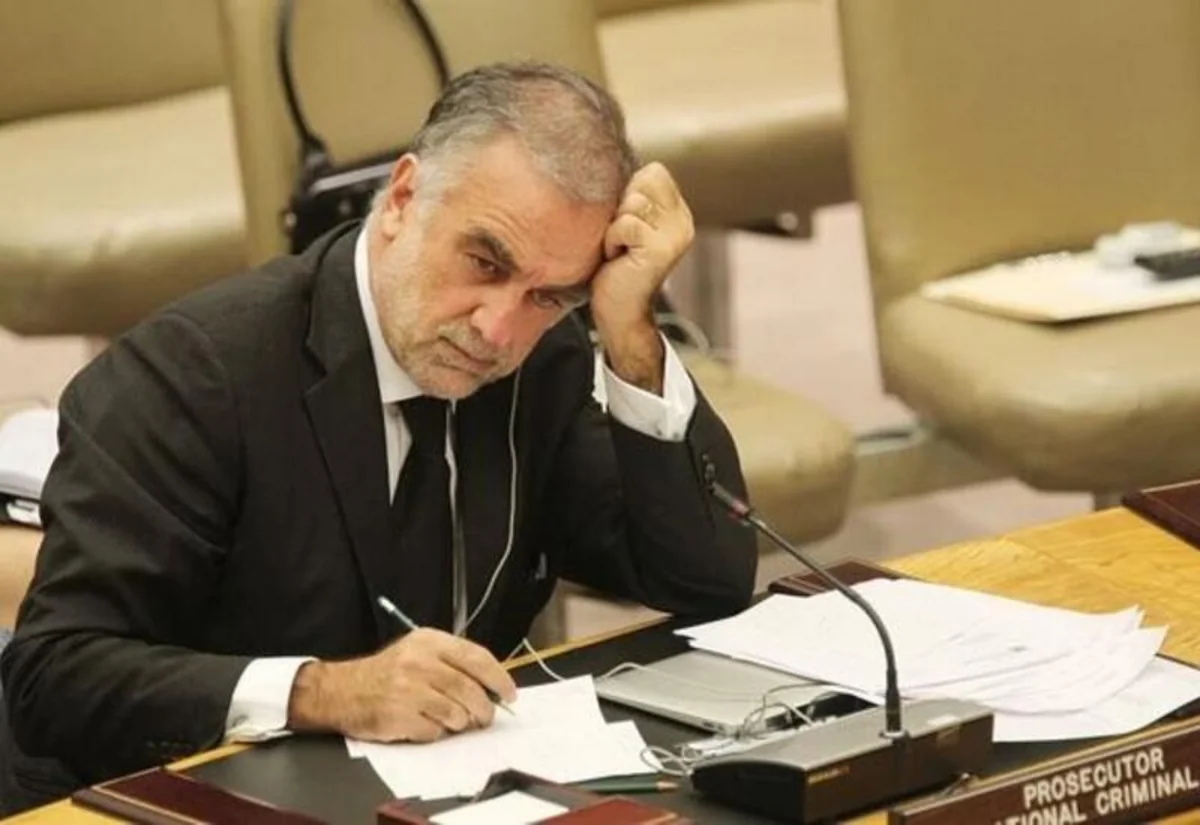
In this regard, the article pays special attention to the activities of the former prosecutor of the UN International Criminal Court, Luis Ocampo.
It notes that the ICC, an institution created on the promise of ensuring impartial justice, is experiencing the most turbulent period in its 24-year history.
"It is against this backdrop that the case of Luis Moreno Ocampo, the court's first chief prosecutor, deserves closer scrutiny than it has received so far. Not as an indictment of the ICC itself, but as a warning about what happens when a weakened institution's authority becomes available for private rent," the author notes.
The article recalls that Ocampo headed the Office of the Prosecutor from 2003 to 2012. His tenure in this post is mostly remembered for failed cases, and audits revealed shortcomings in his prosecutorial activities.
The article also cites a recent publication in Newsweek by Ilan Berman, a representative of the American Foreign Policy Council, in which the latter noted that Ocampo "attracted criticism during his tenure" and "has continued to court controversy since leaving the ICC". His controversial intervention in the conflict between Armenia and Azerbaijan was also given as an example.
The article also mentions Ocampo's financial activities after leaving the post. In particular, it cites the results of an investigation by European Investigative Collaborations and Der Spiegel, which established that during his tenure as chief prosecutor and after leaving the ICC, he managed offshore structures registered in Panama and the British Virgin Islands. In addition, shortly after he left office, tens of thousands of dollars were transferred to him through Swiss accounts.
Later, Ocampo signed a consulting contract, which, according to the article, was valued at $3 million plus $5,000 for each working day, with Libyan oil magnate Hassan Tatanaki, who financed the armed formations of General Khalifa Haftar, accused of extrajudicial executions.
"Asked to explain the arrangement, Ocampo said simply that his Hague salary had not been enough," the article says.
The author notes that it was precisely against the background of this story, related to the commercial use by the former ICC chief prosecutor of his professional connections and reputation, that Ocampo subsequently became involved in the situation around Karabakh.
The article states that this story began in August 2023, when Ocampo accepted an assignment from representatives of the Armenian separatist forces in the Karabakh region of Azerbaijan and other individuals connected with Armenia, after which he came forward with accusations against Azerbaijan.
Ocampo himself later admitted on social media that the opinion he prepared was commissioned by the self-proclaimed "president" of the now-liquidated separatist regime in Karabakh. The author recalls that this entity was created in the 1990s on the territory of Azerbaijan with the support of Armenia.
After this, Ocampo accused Azerbaijan of committing serious violations against the Armenian population of the region, including using the formulation "genocide".
"This was not an isolated remark," the author notes.
The article indicates that in the following months, Ocampo repeatedly echoed similar accusations against Baku in his interviews, op-eds, and public speeches, essentially conducting a prolonged campaign of accusations against Azerbaijan.
At the same time, as noted in the article, this story took a new turn after the publication of video recordings featuring Ocampo by the Azerbaijani publication Minval Politika on April 30, 2026.
In these recordings, Ocampo claims that a former assistant to the ex-head of the EU foreign policy service, Josep Borrell, is now "working for me" in the European Parliament. According to Ocampo, this person is engaged in putting pressure on the President of the European Commission, Ursula von der Leyen, as well as advancing a case in the Court of Justice of the European Union in order to achieve the cancellation of the energy partnership between the EU and Azerbaijan.
Furthermore, they include the remarks of Ocampo's son, Tomas, saying that the goal of this network is the removal of Armenian Prime Minister Nikol Pashinyan from power. According to him, this should take place in coordination with Armenian lobbying organizations in the US that oppose Pashinyan's peace policy towards Azerbaijan.
"Whatever the provenance of the footage, its substance resolves a question that should never have needed to be resolved: a paid, coordinated influence campaign is not legal expertise, however many Hague credentials sit atop its letterhead," notes Liberium.
At the same time, the author emphasizes that the stated circumstances should not be viewed as a criticism of international criminal justice as such. According to him, the majority of ICC employees perform their work conscientiously, and the need to hold those guilty of mass crimes accountable remains relevant.
Meanwhile, the article notes that it is precisely the authority of the ICC that determines the professional and political value of former court employees, including Ocampo. The author believes that the weakening of this authority creates opportunities for its use for private interests.
The author also draws attention to the fact that the ICC does not have its own police force and depends on member states in matters of arresting suspects. Critics of the court, the article says, point out that in more than two decades, the ICC has handed down fewer than 15 convictions, and the majority of the accused have been citizens of African countries.
In the conclusion, the author suggests that the ICC consider additional rules regulating the activities of former prosecutors and judges after the end of their tenure, so that the authority gained as a result of working in the court cannot subsequently be used for commercial or political purposes.
Author