Baku 20° C
Katsuya Watanabe: Azerbaijan's transport and green energy projects draw Japanese interest — Interview
- 19 October, 2026
- 12:02
Stay up to date with the top news!
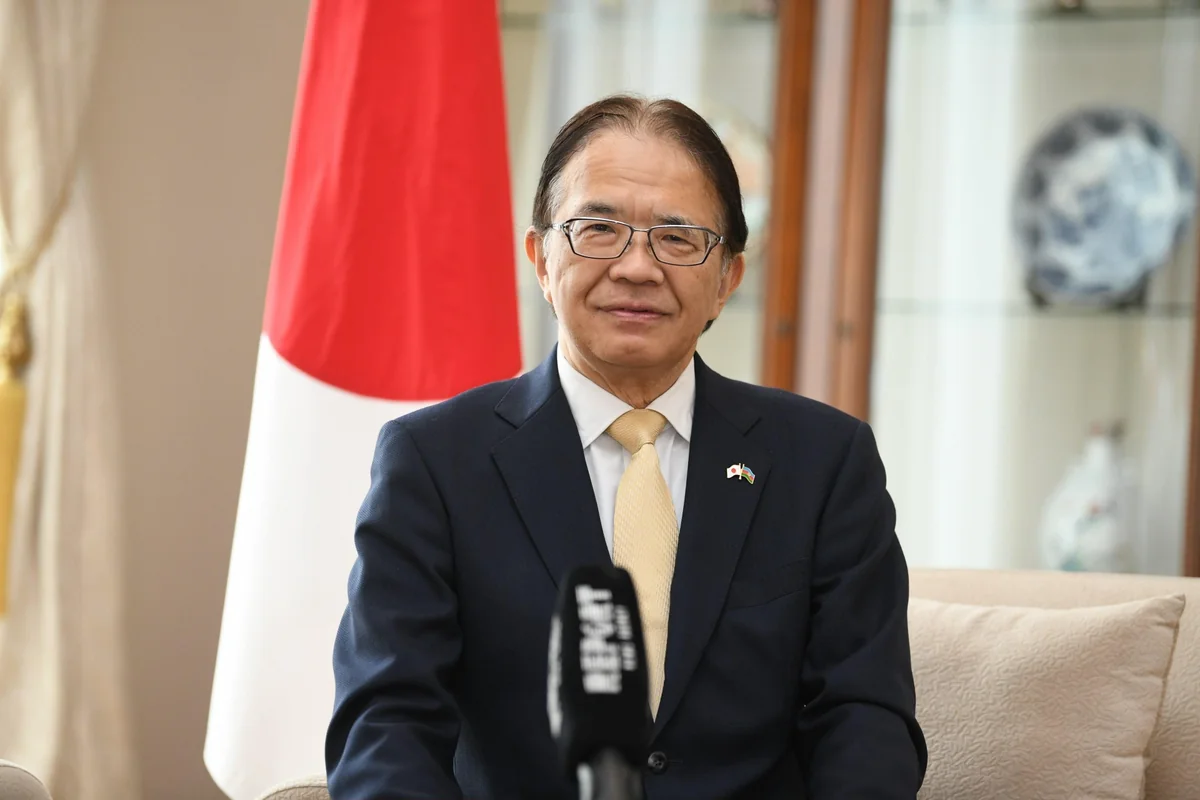
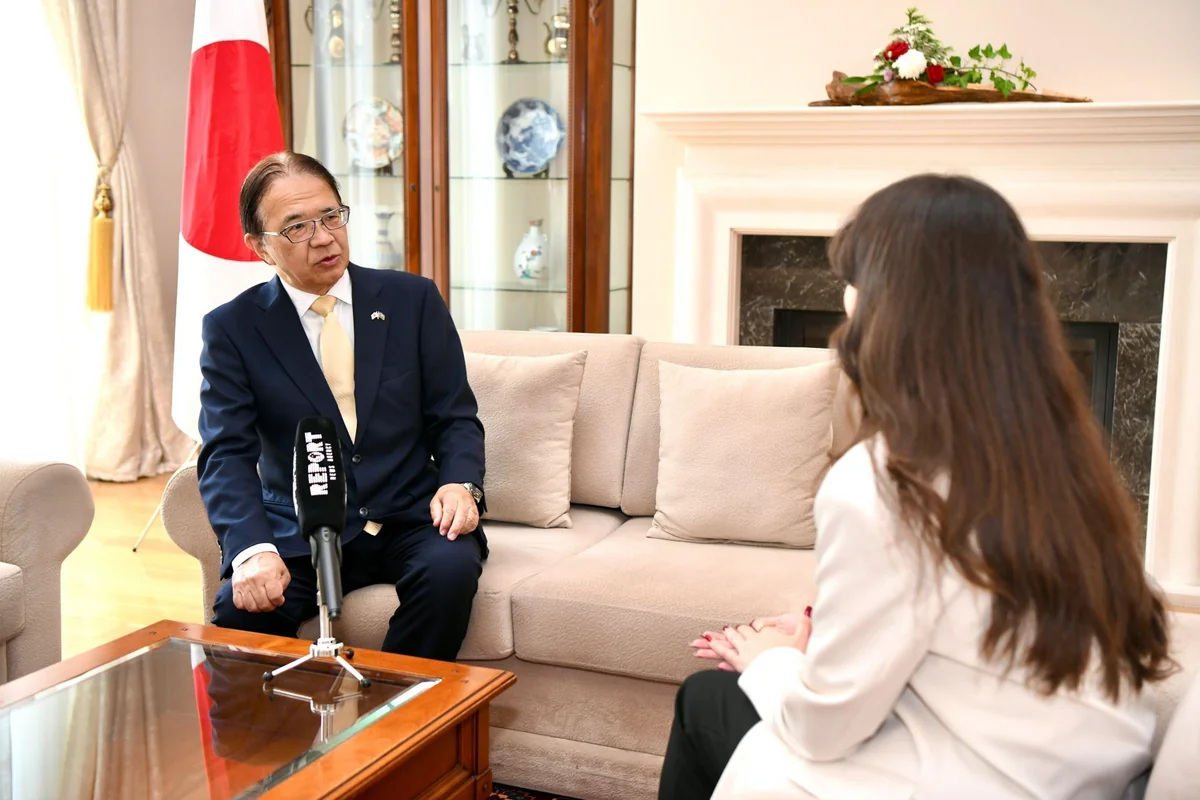
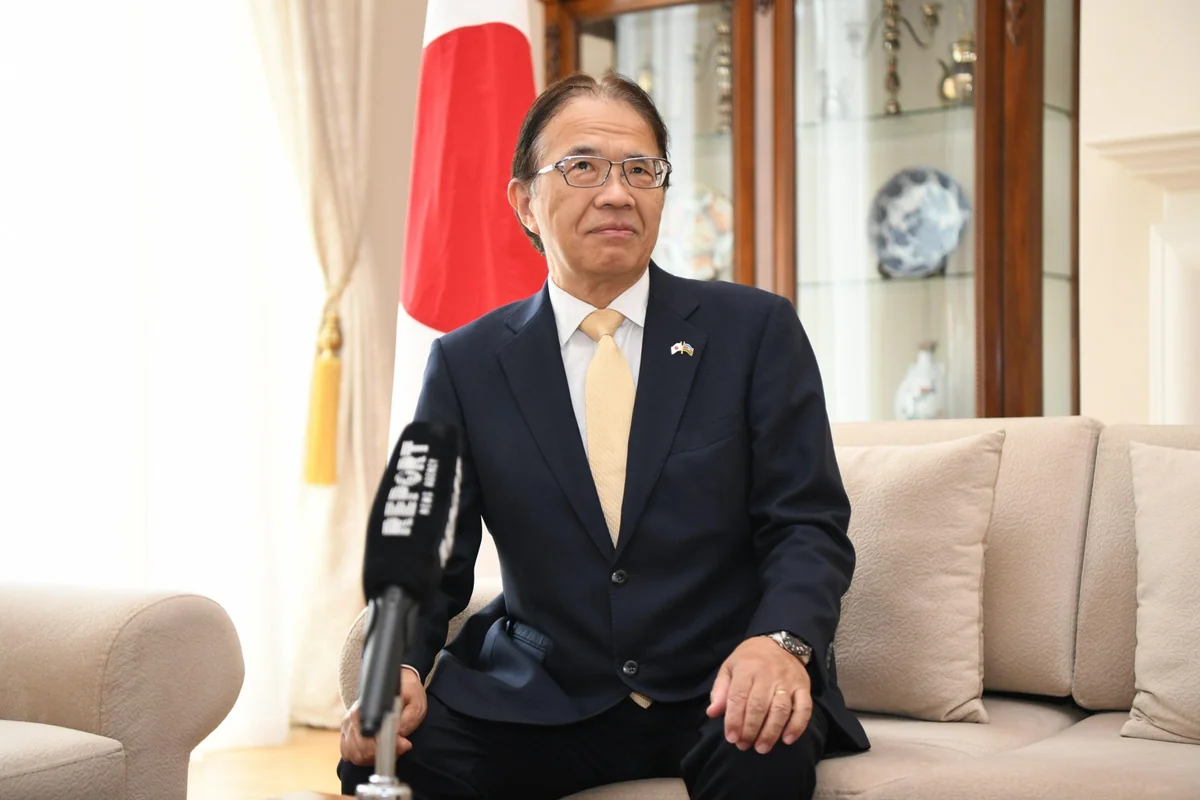
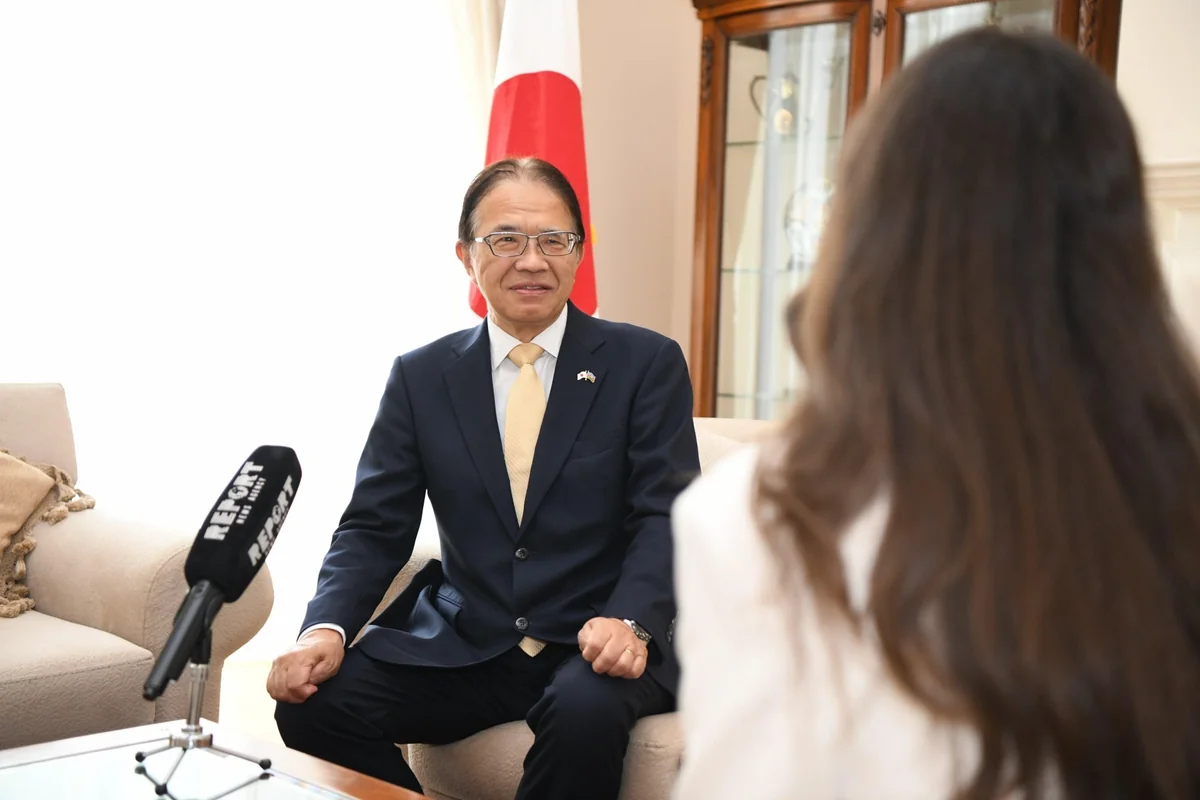
Today, Azerbaijan pursues a multi-vector foreign policy. One of the key areas of this policy is expanding cooperation with Asian countries, including Japan. Japanese businesses have long been present in Azerbaijan and are actively involved in the country's energy projects. In 2027, Azerbaijan and Japan will mark the 35th anniversary of the establishment of diplomatic relations. The two countries intend to expand their existing political and economic ties with a view to deepening bilateral cooperation. In an interview with Report, Japan's Ambassador to Azerbaijan Katsuya Watanabe spoke about how relations between the two countries are developing today and their plans for the future.
Mr. Ambassador, how do you assess the current level of political dialogue between Tokyo and Baku?
Since the establishment of diplomatic relations in 1992, our countries have maintained close political dialogue based on mutual trust for more than 30 years. We believe that, thanks to consistent reciprocal visits by high-ranking officials and political consultations, dialogue between the two countries has continued to deepen.
Azerbaijani Foreign Minister Jeyhun Bayramov's visit to Japan in June this year provided a very useful opportunity to reaffirm the mutual desire to deepen bilateral cooperation across a wide range of areas, including the economy. The importance of continuing active and substantive political dialogue between the two countries was also reaffirmed.
During the meeting of the foreign ministers, there was a broad exchange of views on the situation in the Indo-Pacific region, the Middle East, Ukraine and the South Caucasus, as well as on challenges facing the international community. We attach great importance to deepening dialogue and cooperation between our two countries at the international level as well.
As far as bilateral relations are concerned, it is important to consistently translate the political dialogue our countries have conducted to date into concrete cooperation. In particular, amid instability in the Middle East, cooperation across a wide range of areas, including energy security, is becoming increasingly important for Japan. In addition to discussing stable supplies of crude oil from Azerbaijan, the sides exchanged views on areas in which the two countries could expand cooperation in the future, including decarbonization, transport links and connectivity across the Caspian Sea, as well as investment.
The sides also agreed to accelerate negotiations with a view to completing work on the agreement on the promotion and mutual protection of investments as soon as possible. We expect the deepening of political relations to produce concrete results in the economic sphere as well.
It is important to maintain the positive momentum created by Foreign Minister Jeyhun Bayramov's visit to Japan in June, continue dialogue through reciprocal visits by high-ranking officials and regular political consultations, and develop cooperation across a wide range of areas, including energy, the economy, investment, transport connectivity, and peace and stability in the South Caucasus.
In 2027, our two countries will mark an important milestone - the 35th anniversary of the establishment of diplomatic relations. We intend to use this opportunity to further strengthen our friendly relations based on mutual trust.
Which areas of bilateral cooperation between Japan and Azerbaijan do you consider the most promising in the coming years?
I believe Japan and Azerbaijan have broad opportunities to develop bilateral cooperation in various areas, including politics, the economy, culture, education and people-to-people contacts.
For example, in the economic sphere, Japanese companies are involved in the development of the Azeri-Chirag-Gunashli (ACG) oil field and the Baku-Tbilisi-Ceyhan (BTC) pipeline project. The energy sector, particularly the oil and gas industry, will continue to be one of the promising areas of cooperation.
Before the situation in the Middle East deteriorated, Japan relied heavily on imports from countries in that region for its crude oil supplies. In an effort to identify alternative sources of supply, negotiations were conducted with various countries, and in May this year, following the escalation of the situation in the Middle East, Azerbaijani oil was delivered to Japan for the first time. This development received extensive coverage in the Japanese media as a symbol of the friendly relations between our two countries.
In addition, the Azerbaijani government's ambitious green growth initiatives and its policy of transforming the country into a regional logistics hub are also attracting the interest of Japanese companies.
Cooperation in tourism is also expected to develop, including through the wider dissemination of information about Azerbaijan via audiovisual media and other channels. In 2026, a Japanese television series filmed in Azerbaijan began airing, and as a result, interest in the country is gradually growing in Japan.
Azerbaijan introduced a visa-free regime for Japanese citizens from July 1, 2026, to July 1, 2027. How do you think this will affect tourism, business ties and contacts between citizens of the two countries? Could Japan, in turn, consider further simplifying visa procedures for Azerbaijani citizens?
We believe the Azerbaijani government's decision to waive visa requirements will contribute not only to the development of tourism but also to an increase in travel between the two countries for various purposes. We expect this decision to make a significant contribution to the further expansion of economic, people-to-people and cultural ties between our countries.
As for Japanese visas, the formation in Japan of a "society of orderly coexistence with foreign nationals" is currently an issue attracting considerable public interest. In this regard, visa procedures need to be properly administered, taking into account migration and residence-status management, as well as the need to ensure public safety.
Therefore, at this stage, simplifying visa procedures is not on the agenda. At the same time, Japan attaches extremely great importance to developing people-to-people contacts with Azerbaijan and intends to continue strengthening exchanges between the two countries in various ways beyond visa-related matters.
What measures are being taken to increase bilateral trade between Azerbaijan and Japan? Is there potential for further expansion of bilateral trade, and which products or sectors could become its main drivers? In your view, which Azerbaijani products and industries have the greatest potential to enter the Japanese market?
At present, iron and steel products and automobiles account for a significant share of Japanese exports to Azerbaijan, while Azerbaijan's exports to Japan include aluminum alloys and wine.
Bilateral meetings, including those held within the framework of the Joint Commission on Economic Cooperation between Japan and Azerbaijan, seminars organized by the two countries' trade and investment promotion organizations - JETRO and AZPROMO - as well as participation in events held in our countries, such as COP29, International Telecommunication Union events and the Expo in Osaka, contribute to deepening mutual understanding and increasing bilateral trade.
For example, Azerbaijan presented an impressive pavilion at the Expo in Osaka. Azerbaijani tea tastings at the pavilion helped raise awareness of the product among visitors and opened opportunities for potential business cooperation.
As for expanding trade, during my diplomatic mission in Azerbaijan, I have had the opportunity to visit many regions of the country, including on personal trips. I have seen that every region has a diverse range of distinctive local products. I believe there are many opportunities for Azerbaijani goods to enter the Japanese market in the future.
In which sectors of Azerbaijan's economy do you expect to see new Japanese investment in the coming years?
At present, the main investments are concentrated in the energy sector, particularly the oil and gas industry. At the same time, the Azerbaijani government's ambitious green growth initiatives and its efforts to transform the country into a regional logistics hub are attracting the interest of Japanese companies.
Cooperation in tourism is also expected to develop. In addition, Japanese companies are paying attention to the Azerbaijani government's measures to identify sectors of the economy attractive to private investment and to develop the mining and metallurgical industries, digital transformation, agriculture and agricultural processing, tourism and other areas.
At what stage is work on the agreement between Azerbaijan and Japan on the promotion and protection of investments, and when could it be signed? To what extent do you think this agreement could increase the interest of Japanese businesses in Azerbaijan?
Discussions are currently continuing between our countries with a view to completing negotiations on the agreement on the promotion and mutual protection of investments. Both sides are making active efforts to conclude the negotiating process as soon as possible.
We hope these efforts will contribute to improving the investment climate in both countries and increasing investment volumes.
How does Japan assess Azerbaijan's role in developing regional transport and logistics routes connecting Asia and Europe? What role could Tokyo play in developing regional transport corridors and strengthening supply chains?
We believe Azerbaijan's importance within the Middle Corridor connecting Asia and Europe is growing every year. Amid instability in neighboring countries, the South Caucasus region, with Azerbaijan at its center, is extremely important in terms of maritime, land and air transportation, logistics and the movement of people.
Azerbaijan officially participates in the summit of Central Asian heads of state, and we believe the country's role as a connecting hub with Central Asia will continue to strengthen.
During Foreign Minister Jeyhun Bayramov's visit to Japan in June, the sides agreed on the importance of cooperation along the Caspian route to strengthen connectivity within the region and beyond. We expect activities in this area to expand further, with "strengthening connectivity" remaining the key concept.
Japanese companies have been actively involved in projects in Azerbaijan's oil and gas sector for many years. Does Japan plan to expand cooperation with Azerbaijan in the oil and gas and petrochemical industries?
Japanese companies have been involved in the development of the ACG oil field and the BTC pipeline project for many years. The energy sector, particularly the oil and gas industry, will continue to be one of the promising areas of cooperation.
Human resource development and exchanges of specialists between companies within the framework of these projects are also very positive examples of cooperation between the two countries.
As far as we are aware, in addition to the ACG field, Azerbaijan has many promising areas both onshore and offshore, while exploration work is underway at various blocks. We hope negotiations between interested Japanese companies, SOCAR and oil and gas companies from various countries will continue successfully and lead to the participation of Japanese companies in new projects.
We are also aware of Japanese companies' interest in the petrochemical sector. Discussions on their possible participation are being conducted on a commercial basis. We hope the participation of Japanese companies will materialize in a way that is beneficial and desirable for both countries.
Given the active development of renewable energy in Azerbaijan, are Japanese companies considering projects in this field? Is the Japanese government prepared to provide financial support for such initiatives?
As part of Azerbaijan's ambitious green growth initiatives, and taking into account discussions held at COP29 between the relevant Azerbaijani institutions, Japanese companies and other organizations, the possibility of implementing a number of relevant projects is being considered.
The use of the Joint Crediting Mechanism (JCM), whose first Joint Committee meeting is currently under discussion, is also expected to give impetus to the implementation of these projects and the attraction of investment.
When is the first meeting of the Azerbaijan-Japan Joint Committee on the Joint Crediting Mechanism (JCM) expected, and what specific decarbonization projects could be considered within its framework? Could the JCM become a platform for attracting Japanese investment and technologies to renewable energy and emissions-reduction projects in Azerbaijan?
The joint press statement issued following the foreign ministers' meeting during Jeyhun Bayramov's visit to Japan in June also noted that the two countries had agreed to hold the first meeting of the JCM Joint Committee as soon as possible and promote cooperation in the field of decarbonization.
In the future, the JCM is expected to contribute to expanding measures to reduce greenhouse gas emissions in Azerbaijan, implementing green technology projects by Japanese companies, increasing investment, and further stimulating economic activity between the two countries.
Could you tell us about the participation of Japanese companies in the reconstruction and development of Azerbaijan's liberated territories? Is there potential for new projects? In which areas - including agriculture, energy, infrastructure, digitalization and others - do you see the greatest prospects for cooperation?
In 2021, Japanese company TEPSCO developed a master plan for the development of the power sector in these territories, envisaging the use of renewable energy sources and the smart city concept.
I have also participated in familiarization trips for representatives of the diplomatic corps organized by Azerbaijan's Ministry of Foreign Affairs, which enabled me to personally observe the situation on the ground. I witnessed the large-scale infrastructure work being actively carried out by the Azerbaijani government, including the restoration of roads and substations and the construction of residential buildings and airports.
The stability and independent development of the South Caucasus are important for the entire international community, including Japan. We intend to consider forms of cooperation that could contribute to achieving these goals.
Does Japan plan to provide further technical and financial assistance to Azerbaijan in the field of demining through the Azerbaijan Mine Action Agency (ANAMA)?
First of all, we would like to express our deep respect for the efforts of ANAMA and other relevant Azerbaijani authorities in the field of demining.
Japan fully recognizes that mine-contaminated territories cover significant areas, that clearing them requires substantial resources, including time, and that international cooperation in this field is of vital importance.
We intend to continue gathering information on the needs of the Azerbaijani side, the progress of demining operations and the nature of support provided by the international community so that, when necessary, we can consider possible forms of Japan's participation in this process.
What new educational, cultural and youth exchange programs between Azerbaijan and Japan are planned for the near future? Is Japan considering launching new scholarship programs for Azerbaijani students?
Japan implements various educational and scholarship programs aimed at attracting talented individuals from Azerbaijan and other countries around the world. The Embassy of Japan also conducts an annual selection process for Japanese government scholarships.
Thanks to these programs, many Azerbaijani students have had the opportunity to study in Japan. At present, several students from Azerbaijan are continuing their studies at various Japanese universities.
In addition, Azerbaijani citizens who have gained educational experience in Japan are actively working in Azerbaijan's government institutions, private companies and educational establishments, as well as in Japanese companies and other fields.
We hope that an increase in the number of people working in these areas in both countries will contribute to the further expansion of contacts between the citizens of Japan and Azerbaijan.
Author

Photo