
 Baku 13° C
Work on first phase of Black Sea Energy project completed
- 23 November, 2026
- 14:16
Stay up to date with the top news!
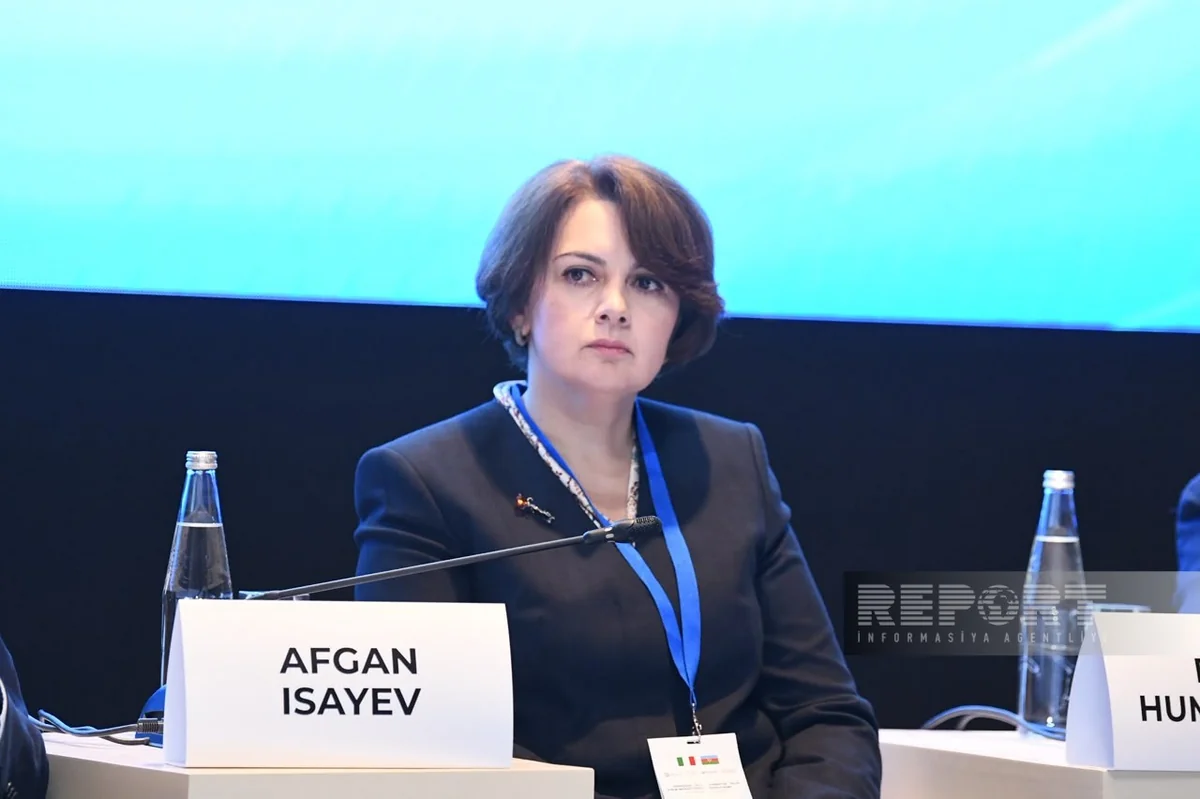
Work on the first phase of the Caspian Sea-Black Sea-Europe submarine cable project (Black Sea Energy) has been successfully completed, Deputy Director of the State Agency for Renewable Energy Sources Rana Humbatova said at the Azerbaijan-Italy Business Forum in Baku today.
Report quotes her as saying the project's feasibility study was prepared by Italian consulting company CESI.
"They are involved not only in preparing the feasibility study for this project but also for the Central Asia-Azerbaijan Green Energy Corridor project involving Kazakhstan, Uzbekistan and Azerbaijan. The results of the feasibility study were received early this year. After all partner countries in the region had thoroughly reviewed the findings, it was decided to present them for the first time at the 'From Feasibility Study to Implementation' forum, held in Baku on October 22 this year," Humbatova said.
The deputy director noted that work on the first phase had been successfully completed and that the project was now moving on to its second phase.
"Following European Commission President Ursula von der Leyen's visit to Baku, support for the project was reaffirmed. It also received backing under the EU-Azerbaijan Connectivity Partnership and was included in the EU's 2024 Ten-Year Network Development Plan (TYNDP). The second phase will be divided into two main components. The first is the Azerbaijan-Georgia onshore corridor, while the second involves a high-voltage direct current (HVDC) submarine cable between Georgia and Romania, with another onshore section running from Romania to Hungary," Humbatova emphasized.
She added that the first stage, involving conceptual design and the development of technical specifications, would define operational requirements, security and integration needs, and establish the engineering basis for future tenders. The second stage would involve preparing contract packages and determining the project implementation schedule, procurement approach and risk management measures.
"I would also like to note that the final investment decision on this project is expected to be made within the next two years, by the end of 2029," she said.
In conclusion, Humbatova noted that once the project is implemented, around 20 terawatt-hours of clean energy will be exported from Azerbaijan to the European Union, helping reduce emissions by 3.6 million tonnes of CO2 equivalent.
Author