Baku 21° C
Azerbaijan calls for stronger voice for small island states in global climate policy
- 07 October, 2026
- 15:12
Stay up to date with the top news!
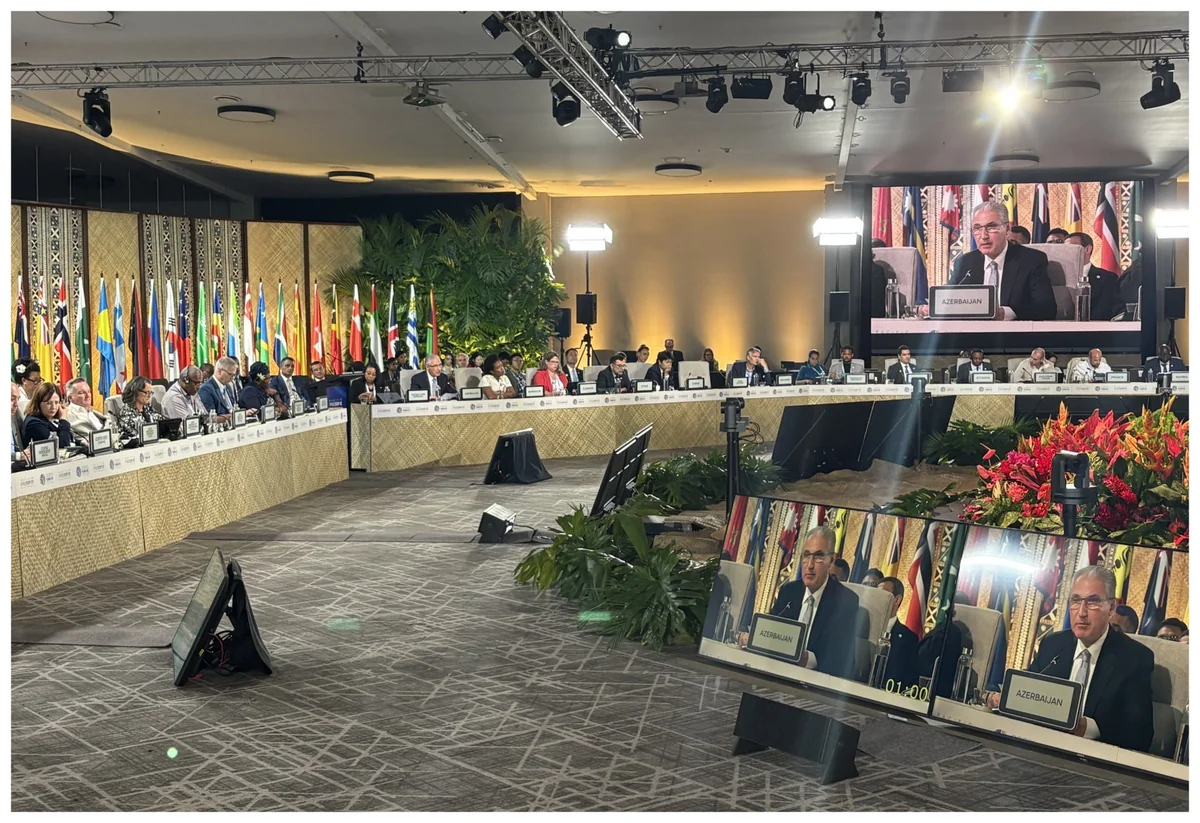
Azerbaijan has consistently advocated ensuring that the voices of those most affected by the climate crisis, including Small Island Developing States (SIDS), are not only heard but also meaningfully reflected in global climate policy, Azerbaijan's Presidential Representative on Climate Issues Mukhtar Babayev said at the Pre-COP31 event in Fiji, co-hosted by Fiji, Tuvalu and Australia.
According to Report, Babayev said it was particularly important to ensure that the specific vulnerabilities faced by Small Island Developing States received adequate attention on the international agenda and that these countries were provided with the support needed to address their particular challenges.
He noted that the first decade of the Paris Agreement had already been completed, adding that its policy cycle had been made fully operational at COP29 and further progress had been achieved at COP30.
Babayev said all the mechanisms needed to deliver ambition and implementation were now in place and that the next decade should become a genuine phase of implementation.
He said COP31 was being clearly positioned as an implementation-focused COP, with the presidency concentrating on the principles of Dialogue, Consensus and Action.
According to Babayev, the Action Agenda links implementation with finance, energy, resilience, industrialization and other areas. He said COP31 should therefore become an implementation COP not simply by asking countries to do more, but by making it more feasible for them to deliver on commitments they had already undertaken.
He stressed that implementation should not be measured only by the presentation of ambitious plans already in place, adding that the key issue was whether countries had the necessary capacities and enabling conditions to turn those plans into reality.
Babayev said financing, along with other means of implementation, must be ensured to enable the full delivery of Nationally Determined Contributions (NDCs).
He added that COP31 should maintain the momentum generated by the climate finance outcomes achieved at COP29.
Babayev said the New Collective Quantified Goal on Climate Finance (NCQG) could not and should not remain merely an aspirational target on paper, stressing that it was not only a financial objective but also a test of the effectiveness and credibility of the multilateral climate process, including the Paris Agreement.
He also said COP31 should address challenges related to the Global Goal on Adaptation, including those concerning indicators.
Babayev added that Baku, Belém and Antalya should be united around a common objective.
He said COP31's Action Agenda should help connect countries' priorities with finance, investment, technology and partnerships and accelerate implementation on the ground.
According to Babayev, it should contribute to delivering decisions already taken and transform formal processes into solutions focused on concrete action.
Author