
 Baku 15° C
France presidential elections: Le Pen's fourth bid, but against whom?
- 10 July, 2026
- 12:17
Stay up to date with the top news!
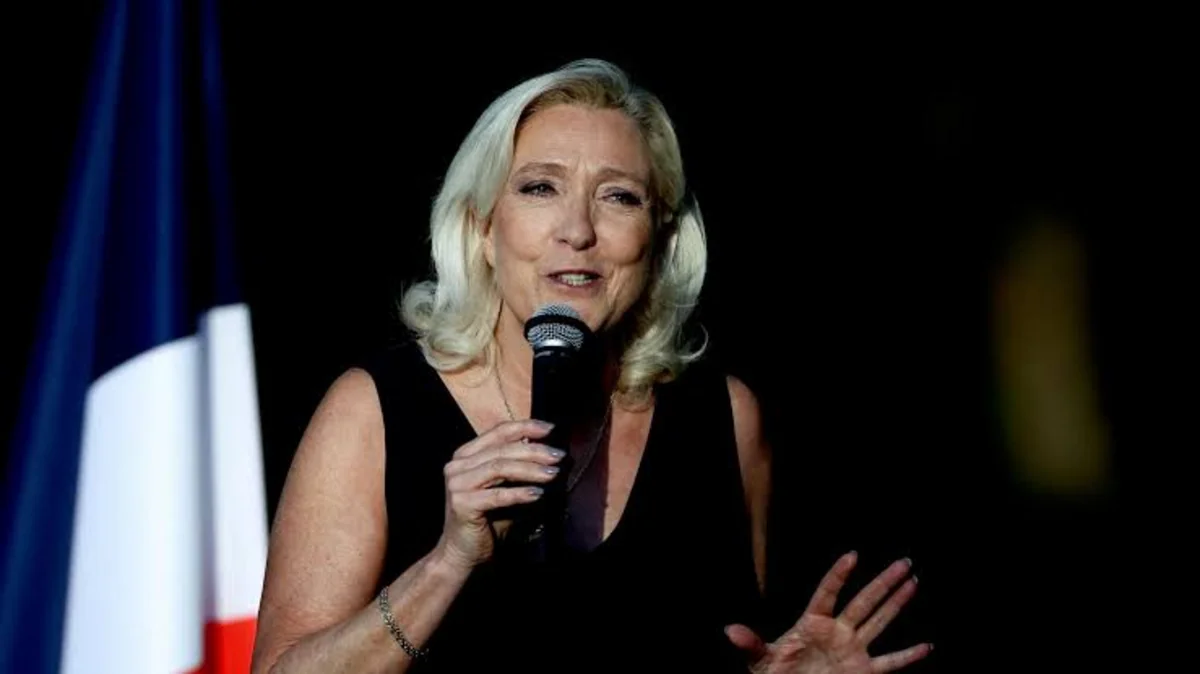
When Marine Le Pen announced her intention to run for the French presidency for a fourth time in the 2027 election, the news was not the candidacy itself - that had been widely expected.
As Report's European bureau notes, the real question in recent months was whether the leader of the National Rally would be able to take part in the election at all after a court ruling barred her from running for public office.
That is why French and international media closely followed the Paris Court of Appeal hearing on July 7.
Once the court cleared the way for Le Pen's candidacy, the legal uncertainty came to an end. Almost immediately, however, it gave way to political uncertainty.
The main question is no longer about Le Pen
Just a few days ago, French politics was focused on the fate of one politician. Now the discussion has shifted to the fate of the entire presidential race.
Following Le Pen's announcement, the key question has become: who will be able to challenge her in the second round?
This is where the main intrigue of the 2027 election begins.
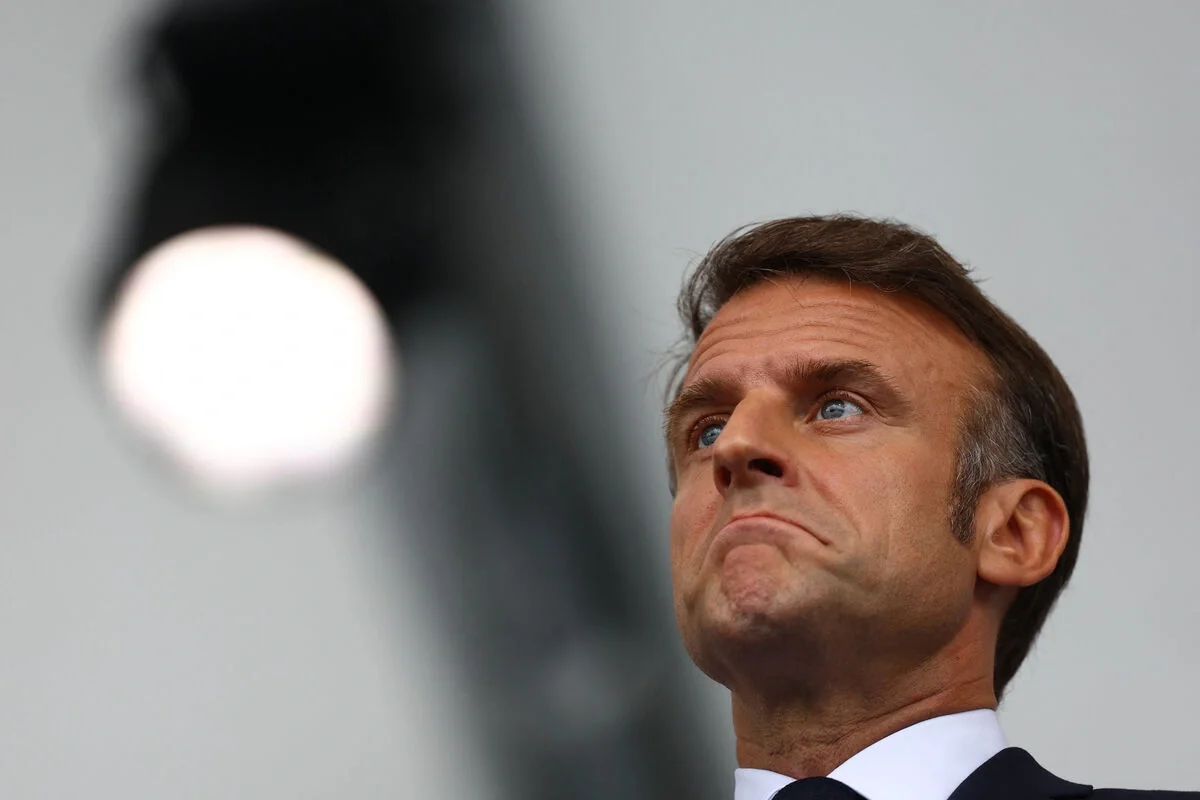
For the first time in a decade, France will elect a president without Emmanuel Macron on the ballot. The constitution prevents him from seeking a third consecutive term, and no politician has yet emerged who can automatically unite the centrist electorate around a single candidacy.
Since 2017, Macron has largely shaped French politics. Virtually every major election in recent years has been defined by a contest between his political camp and the far right.
That political framework is now disappearing.
Le Pen remains one of the country's best-known politicians and, according to most opinion polls, is once again among the frontrunners in the presidential race. But for the first time in years, the debate is no longer only about how to stop her, but also about who can emerge as a credible alternative.
Le Pen has already contested three presidential elections. In 2012, she won 17.9% of the vote and finished third, behind François Hollande and Nicolas Sarkozy, failing to advance to the runoff. In 2017, she secured 21.3% in the first round, narrowly trailing Macron's 24%, before losing the second round with 33.9% against Macron's 66.1%. Five years later, in 2022, she again finished second in the first round with 23.15%, compared with Macron's 27.84%. In the runoff, she improved her result to 41.46%, but it was still not enough to defeat Macron, who won with 58.54%.
Only a few years ago, many believed Le Pen's biggest obstacle was the so-called "Republican front" - the willingness of voters from across the political spectrum to unite against the far right in the second round.
Today, however, the question is different: unite behind whom?
France's political center still lacks an obvious candidate, while both the right and the left continue searching for leaders of their own. Meanwhile, Le Pen enters the campaign as a politician who no longer needs to prove either her name recognition or her claim to power.
For that reason, the court's decision did not so much reshape the presidential race as restore what had long been considered its most likely scenario.
The central question in French politics is no longer whether Marine Le Pen will be able to run. It is who will emerge as the unifying political figure of the post-Macron era.
According to a poll conducted immediately after the court's ruling was announced, Marine Le Pen would win both the first and second rounds of France's presidential election.
The survey found that Le Pen could receive 35% of the vote in the first round, provided Renaissance party leader Gabriel Attal, who enjoys 8% support, and former Prime Minister Édouard Philippe, leader of the center-right Horizons party with 14% support, both remain in the race. Under that scenario, Jean-Luc Mélenchon, leader of La France Insoumise, would finish second with 16%.
If Attal were to withdraw in favor of Philippe, the Horizons leader would rise to 20%, overtaking Mélenchon but still trailing Le Pen, who would receive 34%.
In the second round, Le Pen could count on 51% of the vote, enough to become president of France on her fourth attempt.
However, that reflects the political landscape today. Her opponents still have time to unite behind a candidate capable of preventing Le Pen from entering the Élysée Palace.
Brussels prepares for every possible outcome
For the European Union, France's 2027 presidential election carries particular significance.
France remains one of the bloc's key members, with its position influencing issues ranging from European defense and support for Ukraine to budget policy and the future of European integration.
Several years ago the main question in European institutions was "How to keep Le Pen from coming to power?". but the debate has now changed.
In Brussels, policymakers are increasingly debating what France might look like under a right-wing presidency and whether it would resemble Giorgia Meloni's Italy or adopt a more confrontational approach similar to Viktor Orbán's Hungary.
European institutions and EU governments no longer view a right-wing victory in France as an impossible scenario.
As a result, preparations are no longer focused solely on the question, "What if Le Pen wins?" but increasingly on the more practical issue of how to work with France under new political leadership.
That is why the outcome of the 2027 election will matter far beyond France's borders: it will determine not only the country's next president but also the balance of power within the European Union.
Author