Baku 18° C
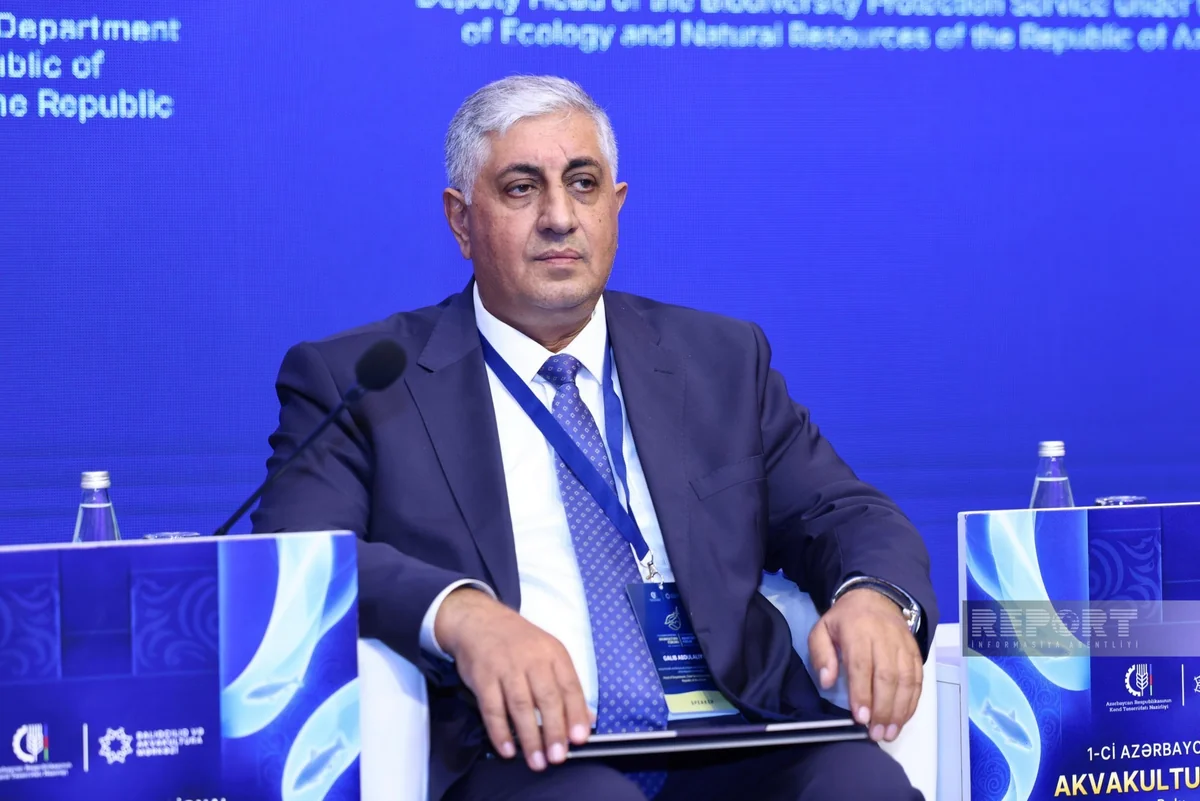
Galib Abdullayev: Fish farms should undergo special monitoring
- 05 November, 2026
- 16:08
Stay up to date with the top news!
Various biosecurity standards should be observed when selecting locations for aquaculture facilities, Galib Abdullayev, Head of the Animal Health and Biosecurity Department at the Azerbaijan Food Safety Agency (AFSA) and the country's Chief Veterinary Inspector, said at the 1st Azerbaijan Regional Aquaculture Forum in Baku, Report informs.
Abdullayev highlighted that under the One Health approach, it is essential to ensure both the health of farmed fish and the health of the surrounding population simultaneously.
"The largest river basin in our country is the Kura-Araz river system, which extends for more than 500 kilometers, and Azerbaijan has more than 800 rivers of various sizes. There are also several lakes with a volume exceeding 10 million cubic meters, and, if I am not mistaken, their number is more than 10. All these are our natural resources. However, certain requirements must be observed when establishing aquaculture facilities that make use of these water resources," he said.
The official noted that live organisms, primarily fish, kept at aquaculture facilities must undergo special monitoring for diseases under a dedicated monitoring regime.
"In recent years, exports of Azerbaijani aquaculture products, particularly fish species, to European countries have become a reality. Currently, efforts are underway to export fish raised at the Hakari fish farm in the Lachin district to CIS countries. Discussions are ongoing, various details are being clarified, and preparing and submitting an extensive report is required to obtain the necessary permits," he said.
He added that one of the key requirements for the report is an assessment of antimicrobial levels in terms of antimicrobial resistance, as well as an examination of residues of harmful substances, including various pharmaceutical preparations and heavy metals.
Abdullayev also noted that a report must be submitted containing the results of regular disease monitoring
Author