
 Baku 21° C
From pearl diving to skyscrapers: Dubai's tourism route
- 31 December, 2025
- 11:54

Stay up to date with the top news!
At first glance from the airplane window, the view resembles the stillness of a desert: endless stretches of sand, scattered residential areas, and thin lines of roads connecting them. But within moments, the landscape transforms beyond recognition. The restraint of the desert gives way to one of the fastest-growing megacities in the world. Even before landing, Dubai seems to send a clear message: everything here happens quickly - and on a scale that takes time to absorb.
This trip, organized at the invitation of Dubai's Department of Economy and Tourism, offered a chance to see the city not only as a tourist destination, but as a carefully structured system - through its services, urban environment, culture, and the rhythm of everyday life.

Any introduction to Dubai begins in Downtown, where the city's most recognizable symbols are concentrated. This is where Dubai Mall is located - the largest shopping and entertainment complex in the emirate and one of the most visited in the world. Long ago, it outgrew the idea of a traditional mall. Today, Dubai Mall feels more like a self-contained urban organism: hundreds of shops and restaurants, art spaces, exhibitions, and leisure zones merge into a continuous stream of life that doesn't pause, day or night. This constant movement is one of Dubai's defining traits.

Rising above it all is the Burj Khalifa - the city"s architectural emblem and the tallest building on Earth. Visiting its observation decks is an experience in itself. From above, the city's strict grid of skyscrapers stretches toward the horizon, where it meets the vast, untouched desert. Fees start at around 199 dirhams ($55) for access to the 124th–125th floors, while premium options with enhanced services and higher levels can reach 399 dirhams ($109) or more.
An underwater world in the city center
One of the most memorable stops is the Dubai Aquarium & Underwater Zoo, located inside Dubai Mall. Walking through its glass tunnel, with sharks, rays, and exotic fish gliding overhead, creates a sense of stepping outside everyday reality. It perfectly reflects Dubai's philosophy: technology here doesn"t replace nature - it reframes it in a bold, futuristic way.

The penguin enclosure is especially striking. In the heart of a desert metropolis, a fully controlled polar microclimate has been created for birds native to cold regions. The contrast is dramatic and deliberate: outside, heat and sand; inside, ice and snow. Entry tickets to Dubai Aquarium & Underwater Zoo generally range from 275 to 309 dirhams ($75–85), depending on the package.

Dubai increasingly positions itself as a testing ground for new leisure formats. House of Hype is a good example - a space where digital art, interactive installations, and entertainment blend into a single immersive experience aimed at a younger, experience-driven audience. Prices typically fall in the 200–300 dirham range ($55–82).

Food plays a central role in Dubai's cultural image. One of the city's most iconic venues is CÉ LA VI Dubai, located 220 meters above ground in the Address Sky View complex. Modern Asian cuisine, signature cocktails, and a carefully curated soundtrack turn dinner here into a full evening experience.

With panoramic views of the Burj Khalifa, sunsets, and the city's nighttime pulse, the restaurant has become part of Dubai's visual and social identity. It has been featured in the MICHELIN Guide for several consecutive years. Main courses typically cost between 100 and 250 dirhams ($28–68), with drinks priced separately.
Outside the downtown core, Dubai's contrasts become even more apparent. Miracle Garden is a true floral oasis, where millions of living plants form large-scale installations - arches, castles, airplanes, and fairy-tale figures - all redesigned each year. The idea that a desert climate is a limitation simply doesn't apply here. Tickets usually cost between 100 and 150 dirhams ($28–41), and the park operates mainly from November to April.
Nearby, the Butterfly Garden offers a more intimate experience: an indoor complex housing thousands of butterflies from different climate zones. The controlled microclimate and thoughtful exhibition make the visit not only aesthetic but also educational. Entry costs around 100 dirhams ($28).

Alserkal Avenue, located in the Al Quoz industrial district, presents an entirely different side of Dubai. Home to contemporary art galleries, creative studios, foundations, and the independent Cinema Akil, it forms a vibrant cultural ecosystem far removed from the city's glossy tourist image. It is here that the other side of Dubai becomes particularly evident - more calm, intellectual, and oriented towards dialogue. Entry is free, though exhibitions, events, and screenings may require tickets. Collectors or art enthusiasts can also purchase works by contemporary artists here.

Dubai's Gastronomic Map
Dubai's multicultural character is particularly evident in its restaurant scene. Gastronomy here is not merely part of the tourist infrastructure, but a reflection of the emirate"s complex social and cultural fabric, where dozens of world cuisines and equally diverse lifestyles coexist.
21 Grams - a cozy Balkan bistro in Meyan Mall - offers traditional Balkan dishes prepared according to family recipes, with an emphasis on ingredient quality and authentic flavors. The average cost of a meal ranges from 50 to 120 dirhams ($14–33) and typically includes a main course and a drink. Its accessible format, consistent quality, and straightforward approach have made it popular with both tourists and locals. The Bib Gourmand award from the MICHELIN Guide confirms its reputation for excellent value.

Kaimana Beach at J1 Beach represents a completely different format - a Pan-Asian restaurant and beach club where tropical aesthetics meet refined gastronomy, a swimming pool, music, and a "day-to-night" concept. During the day, the atmosphere is relaxed and resort-like, becoming more energetic in the evening with music sets and a livelier crowd. The average cost of main dishes ranges from 120 to 300 dirhams ($33–82), in line with the resort segment and level of service.

Lovers of intimate and authentic spaces will appreciate Kima Izakaya in the Jumeirah Lake Towers area - a Japanese izakaya where it's customary to order several dishes for a group and share them at the table. The minimalist interior, restrained presentation, and respect for the purity of taste create a calm, almost contemplative atmosphere here, referencing the Japanese approach to food as culture. It is the attention to detail and sense of authenticity that make this place particularly attractive to those who appreciate Japanese aesthetics. Dish prices range from 40-140 dirhams ($11-39).

One of the city's most photographed locations is AURA Skypool - an infinity pool with a 360-degree panoramic view, located at a height of about 200 meters on Palm Jumeirah. This is not just a lounge space, but a full-fledged area for relaxation and recovery, offering formats for calm relaxation, yoga, and meditation with views of the city and the Persian Gulf. The contrast between height, water, and the city panorama enhances the feeling of isolation from the megacity's noise. The cost of a visit starts at about 225 dirhams ($62) and can reach 600-1000 dirhams ($163-273) depending on the time of day and the chosen package. AURA Skypool is not only a pool but also a panoramic lounge where you can come for breakfast, lunch, or evening drinks without swimming. The Indoor Lounge Experience format does not include pool access but allows you to go out on the terrace and enjoy the views. Fees start from 125 dirhams ($34). AURA Skypool also hosts yoga and wellness sessions - a format for those seeking balance, movement, and inspiring views.

Evening walks along the coastline often lead to Kite Beach - a lively urban beach with free entry. Cafes and street food vendors offer dishes and drinks at an average of 50-100 dirhams ($14-28). Even after dark, the beach doesn't go quiet: people go out for runs, volleyball courts remain active, and powerful spotlights illuminate the shoreline, creating a sense of vibrant urban space by the sea. Swimming is allowed even at night in a specially equipped area of the beach - the zone is well-lit, and safety is ensured by on-duty lifeguards. For me, as a person from Baku, the opportunity to calmly stroll along the beach in December and observe this rhythm became one of the most striking climate contrasts.

Beyond the skyscrapers: historical Dubai
However, to understand Dubai not only through taste and visual impressions but also through its character, it's important to venture beyond the modern gastronomic scene. Behind the facades of skyscrapers and resort areas hides another city - a port, trading hub shaped by the sea and caravan routes long before the oil era. It is here, in the old quarters and along Dubai Creek, that Dubai reveals itself as a place with deep historical memory, where the rhythm of life is still set by markets, boats, narrow streets, and trade.
The historic Al Fahidi (Al Bastakiya) quarter is one of the few places where the authentic atmosphere of Dubai from the late 19th - early 20th century has been preserved. Narrow streets, houses made of coral stone and clay, traditional wind towers - barjeels, which served as natural air conditioning systems, allow you to see how merchants, sailors, and craftsmen lived before the oil era. Walking around the district is free, however, entry to individual museums and cultural spaces - art centers, exhibition halls, or, for example, the Coffee Museum - usually costs from 10 to 30 dirhams ($3-9). At the same time, some exhibitions remain available for free visits. The district is suitable for leisurely walks, while entry to individual museums and cultural spaces - art centers, exhibition halls, or, for example, the coffee museum - usually costs from 10 to 30 dirhams ($3-9).

An integral part of the historical route remains the Deira district, which for decades has been the commercial center of old Dubai. It is here that the port character of the city is particularly evident: busy streets, shops, warehouses, and markets where trade is as active as it was a hundred years ago. One of the most colorful ways to get to Deira is to cross Dubai Creek on a traditional abra boat.

The cost of such a crossing is symbolic - just 1 dirham ($0.03), and it is considered the cheapest form of public transport in the city. At the same time, the short boat ride gives one of the most authentic feelings of Dubai - without the glamour and skyscrapers, but with living history, boats, and the rhythm of the old port. Deira is home to the famous Spice Souk and Gold Souk. At the Spice Souk, the air is filled with the aromas of saffron, cardamom, cinnamon, dried lemons, and oriental herbs. Small packages can be purchased from 10-20 dirhams ($3-6), while rare varieties of saffron or signature blends cost significantly more - from 100 dirhams ($28) and up. Bargaining remains an integral part of the culture here, giving the market a lively, almost theatrical atmosphere.

The Gold Souk is one of the most famous in the world. Hundreds of jewelry stores offer ornaments made of gold, platinum, and precious stones. Prices are formed based on world quotations with the addition of the craftsman's work cost, which makes pricing relatively transparent. The possibility of bargaining remains, especially when buying products with a high proportion of handwork. Even without making a purchase, a walk through the Gold Souk turns into a bright visual experience - showcases with massive necklaces and oriental patterns have long been a symbol of Dubai's trading heritage.

The historical panorama is completed by the Al Shindagha Museum, located along Dubai Creek in the old port area. This is a large museum complex created on the basis of restored historical buildings and dedicated to the history of Dubai, its trade connections, maritime heritage, and everyday life before the oil boom. The exhibitions include archival photographs, documents, and multimedia installations. The entrance ticket usually costs 15-25 dirhams ($4-7), depending on the selected pavilions.

It is in these areas that Dubai reveals itself not as a city of records and skyscrapers, but as a space of merchants, sailors, and caravan routes - a city that grew on trade, the sea, and the ability to build connections between continents. This is a history that can not only be seen but literally walked through - from the quiet streets of Al Fahidi to the bustling markets of Deira, feeling how one of the world's most dynamic cities began its journey.
Hatta - the other side of the emirate
Hatta - a mountainous region just an hour and a half drive from the ultra-modern metropolis - becomes a real discovery. Here, Dubai reveals itself from an unexpected side: instead of skyscrapers, canyons and ridges of the Hajar Mountains, instead of urban noise, the silence of stone gorges and clear air.

The turquoise waters of Hatta Dam, kayaking, hiking trails, ziplines, mountain karting, and activities in Hatta Wadi Hub form the image of the emirate as a full-fledged outdoor destination, where nature becomes part of the tourism strategy.
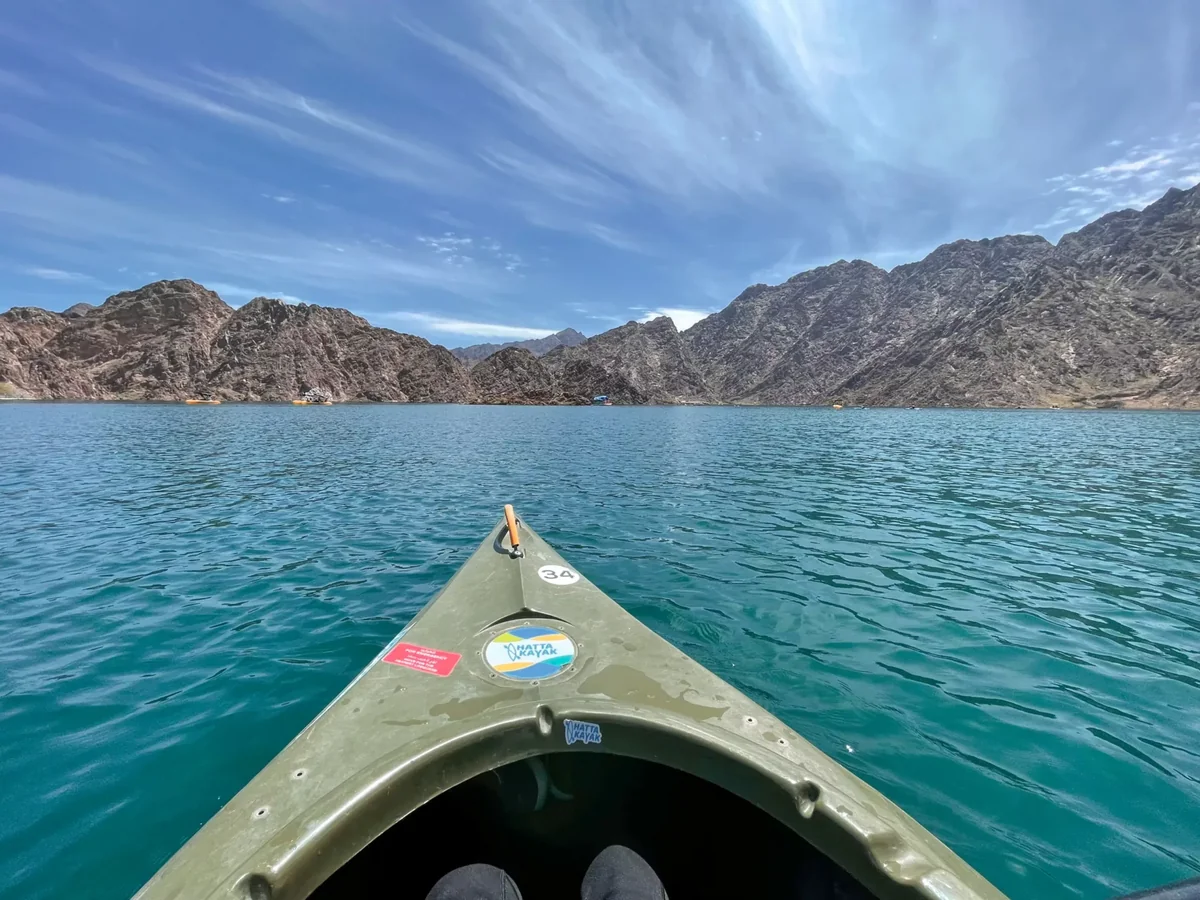
Hatta is perceived not as an excursion, but as a change of scale. Here, the city seems to retreat, allowing you to feel the terrain, distance, and time differently - slower and deeper. A special place in this route is held by the Hatta Honey Bee Garden and Discovery Centre - a unique center dedicated to beekeeping and the role of bees in the ecosystem of the mountainous region. Visitors are detailed about the life of bees, their complex social structure, the pollination process, and why the mountain climate and clean natural environment of Hatta are considered favorable for the production of natural honey.
Here you can see beehives up close, learn about traditional and modern beekeeping methods, as well as taste and purchase local varieties of honey. Depending on the type and volume, prices start on average from 40-60 dirhams ($11-17) and can reach 150-250 dirhams ($41-68) for rare and limited editions. Special emphasis is placed on ecological balance and biodiversity conservation, where bees are viewed not just as honey producers but as a key element of sustainable agriculture in the region.

The city that cannot be reduced to a single image
Dubai has long transcended the usual tourist destination. It's a city of contrasts, where skyscrapers neighbor mountains, artificial snow meets desert, high gastronomy coexists with street culture, and a forward-thinking mindset goes hand in hand with a respectful attitude toward history. It is this multilayered nature that makes Dubai one of the world's most versatile and attractive tourist centers-a city that reveals itself anew each time, depending on the route, season, and perspective.
The scale of this model is also confirmed by statistics. From January to October of the current year, Dubai welcomed 15,702,000 tourists, which is 4.9% more compared to the same period last year. The largest number of visitors came from Western European countries-3,264,000 people, representing a 20.8% annual increase. Unlike Azerbaijan, where the tourist season is traditionally concentrated in the summer months, Dubai's peak activity occurs in winter. Even a short stay allows you to feel this rhythm: within a few days, it becomes obvious that winter here is the time of maximum tourist concentration.
Dubai's pearl history: a city born from the sea
Long before skyscrapers and glass facades, Dubai lived by the sea. Its history began not with oil or tourism, but with a difficult and dangerous craft-the extraction of natural pearls. For centuries, pearls were the main source of income for coastal settlements. Pearls were harvested manually. Divers went underwater without oxygen tanks or protective equipment, holding their breath for one to two minutes at depths of 10-20 meters. It was exhausting work associated with constant risk to life.

In the late 19th and early 20th centuries, Dubai became one of the key centers of pearl fishing in the region. Each summer, dozens and hundreds of traditional dhow boats would set out from Dubai Creek, and pearl diving determined the economy, rhythm of life, and destinies of thousands of families. However, in the 1930s, the pearl era came to an end. The global economic crisis and the emergence of cultured pearls deprived the emirate of its main source of income. This period became a serious challenge, but simultaneously a moment of strategic choice. The emirate's leadership focused on trade openness, port infrastructure development, and the search for new economic foundations. This path, later continued and scaled up under the rule of Mohammed bin Rashid Al Maktoum, transformed the crisis into a foundation for future growth.

Today, Dubai's pearl past is commemorated by the Al Shindagha Museum and the historic Al Fahidi district, the places where the city's history is read not through the silhouettes of skyscrapers, but through people's destinies. Dubai, focused on the future, does not forget that its first wealth was extracted not from the depths of the earth, but from the seabed-at the cost of hard work, endurance, and constant risk. It is this memory of the journey taken that makes modern Dubai not just a city of records, but an example of how the past can become a solid foundation for moving forward.
Author