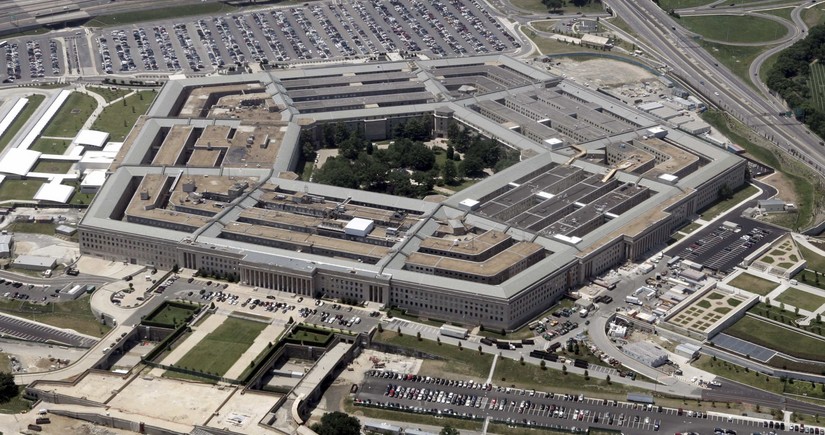
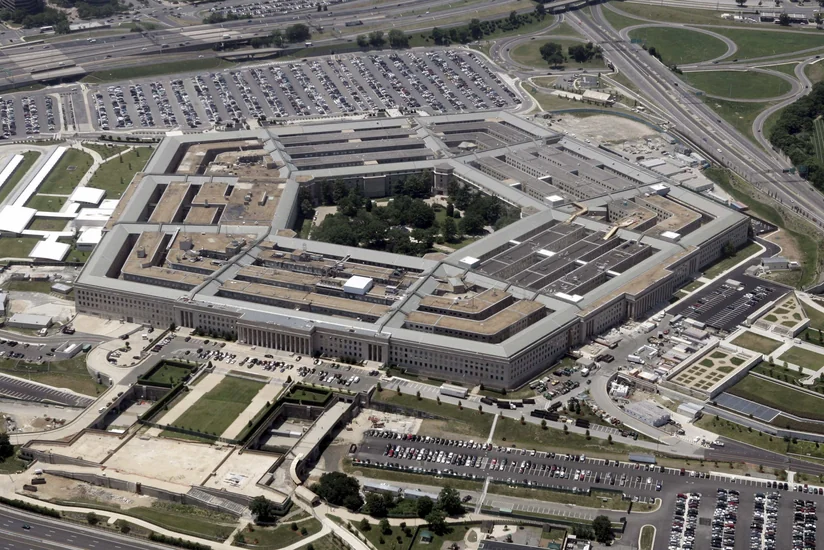
The Pentagon is the headquarters of the United States Department of Defense, located in Arlington County, Virginia, just across the Potomac River from Washington, D.C. It is not merely the largest office building in the world; it is the absolute symbol of American military might, the place where decisions shaping the security architecture of the entire planet are made.
By the spring of 2026, against the backdrop of massive escalation in the Middle East and mounting tensions in the Indo-Pacific region, the Pentagon is undergoing one of its most significant strategic transformations since the end of the Cold War.
Designed during World War II (with construction completed in 1943), the Pentagon remains a masterpiece of logistical and architectural thought.
The Geometry of Efficiency: The building consists of five concentric pentagons (rings) connected by ten intersecting corridors. Despite its colossal footprint (the total length of the corridors exceeds 17.5 miles or 28 km), its unique layout allows personnel to walk between any two points in the building in a maximum of seven minutes.
Scale: Every day, approximately 30,000 military and civilian personnel work within its walls. It operates as an autonomous "city" equipped with its own infrastructure, top-secret communication lines, and command bunkers designed to withstand a nuclear conflict.
Today, the corridors of the Pentagon are buzzing with tension. Our analytical department highlights three main vectors defining the work of the US Department of Defense in the current realities:
Transition to Multi-Domain Operations (JADC2): The Pentagon is pivoting away from the concept of localized counter-terrorism operations that dominated the last two decades. The primary focus for 2026 is the implementation of the Joint All-Domain Command and Control (JADC2) concept. This involves integrating artificial intelligence, space satellites, cyber forces, and traditional military branches into a single neural network to confront peer and near-peer adversaries.
The Budget Leviathan: The US military budget is approaching the historic mark of $900 billion. However, the Pentagon is currently facing a severe bottleneck within the military-industrial complex (MIC): production lines are overwhelmed by the dual necessity of replenishing depleted domestic arsenals while continuously supplying allies in the Middle East and Eastern Europe.
The Unmanned Revolution (Replicator Initiative): The Pentagon is rapidly accelerating a program to deploy thousands of autonomous drones (aerial, surface, and underwater) capable of operating as a swarm. This initiative is designed to neutralize the quantitative advantage of the fleets and armies of potential adversaries in Asia.
Although the South Caucasus is not a zone of direct American troop deployment, the decisions made within the Pentagon have a direct impact on the region's security architecture.
Logistics and Transit: Amidst the growing instability of global shipping routes, the Pentagon highly values Azerbaijan's role as a reliable partner in logistical operations. Historically, Baku has provided critical airspace and overland routes for the United States Transportation Command (TRANSCOM).
Balance of Power: The US Department of Defense closely monitors the security dynamics in the Caspian Basin. Security assistance programs (such as maritime border protection and the non-proliferation of weapons of mass destruction) remain a vital element of bilateral cooperation, even despite periodic political fluctuations in Washington (such as the ongoing debates surrounding Section 907).
The Pentagon of 2026 is a massive bureaucratic and military machine striving to adapt to a rapidly changing global landscape. The global balance of power over the next decade will largely depend on how successfully the US Department of Defense can overcome the current manufacturing crisis within its defense industry and seamlessly integrate artificial intelligence into its command and control systems.

 Baku 29° C