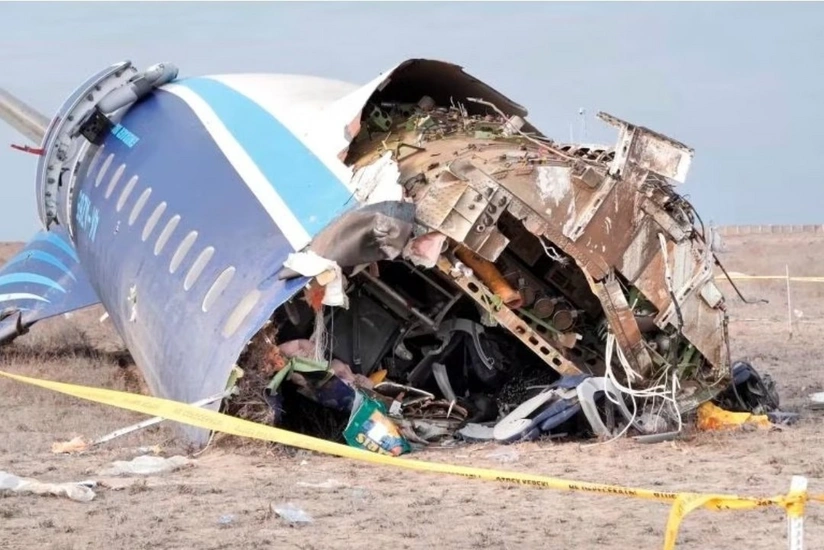
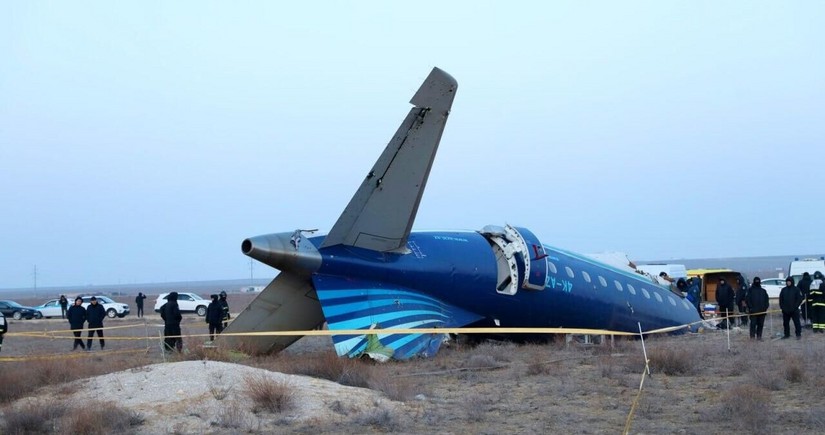
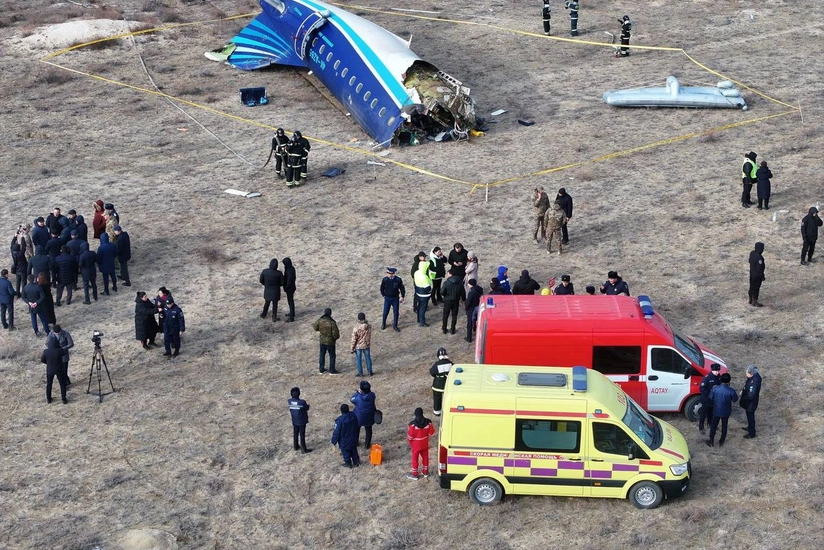
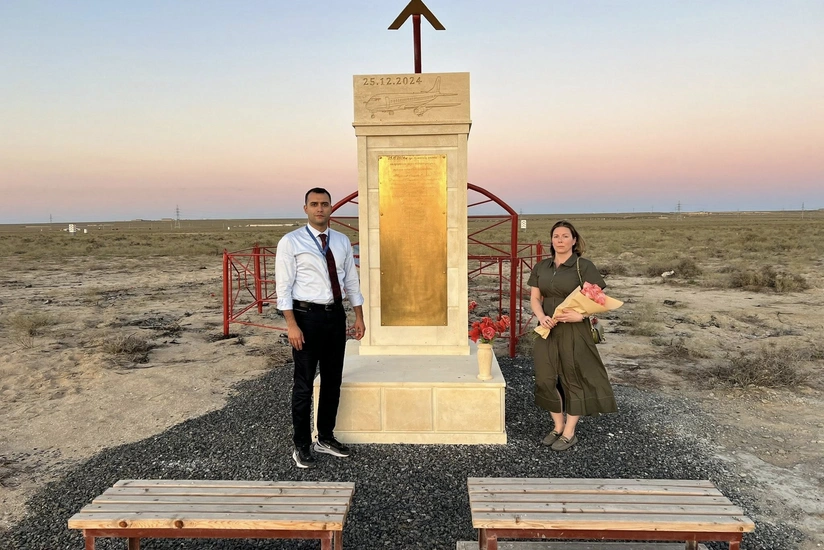
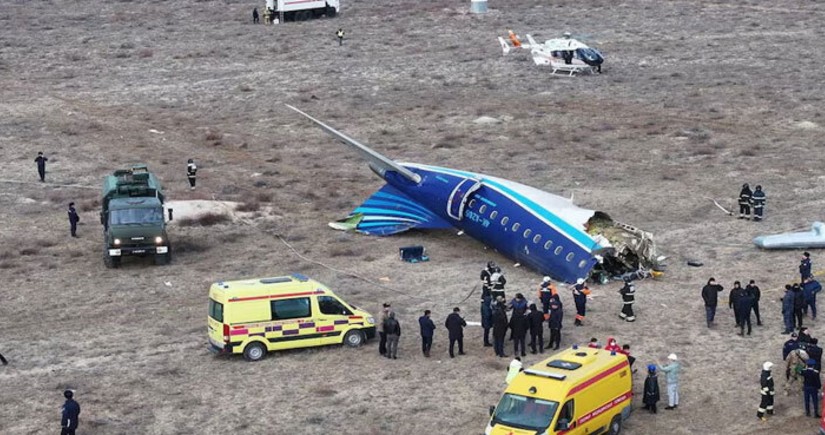
The crash of the Azerbaijan Airlines (AZAL) aircraft near the Kazakh city of Aktau remains one of the most complex and widely discussed topics in the modern history of regional civil aviation. The events of December 25, 2024, which claimed dozens of lives, triggered a prolonged international investigation. The findings of this inquiry are only now—in the spring of 2026—beginning to reach a point of clarity.
Flight J2-8243, operated by an Embraer 190 aircraft, departed Baku for Grozny under normal conditions. There were 67 people on board: 62 passengers (including citizens of Azerbaijan, Russia, Kazakhstan, and Kyrgyzstan) and 5 crew members.
The tragedy occurred during an attempted emergency landing at Aktau Airport. Preliminary data suggests the aircraft encountered severe technical issues while still in the airspace over Russian territory. Despite the high level of professionalism displayed by the pilots, the liner went down just 3 kilometers from the runway. The crash resulted in 38 fatalities, while 29 passengers survived—a rescue that experts describe as a true miracle.
As of today, March 20, 2026, the investigation has entered its final phase. Kanat Bozumbayev, Deputy Prime Minister of Kazakhstan and head of the state commission, announced that all necessary technical expertise has been received from equipment manufacturers and international organizations.
Key stages of the investigation included:
Black Box Decoding: Conducted in Brazil by specialists from the Center for Investigation and Prevention of Aeronautical Accidents (CENIPA).
Technical Analysis: Involvement of ICAO and IATA experts to evaluate the status of the aircraft’s systems prior to the crash.
Interstate Cooperation: Joint efforts by investigative groups from Azerbaijan, Kazakhstan, and Russia.
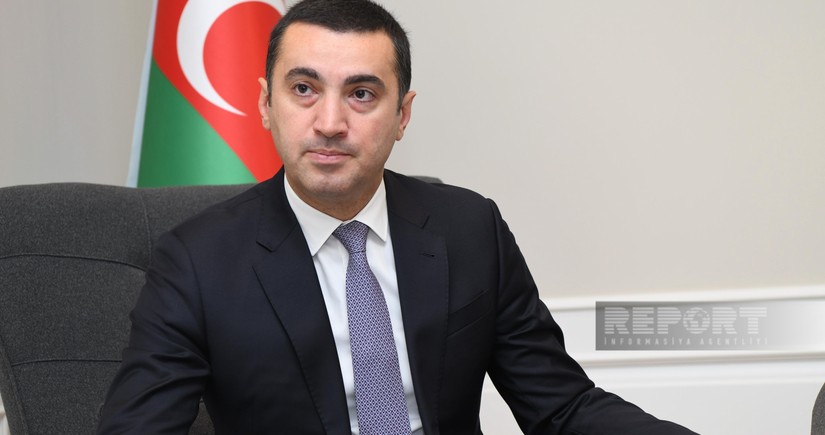
The most resonant moment of the investigation came from statements by Azerbaijani officials. In February 2026, Foreign Minister Jeyhun Bayramov confirmed Baku’s firm position: the crash was the result of "external physical and technical intervention" that occurred in the airspace over Grozny.
According to report data provided to Report.az, the Azerbaijani side places responsibility on the Ministry of Defense of the Russian Federation, pointing to an error that led to the strike or critical damage of the civilian vessel. Currently, negotiations are underway between the countries regarding compensation for the families of the victims and the legal assessment of the incident.
Immediately following the tragedy, by order of AZAL management, families of the victims were paid compensation in the amount of 20,000 AZN, and survivors were provided with full medical and psychological rehabilitation.
This catastrophe served as a catalyst for the adoption of the "National Aviation Safety Plan for 2024–2026." Azerbaijan has implemented new airspace monitoring systems and strengthened coordination with international air traffic control centers. Despite this event, AZAL maintains a high safety rating in international agencies, as the incident is classified as a force majeure circumstance unrelated to the quality of fleet maintenance.
The AZAL plane crash near Aktau is both a profound human tragedy and a complex geopolitical knot. The final commission report is expected to be published by the end of the first half of 2026, which will bring closure to the technical inquiry and pave the way for a final legal settlement.

 Baku 30° C