Armenia

Armenians violate ceasefire 21 times throughout the day
Military
Armenians violate ceasefire 21 times throughout the day
  • 15 December, 2018
  • 05:51
Conditions for liberation of Karabakh 'ripening' - expectations from year 2019  - COMMENT
app.type.article
Analytics
Conditions for liberation of Karabakh 'ripening' - expectations from year 2019 - COMMENT
  • 14 December, 2018
  • 13:07
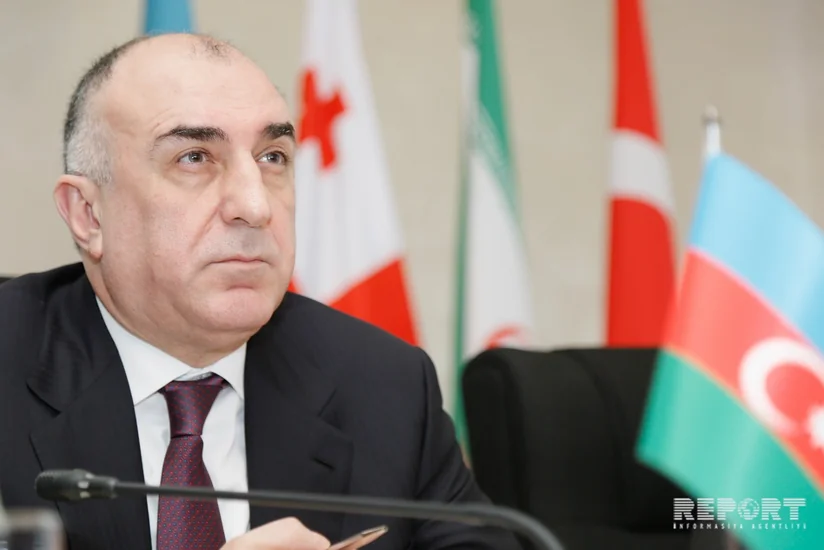
Elmar Mammadyarov: We should make progress in solving the Nagorno-Karabakh conflict next year
Karabakh
Elmar Mammadyarov: We should make progress in solving the Nagorno-Karabakh conflict next year
  • 14 December, 2018
  • 12:28
SBS takes over combat posts in Gazakh and Agstafa sections of state border with Armenia
Incident
SBS takes over combat posts in Gazakh and Agstafa sections of state border with Armenia
  • 14 December, 2018
  • 11:46
Alexander Lukashenko: Armenia should meet CSTO members halfway
Region
Alexander Lukashenko: Armenia should meet CSTO members halfway
  • 14 December, 2018
  • 11:15
Alexander Lukashenko: OSCE MG has done damn all to resolve the Karabakh conflict
Karabakh
Alexander Lukashenko: OSCE MG has done damn all to resolve the Karabakh conflict
  • 14 December, 2018
  • 10:50
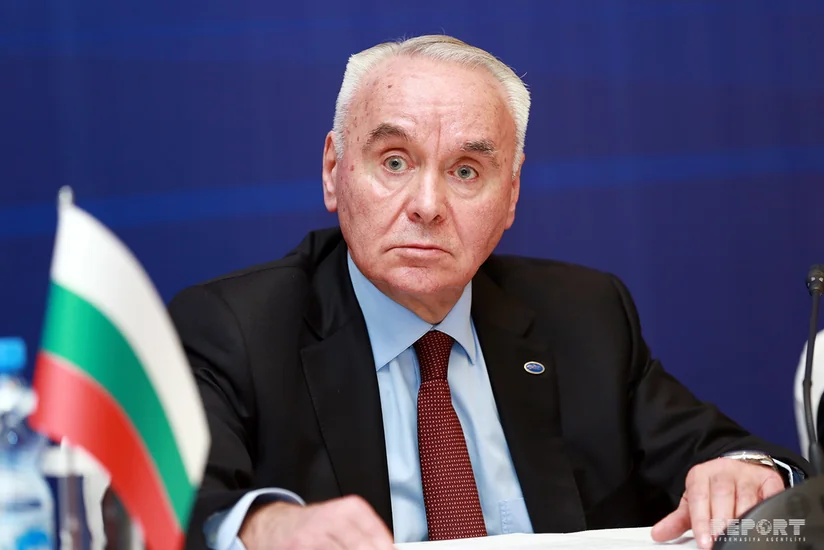
Deputy Minister: Conflicts existing in BSEC region affect its development
Foreign policy
Deputy Minister: Conflicts existing in BSEC region affect its development
  • 14 December, 2018
  • 09:52
Lavrov: Russia will do everything possible to achieve compromises on Karabakh settlement
Karabakh
Lavrov: Russia will do everything possible to achieve compromises on Karabakh settlement
  • 14 December, 2018
  • 09:27
Çavuşçoğlu: Azerbaijan has done a lot of work during BSEC chairmanship
Foreign policy
Çavuşçoğlu: Azerbaijan has done a lot of work during BSEC chairmanship
  • 14 December, 2018
  • 08:21
Qarabag's footballer: Someone will be responsible for this provocation and that person will be punished
Football
Qarabag's footballer: Someone will be responsible for this provocation and that person will be punished
  • 14 December, 2018
  • 07:52
Speaker: I am sure Karabakh conflict will be resolved within the norms of international law
Incident
Speaker: "I am sure Karabakh conflict will be resolved within the norms of international law"
  • 14 December, 2018
  • 06:49
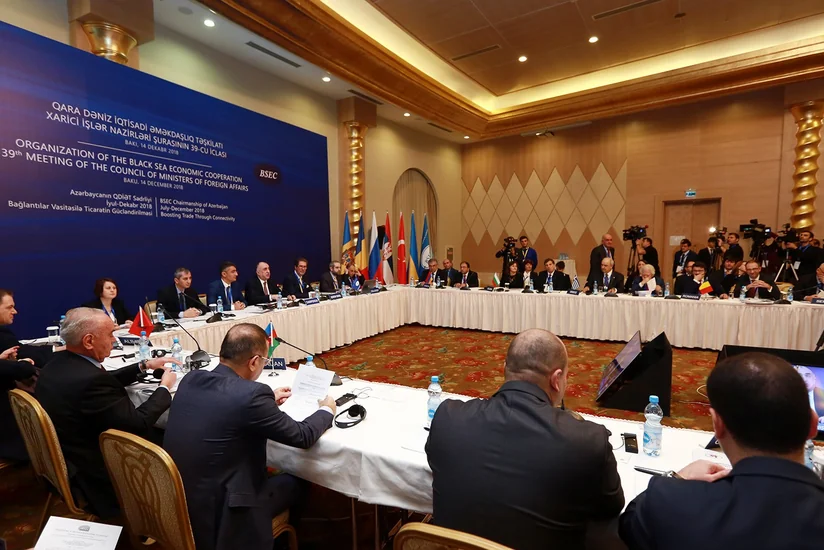
39th meeting of BSEC Council of Foreign Ministers kicks off in Baku
Foreign policy
39th meeting of BSEC Council of Foreign Ministers kicks off in Baku
  • 14 December, 2018
  • 05:56
Armenian armed forces violate ceasefire 26 times throughout the day
Karabakh
Armenian armed forces violate ceasefire 26 times throughout the day
  • 14 December, 2018
  • 05:44
Ziyafat Asgarov: If we see that Armenians are engaged in imitation, the military solution of the conflict will be inevitable - INTERVIEW - PART II
Photo
Domestic policy
Ziyafat Asgarov: If we see that Armenians are engaged in imitation, the military solution of the conflict will be inevitable" - INTERVIEW - PART II
  • 14 December, 2018
  • 05:16
Senate committee approves US ambassador to Azerbaijan nominee
Photo
Foreign policy
Senate committee approves US ambassador to Azerbaijan nominee
  • 14 December, 2018
  • 04:52
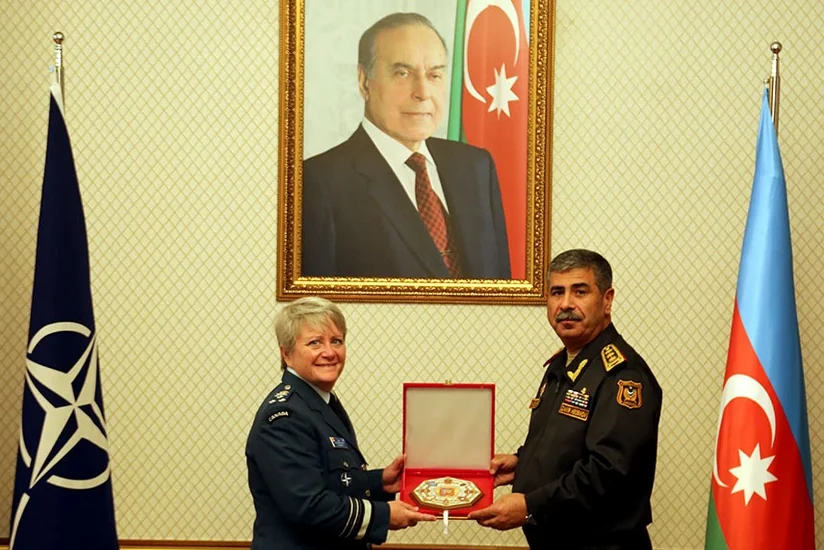
Zakir Hasanov meets with NATO Defense College Commandant
Military
Zakir Hasanov meets with NATO Defense College Commandant
  • 13 December, 2018
  • 13:34
1 ... 1166 1167 1168 1169 1170 ... 1362

Armenia: History, Culture, Geopolitics, and Economy

Armenia (officially the Republic of Armenia, arm. Հայաստան, Hayastan) is a landlocked sovereign state located in the South Caucasus region of Eurasia, at the crossroads of Eastern Europe and Western Asia. Bounded by Georgia to the north, Azerbaijan to the east, Iran to the south, and Turkey to the west, Armenia spans over 29,743 square kilometers within the rugged Armenian Highlands. As an ancient nation with its capital and largest city in Yerevan, Armenia is globally celebrated as the first state to adopt Christianity as its official religion (in 301 AD), boasting a profound cultural heritage, a resilient diaspora, and a strategic democratic political system.

1. Historical Background and Ancient Roots

Millennial Heritage: The history of Armenian civilization spans over three millennia, with the Kingdom of Urartu and subsequent ancient Armenian kingdoms flourishing across the Armenian Highlands since antiquity.

Cultural and Religious Identity: Armenia adopted Christianity in 301 AD under the guidance of St. Gregory the Illuminator, establishing the independent Armenian Apostolic Church, which has served as a vital pillar of national preservation through centuries of foreign domination.

Modern Statehood: Following centuries of partition between various empires (including Ottoman, Persian, and Russian), the First Republic of Armenia was established in 1918, followed by the Armenian Soviet Socialist Republic in 1920. Armenia regained its full independence on September 21, 1991, following the dissolution of the USSR.

2. Geopolitics, Regional Relations, and Diplomacy

Foreign Policy Strategy: Armenia pursues a multi-vector foreign policy aimed at balancing relations with Western democracies, the European Union, the United States, and traditional regional partners, while actively seeking to secure lasting peace and stability in the South Caucasus.

International Organizations: Armenia is an active member of the United Nations, the Council of Europe, the CIS, and the Eurasian Economic Union (EAEU), while simultaneously deepening political and economic dialogue with European institutions.

Global Diaspora: Due to historical tragedies, notably the Armenian Genocide of 1915, a vast and influential Armenian diaspora exists worldwide, contributing significantly to global culture, science, business, and politics.

3. Economy, Innovation, and Natural Resources

Tech and Innovation Hub: Armenia has rapidly transformed into a prominent technological and software development hub in the South Caucasus, often referred to as the "Silicon Valley of the region," featuring a thriving startup ecosystem and robust engineering talent.

Agriculture and Viticulture: Blessed with unique volcanic soil and microclimates, Armenia is one of the world's oldest winemaking regions, renowned for its ancient grape varieties, vineyards in the Ararat Valley, brandy production, and rich agricultural harvests (pomegranates, apricots).

Mining and Industry: The country possesses significant mineral resources, including copper, molybdenum, and gold, which form a cornerstone of its industrial export sector.

4. Culture, Architecture, and Tourism

Architectural Wonders: Armenia's landscape is dotted with medieval architectural masterpieces carved from volcanic tufa stone, including UNESCO World Heritage sites such as the monasteries of Haghpat, Sanahin, Etchmiadzin Cathedral, and Geghard.

Intangible Heritage: Traditional Armenian music (featuring instruments like the duduk), the unique Armenian alphabet created by Mesrop Mashtots in 405 AD, and rich culinary traditions (such as lavash baking) are inscribed in UNESCO's intangible cultural heritage lists.