
 Baku 19° C
Two documents on religion, climate change and AI presented in Astana
- 07 October, 2026
- 11:33
Stay up to date with the top news!
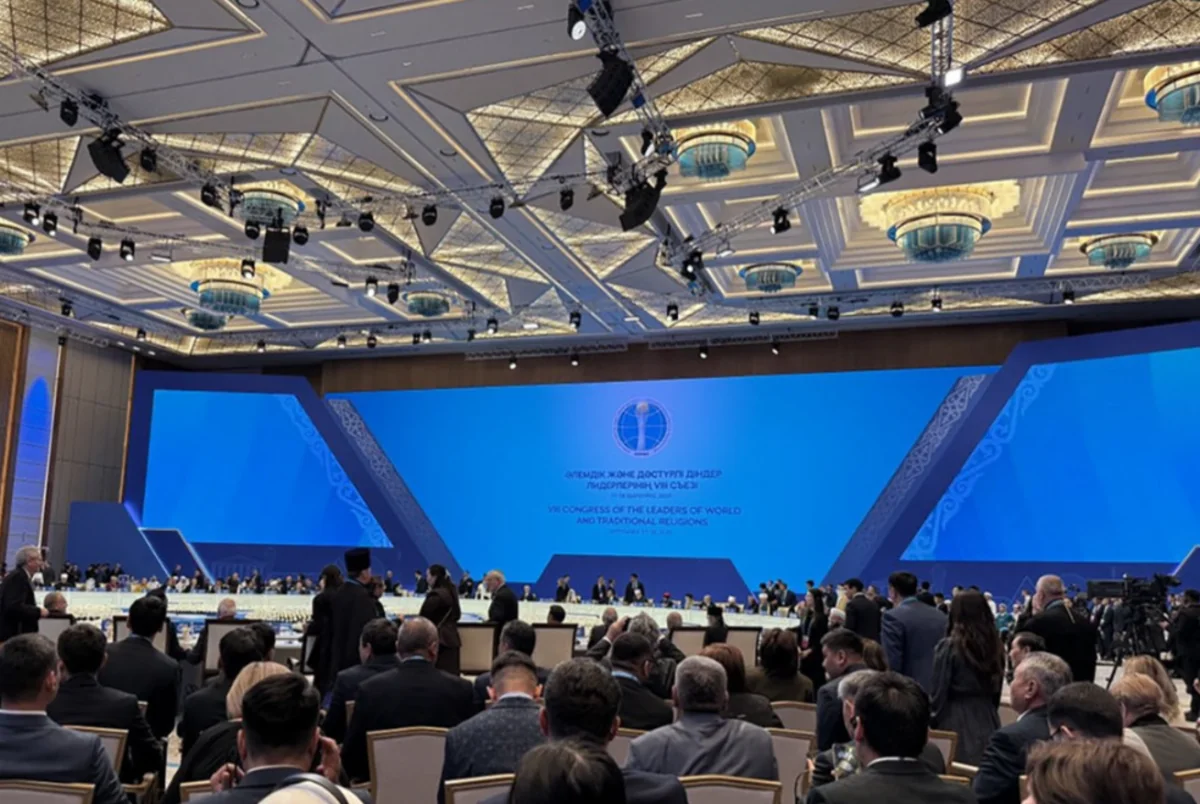
Two joint documents on the role of religion in combating climate change and the ethical use of artificial intelligence in the religious sphere were presented at a meeting of the Secretariat of the Congress of Leaders of World and Traditional Religions, Report informs.
The documents were presented by Gulsana Kozhabay, Chair of the Board of the International Center for Interfaith and Interreligious Dialogue.
According to her, the Secretariat's working group reviewed both documents the previous day and approved them for presentation at the meeting.
The document titled "The Role of Religion in Combating Climate Change" was developed pursuant to Paragraph 22 of the 2025 Astana Declaration of Peace, with the participation of 26 representatives of various religious and cultural traditions.
"Climate change is also a matter of values, responsibility and relations between people and nature," Kozhabay said.
According to her, the document outlines common ethical foundations for practical action, including recognition of the value of nature, responsibility toward future generations, moderation and balance, and solidarity with the most vulnerable groups.
The second document, titled "Code of Ethics for the Use of Artificial Intelligence in a Religious Context," was developed pursuant to Paragraphs 23 and 24 of the 2025 Astana Declaration of Peace.
"Artificial intelligence can help, but it cannot become a spiritual authority," Kozhabay stressed.
She noted that AI can be used for education, analysis and access to information, but should not replace personal religious experience or human judgment on matters of faith.
The code contains 11 principles, including protection of human dignity and freedom of conscience, human oversight and accountability, protection of sensitive data, and ensuring the authenticity of religious content.
According to Kozhabay, both documents are advisory in nature and do not create legal obligations. The next step should be their international implementation.
Author