
 Baku 25° C
Media forum participants visit Registan Square in Samarkand
- 27 August, 2026
- 22:43
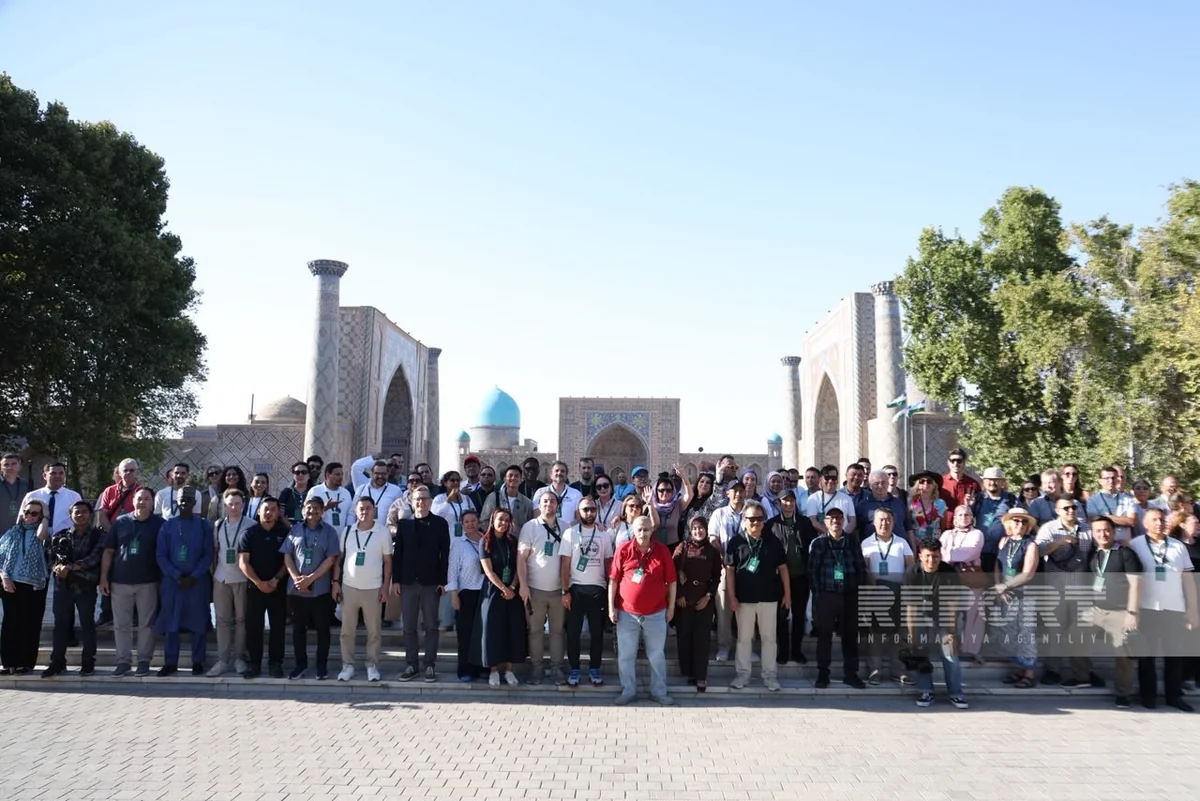
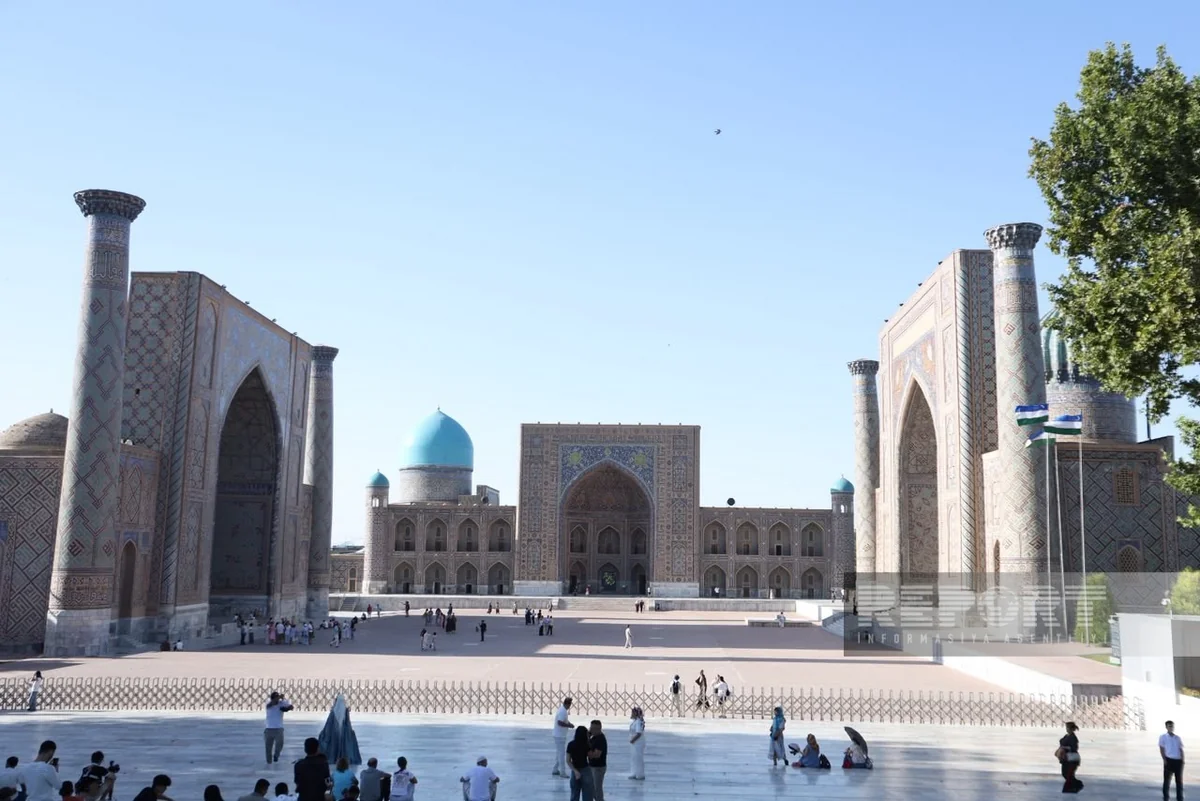
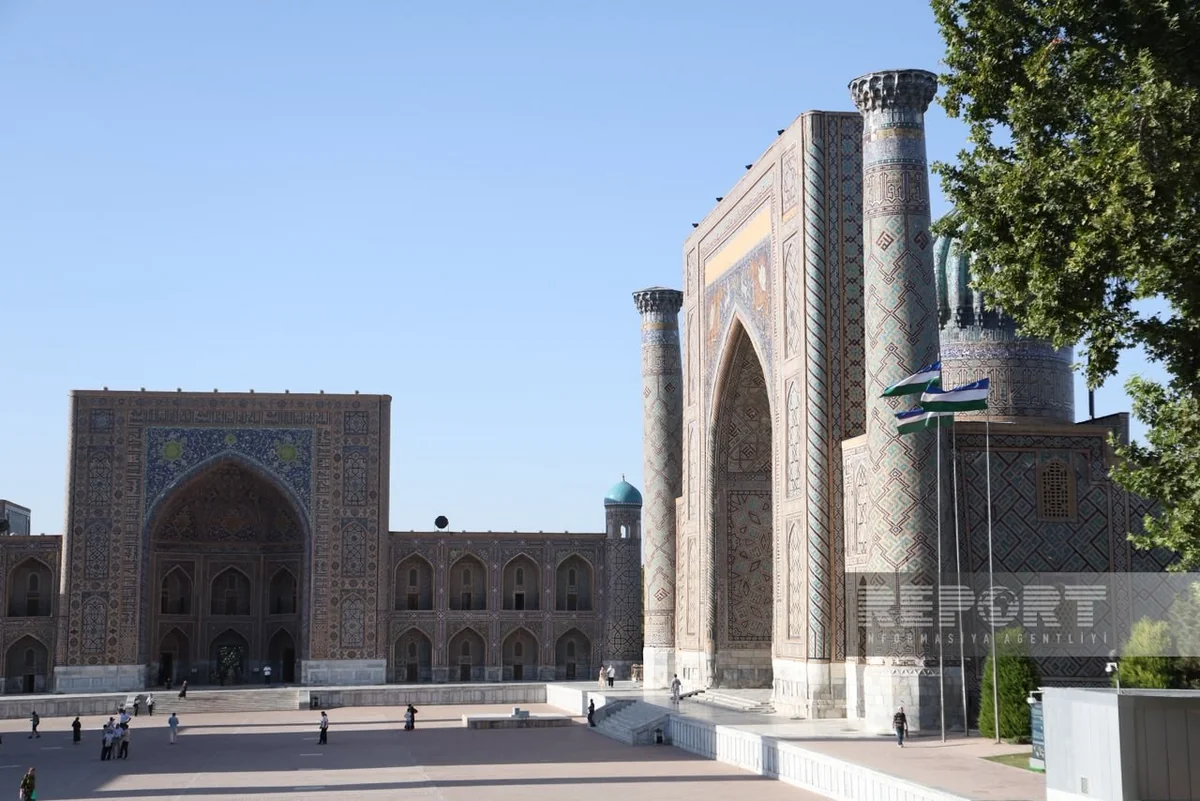
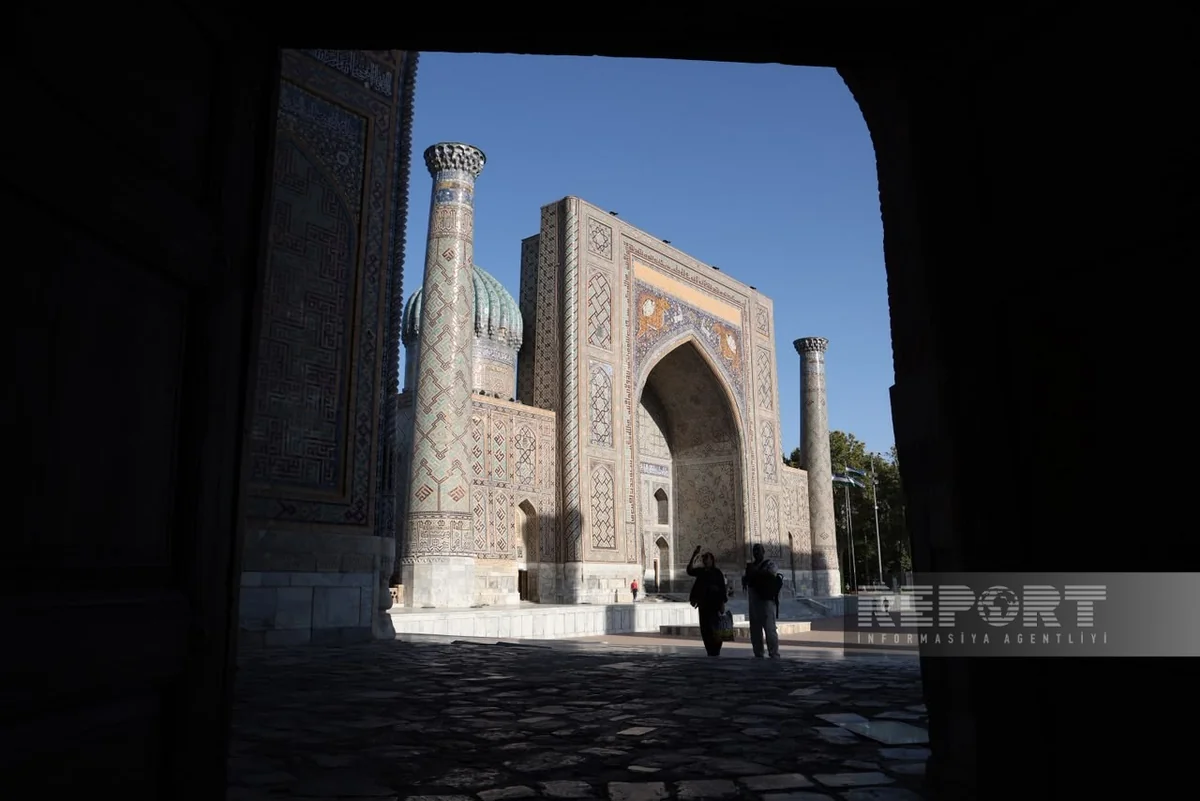
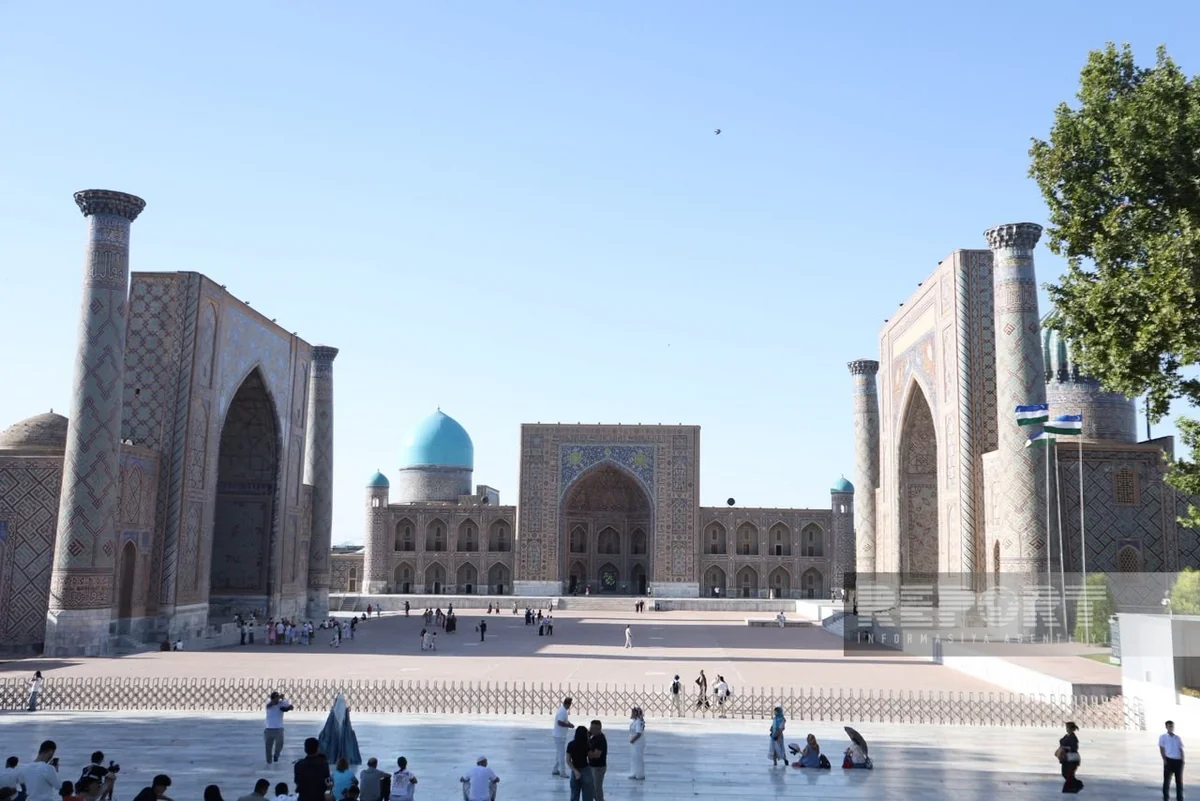
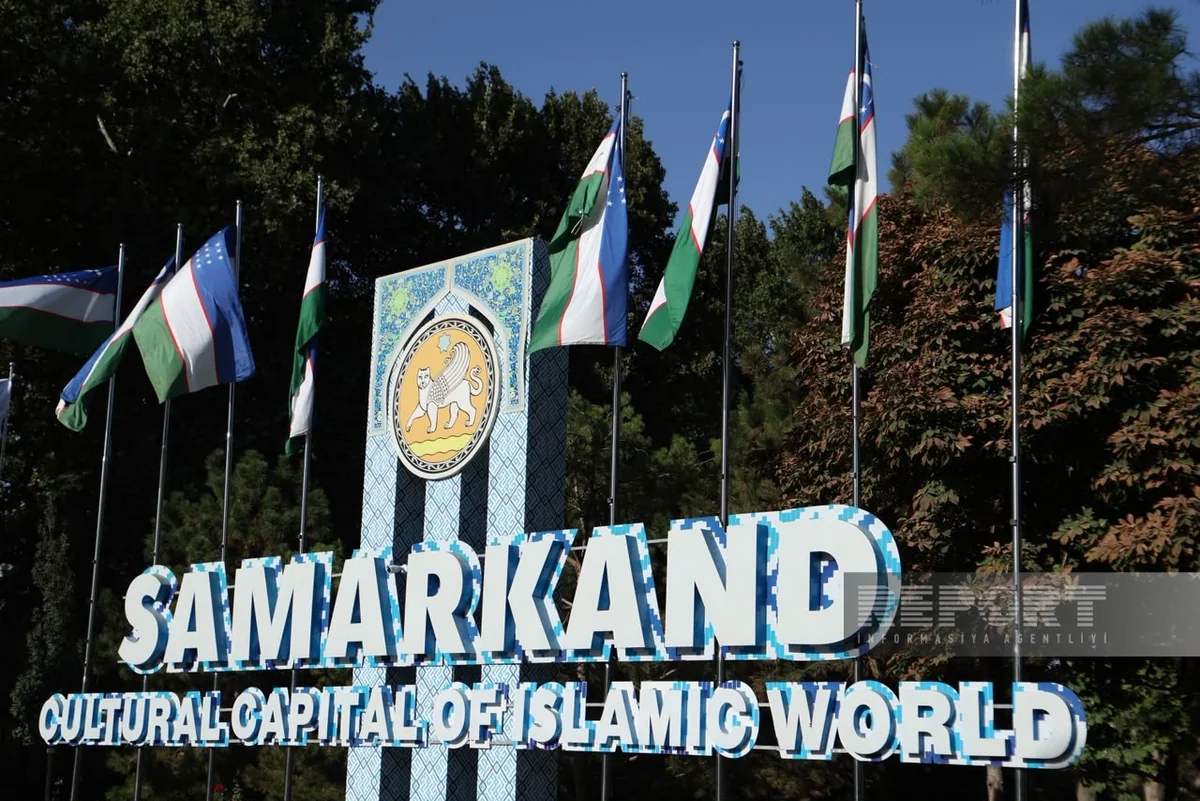
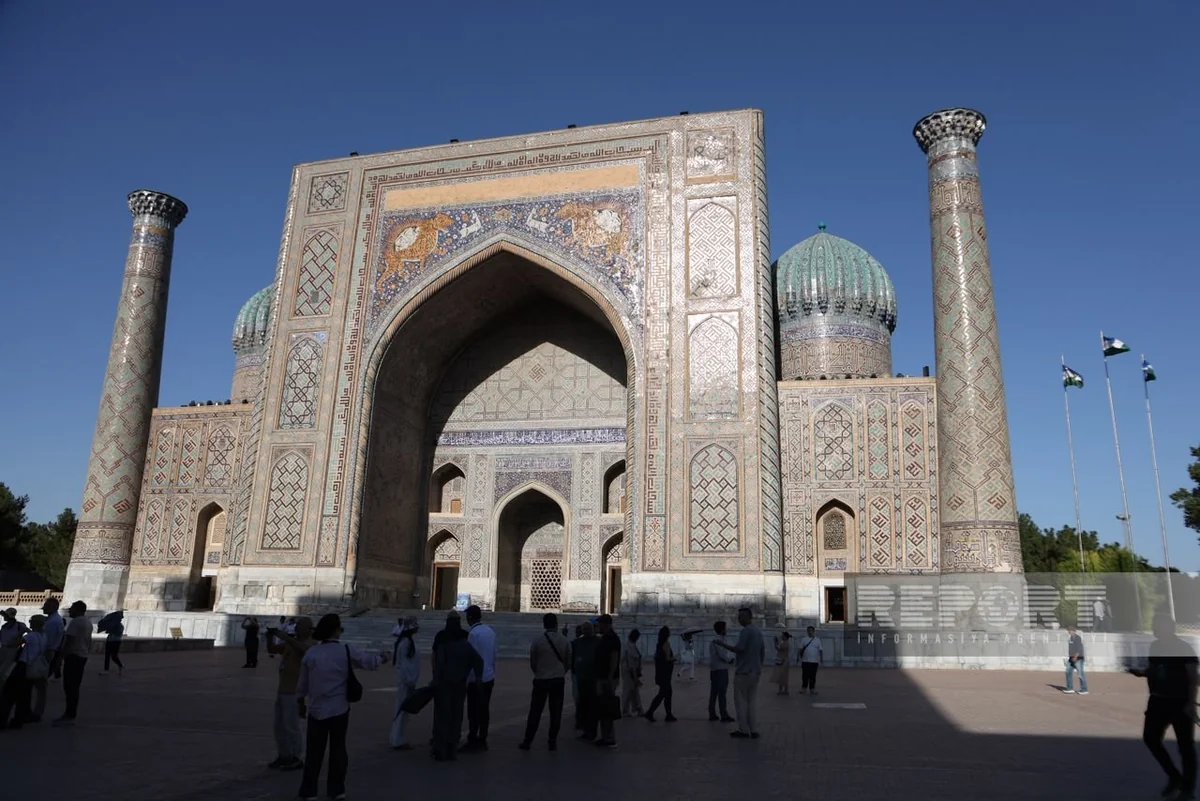
Participants of the media forum visited Registan Square in Samarkand, one of the most famous architectural ensembles in Central Asia, a symbol of the ancient city and an important part of its cultural heritage.
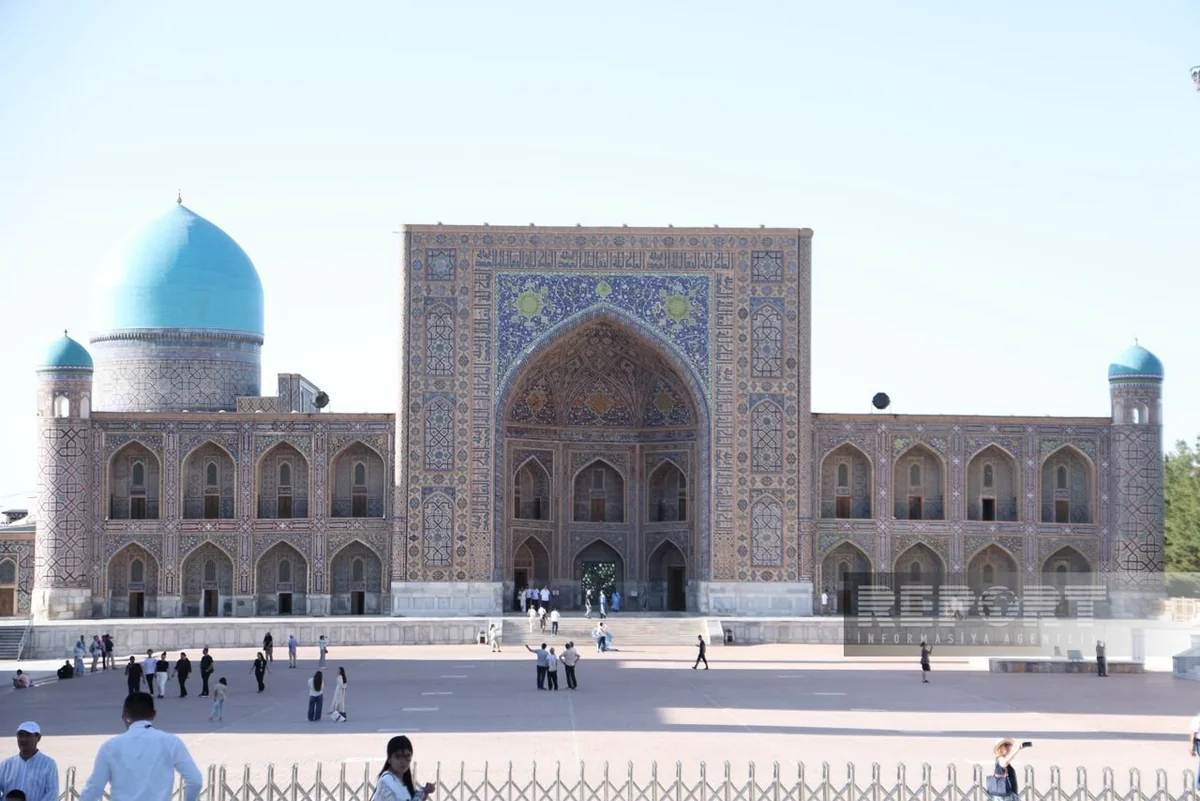
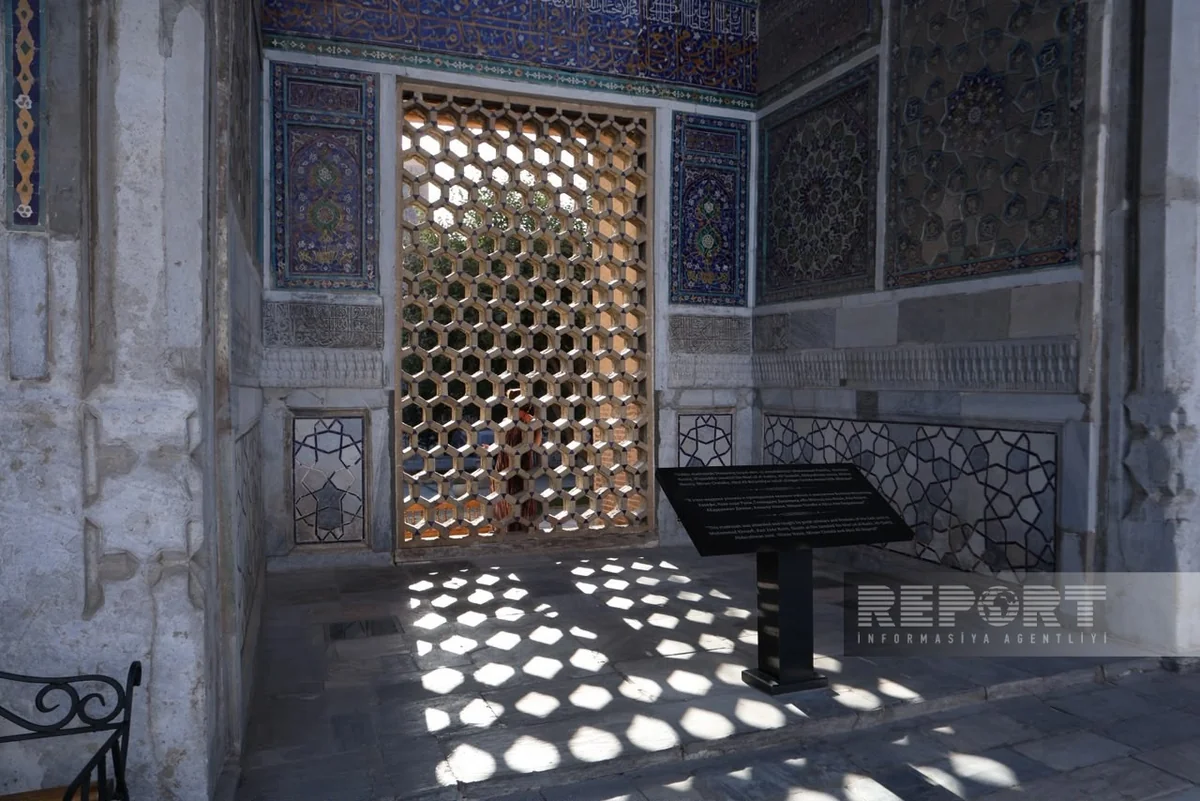
Report's correspondent dispatched to Samarkand says that the participants learned about the history of the square and visited the Tilla-Kari Madrasah, one of the three architectural monuments that make up the Registan complex.
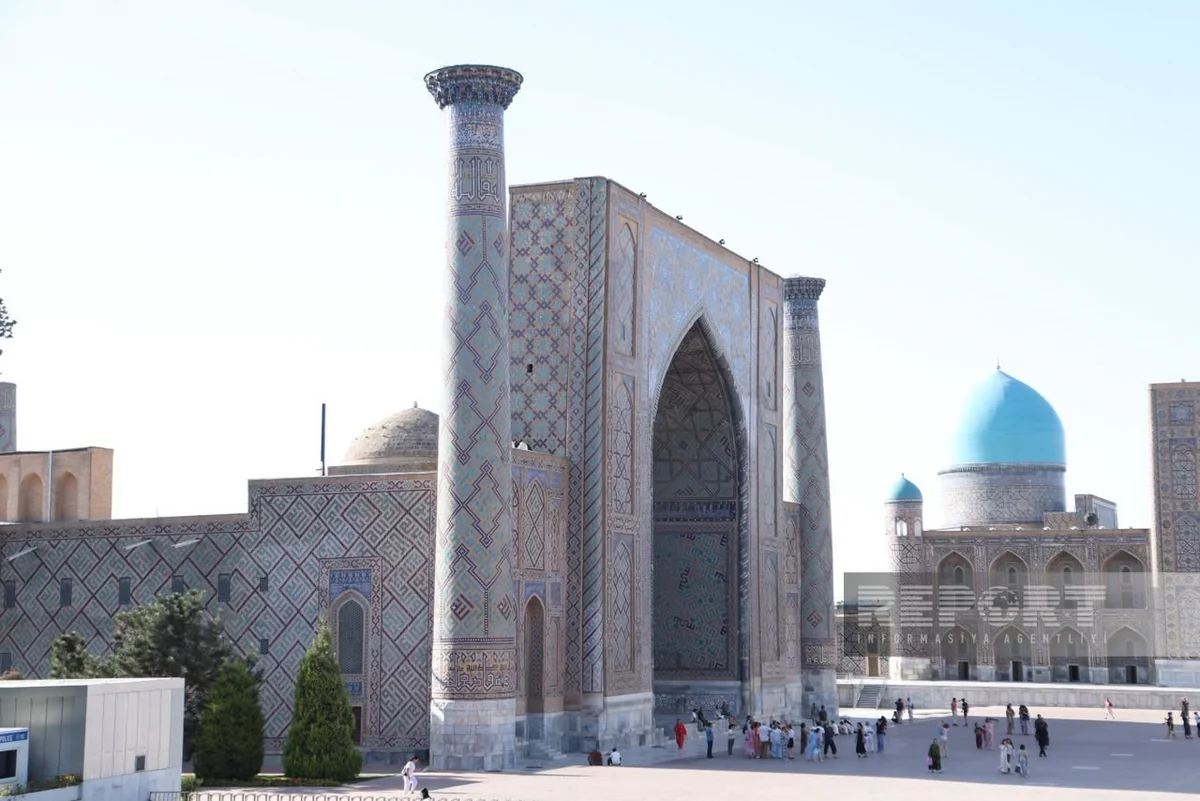
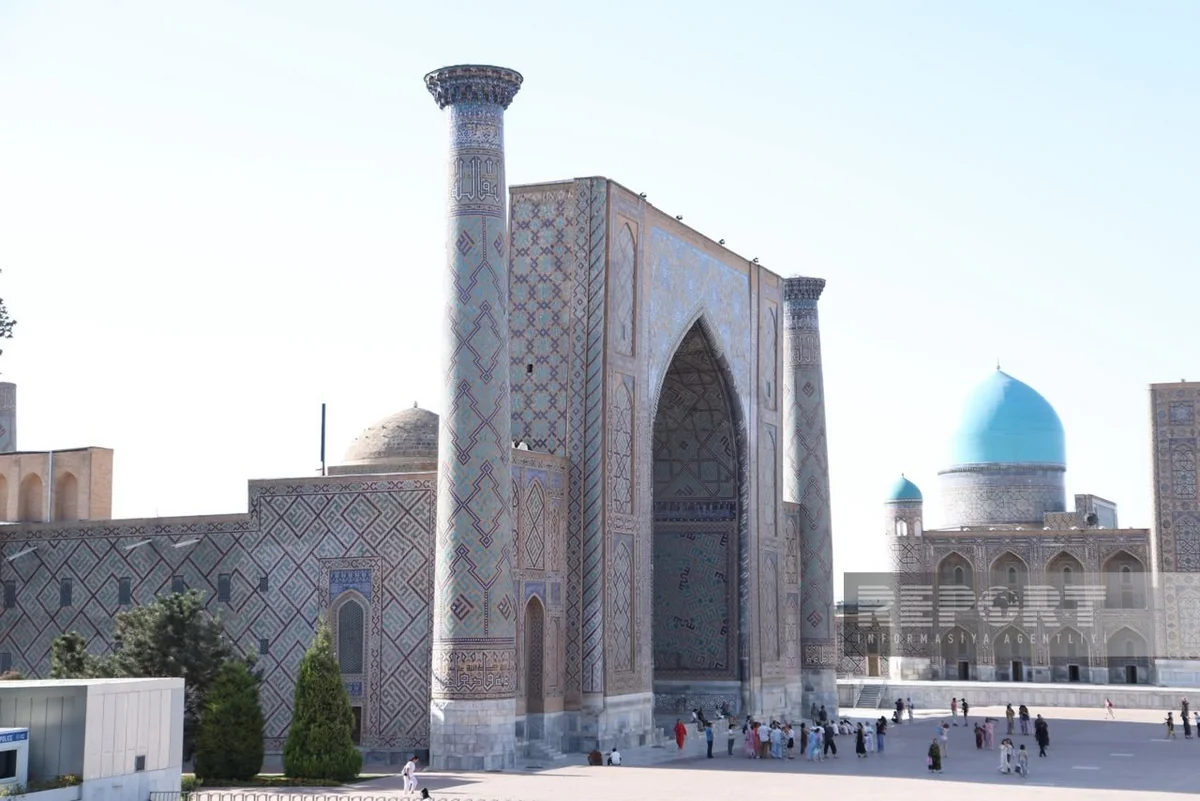
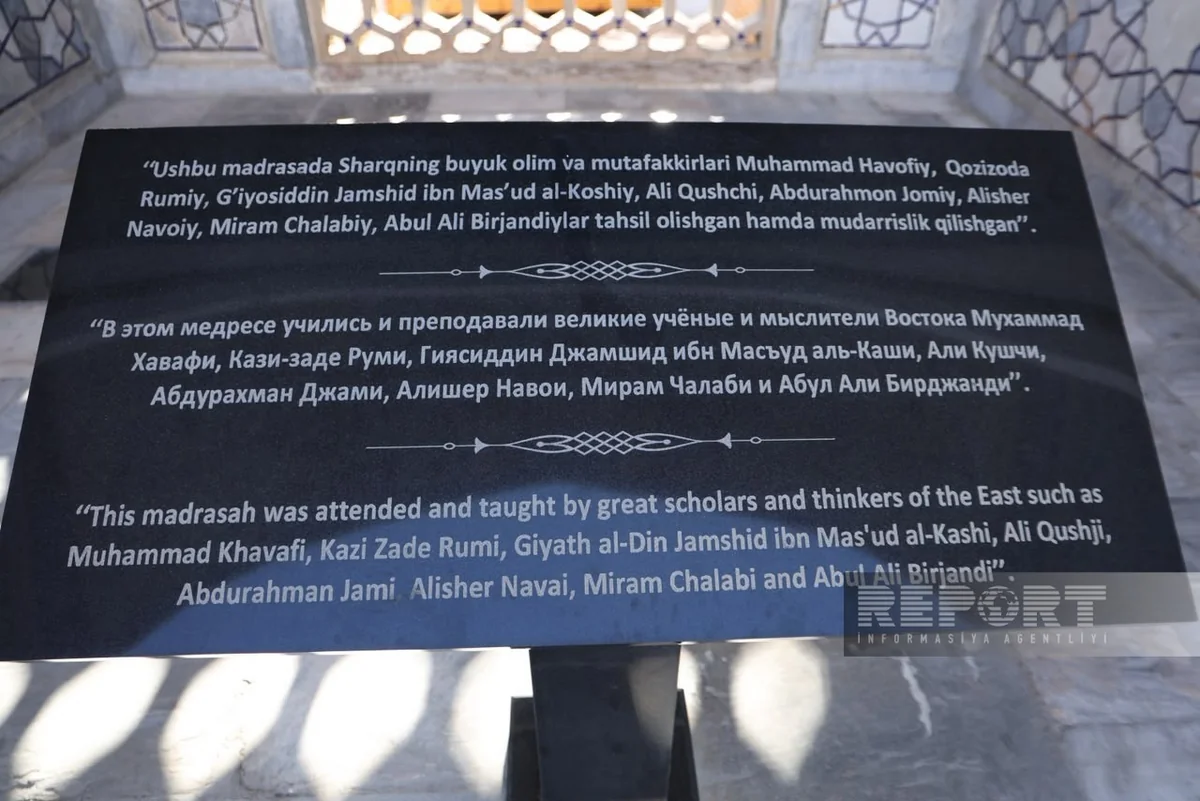
Registan began developing as Samarkand's public center in the Middle Ages. A new stage in its history is associated with Mirza Ulugh Beg, a ruler, prominent astronomer and grandson of Amir Timur. In 1417-1420, he ordered the construction of the Ulugh Beg Madrasah, which became one of the most important centers of education and science of its time.
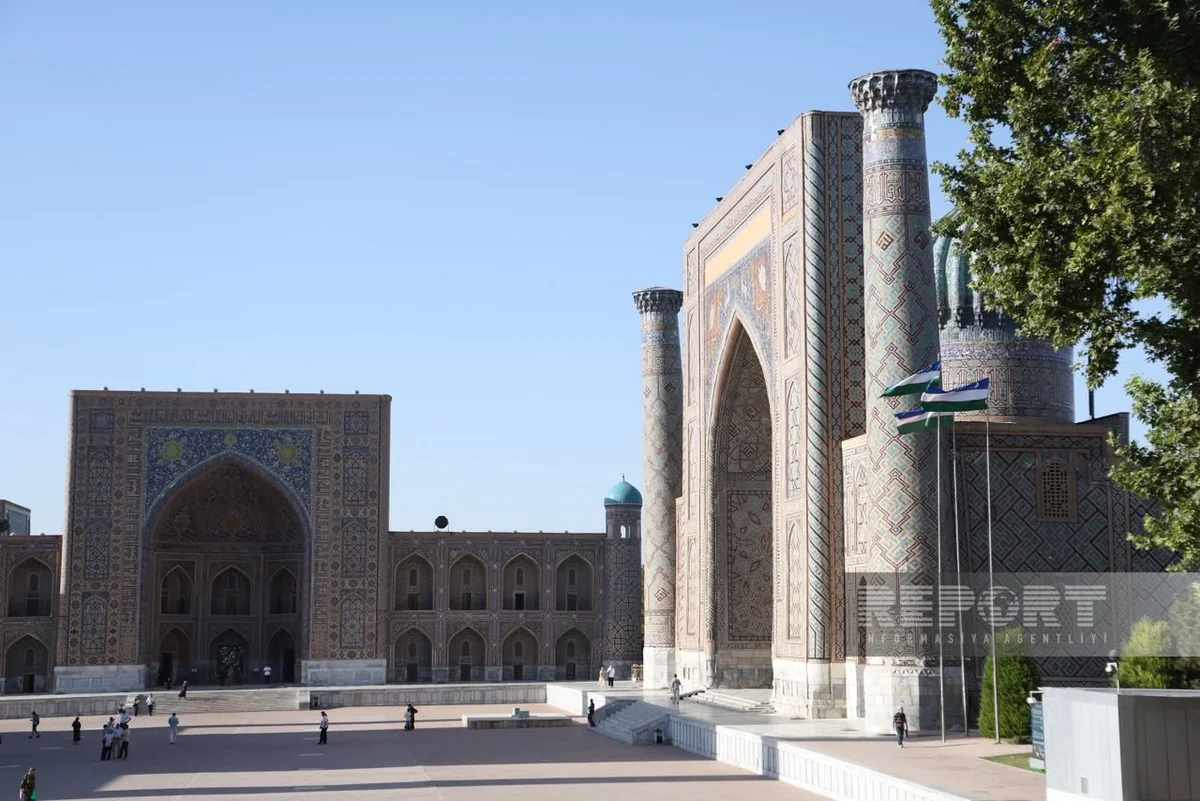
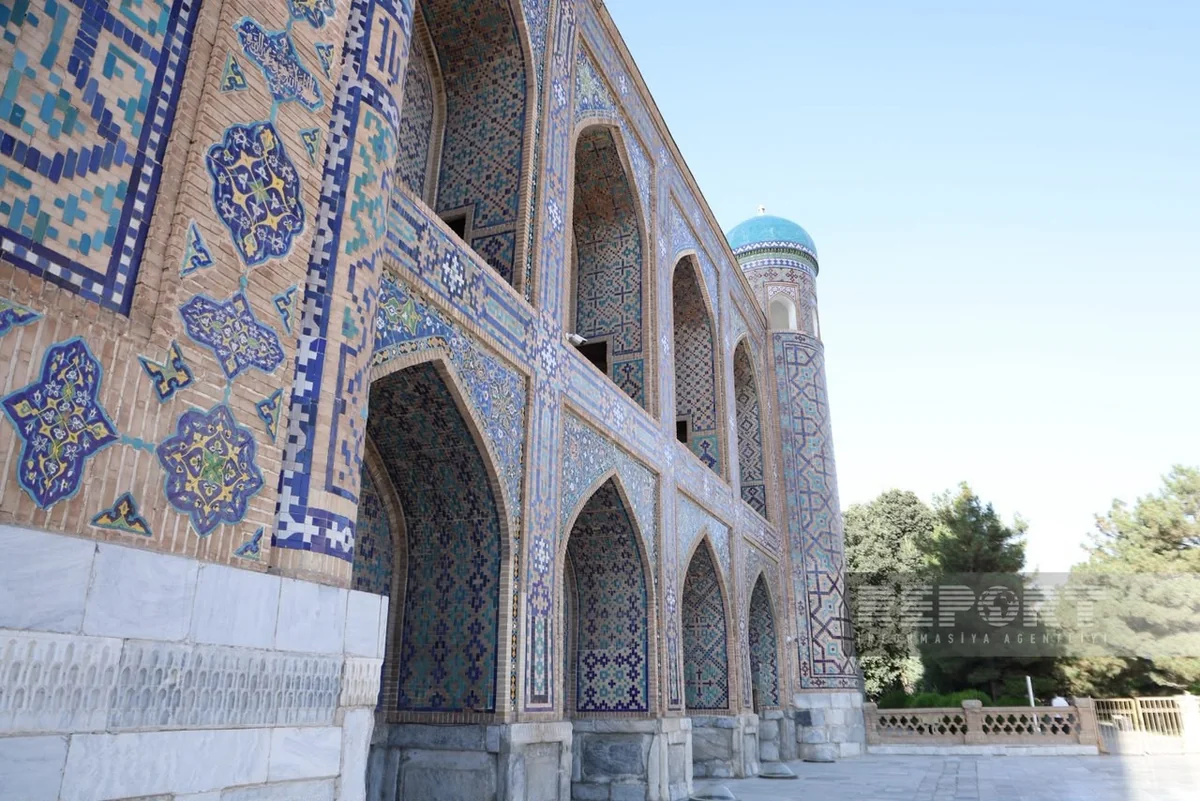
The square acquired its present appearance later. In the 17th century, during the reign of Samarkand ruler Yalangtush Bahadur, the Sher-Dor and Tilla-Kari madrasahs were built opposite the Ulugh Beg Madrasah. As a result, a unique ensemble of three monumental buildings with unified facades and a common space was formed.
Tour participants paid particular attention to Tilla-Kari. Its construction began in 1646 and was completed in 1660. The madrasah was built on the site of the former Mirzoi caravanserai, where travelers and merchants had previously stayed.
Participants were also informed about the distinctive features of Registan's architecture that remain visible today. Over the centuries, the buildings were affected by time and earthquakes, resulting in individual elements being damaged, lost or subsequently restored.
Craftsmen from different periods carried out restoration work taking into account the surviving structures and technologies of their respective eras. As a result, some elements of the ensemble today show minor variations in geometry and proportions. According to the guide, this is part of the complex history of Registan's formation and restoration.
A separate section of the tour was dedicated to the restoration of the monuments. The museum houses surviving fragments of decorative designs and elements discovered during restoration work. Visitors were also shown fragments related to damage caused by earthquakes. These details allowed visitors to see not only the results of restoration but also the process of preserving historical heritage.
Participants were also shown examples of ancient calligraphy and learned about the creation of manuscript books and decorative inscriptions. Calligraphic texts played an important role in the architecture of the madrasahs, where they were combined with geometric and floral ornaments.
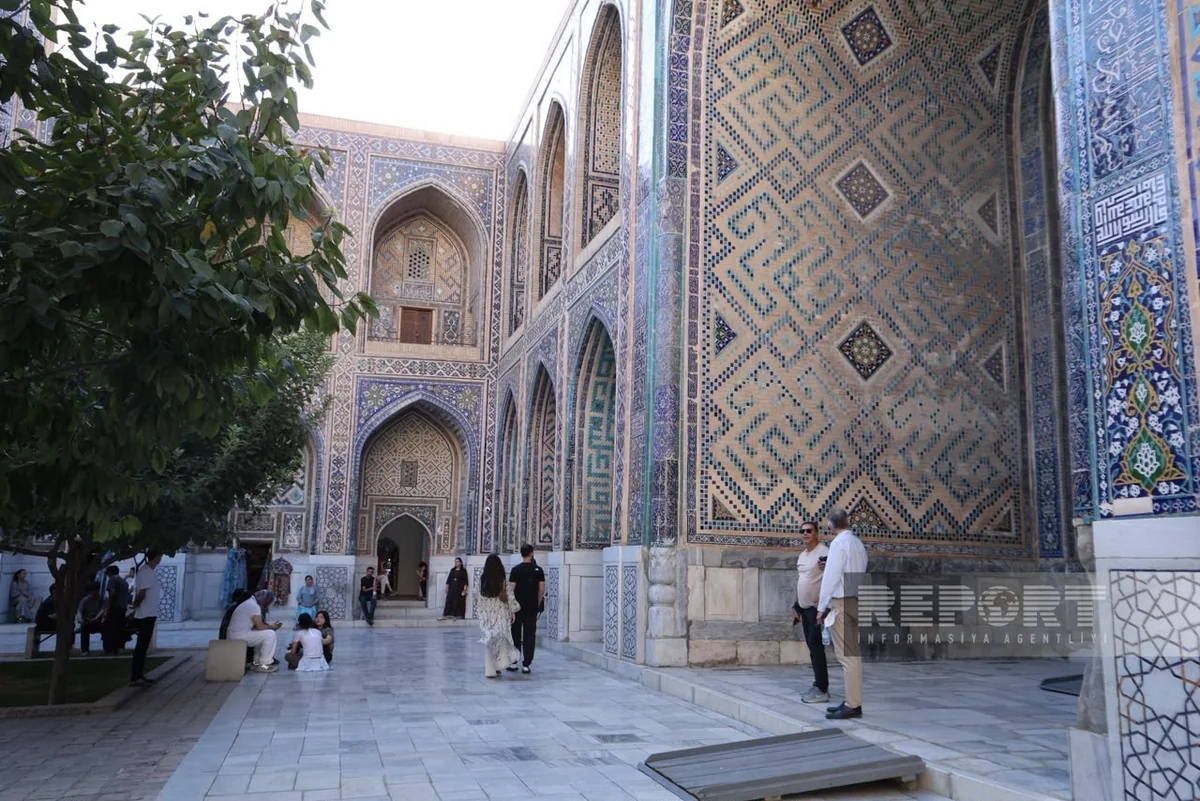
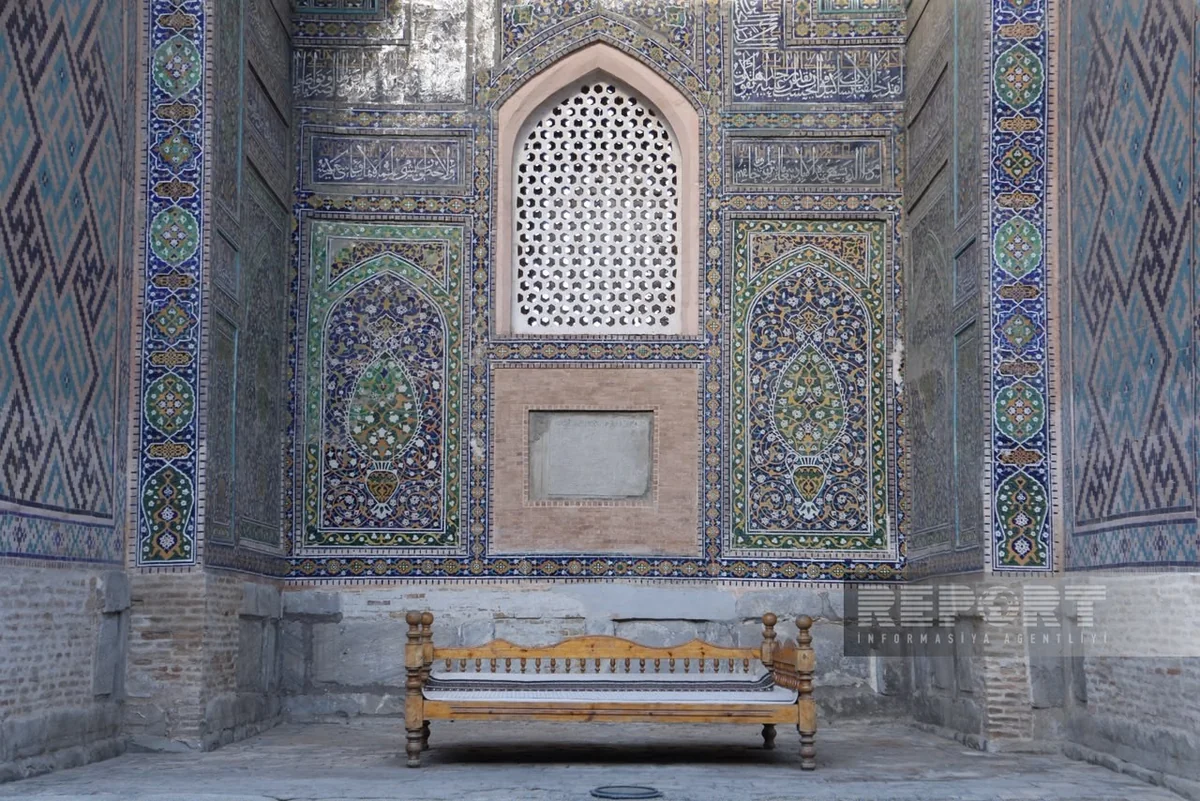
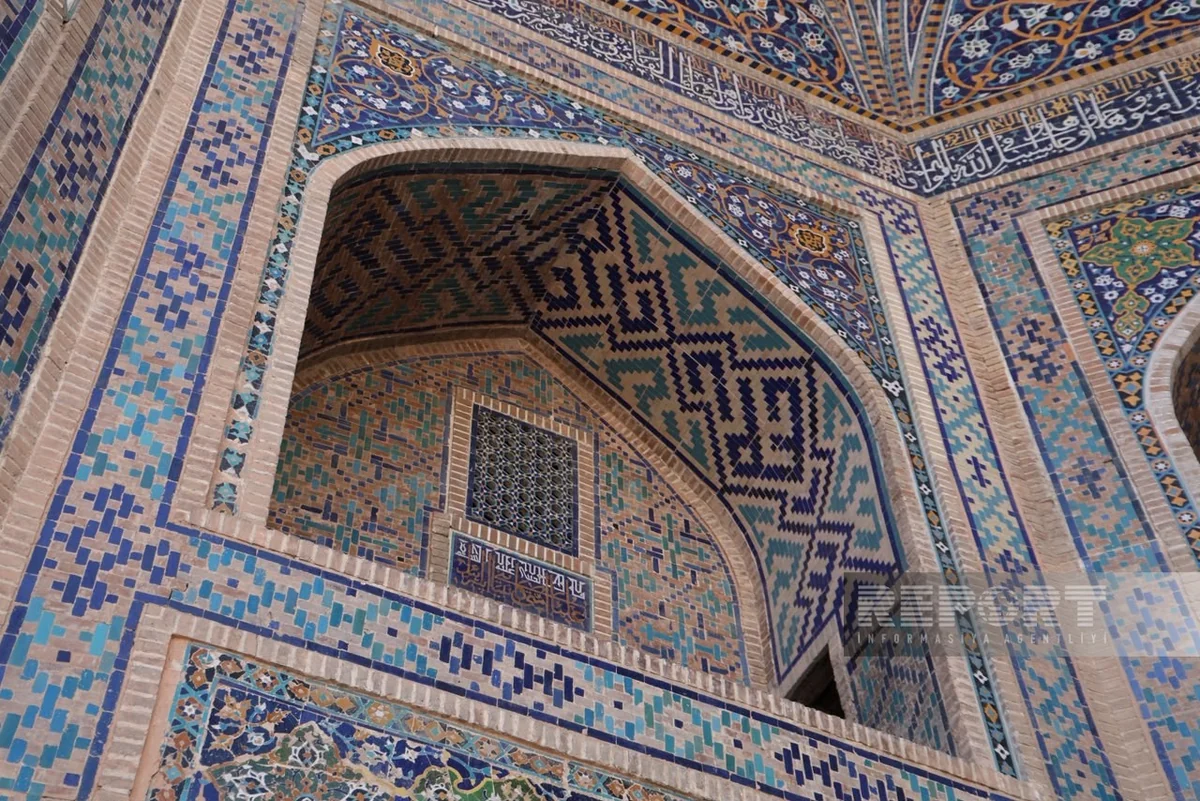
One of Registan's distinctive features is its expressive color scheme. The facade design combines dark and light blue shades with turquoise, white, yellow and orange. Mosaic compositions create intricate patterns in which geometric forms are combined with floral motifs and epigraphic inscriptions.
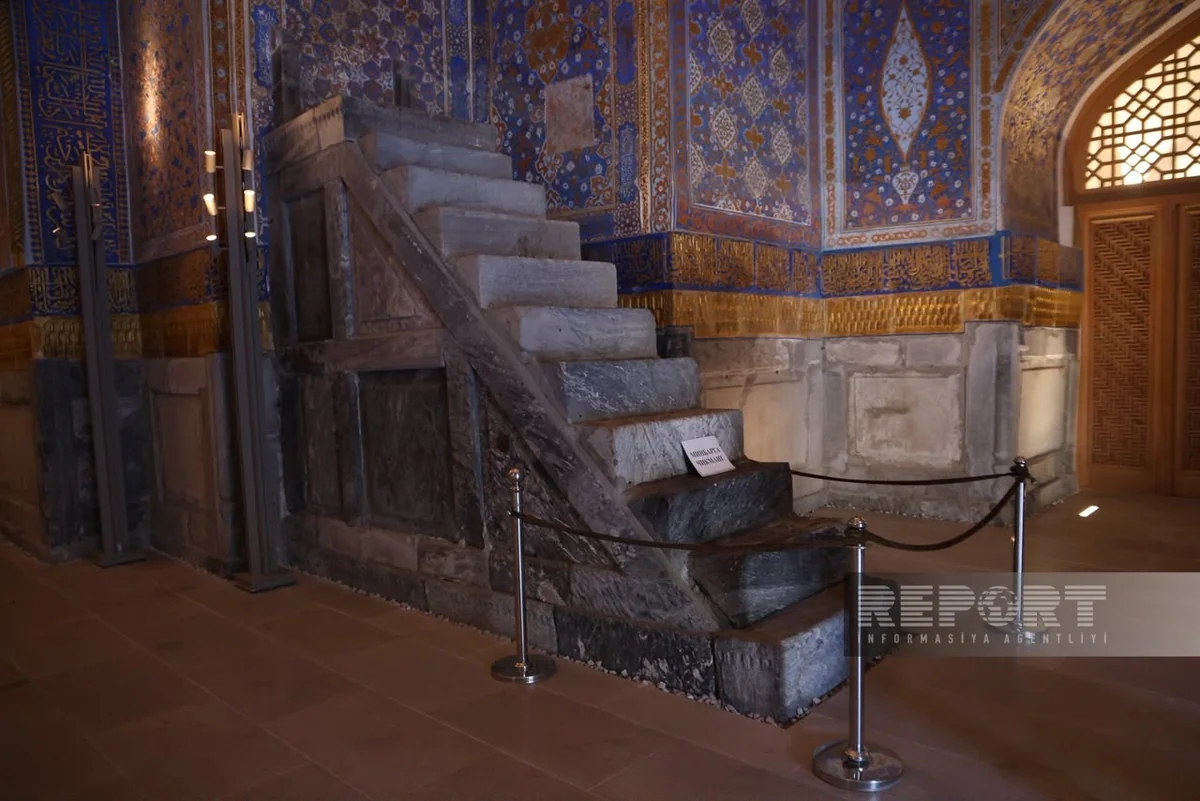
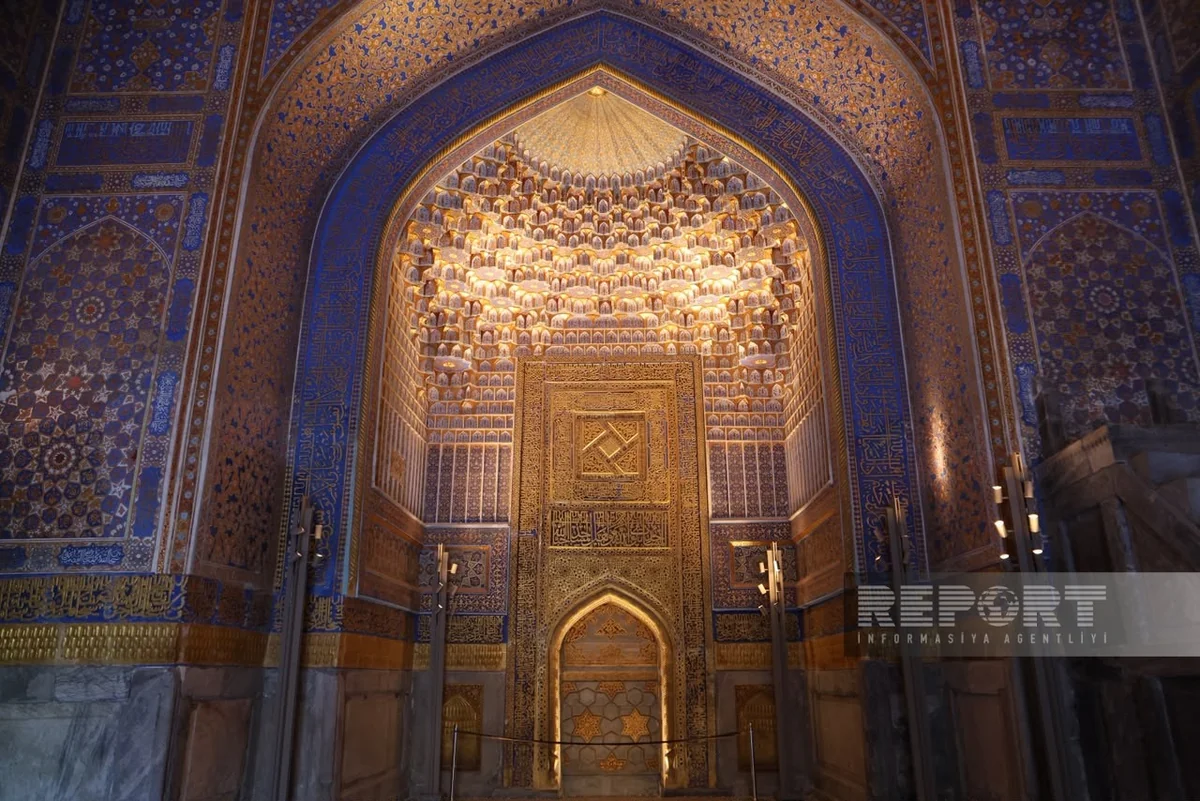
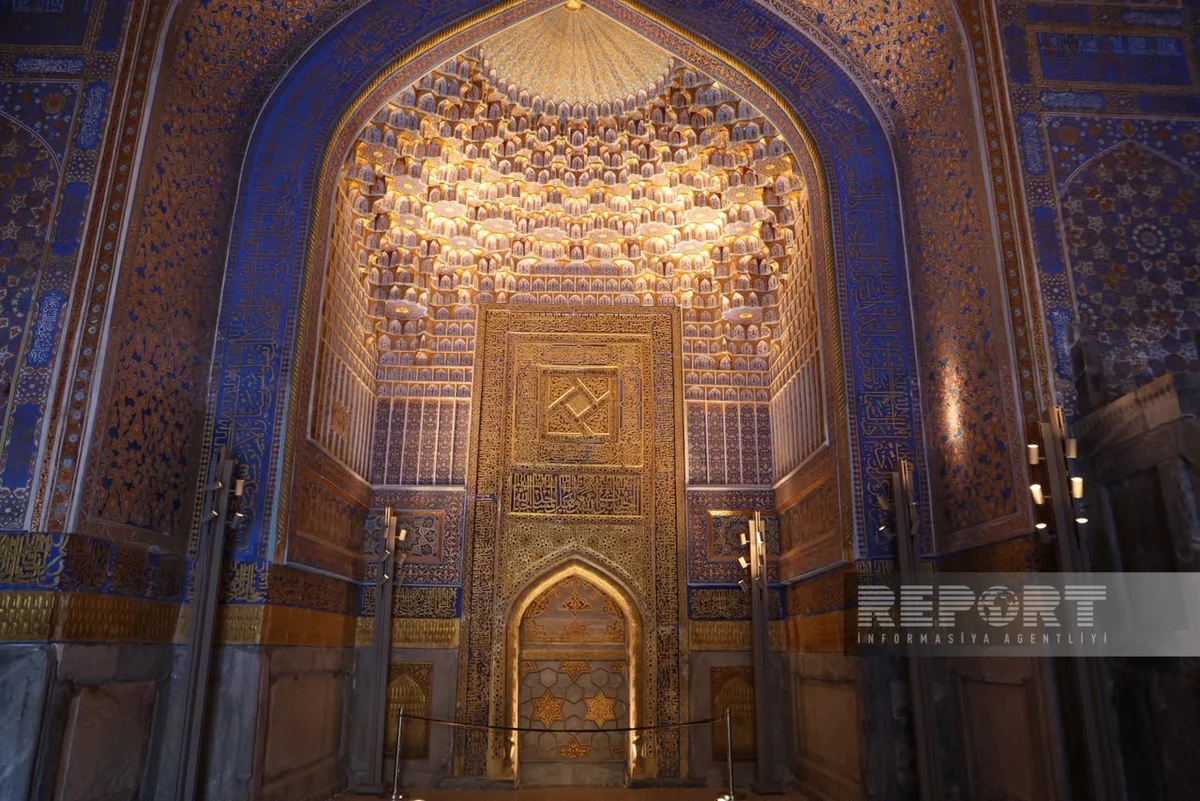
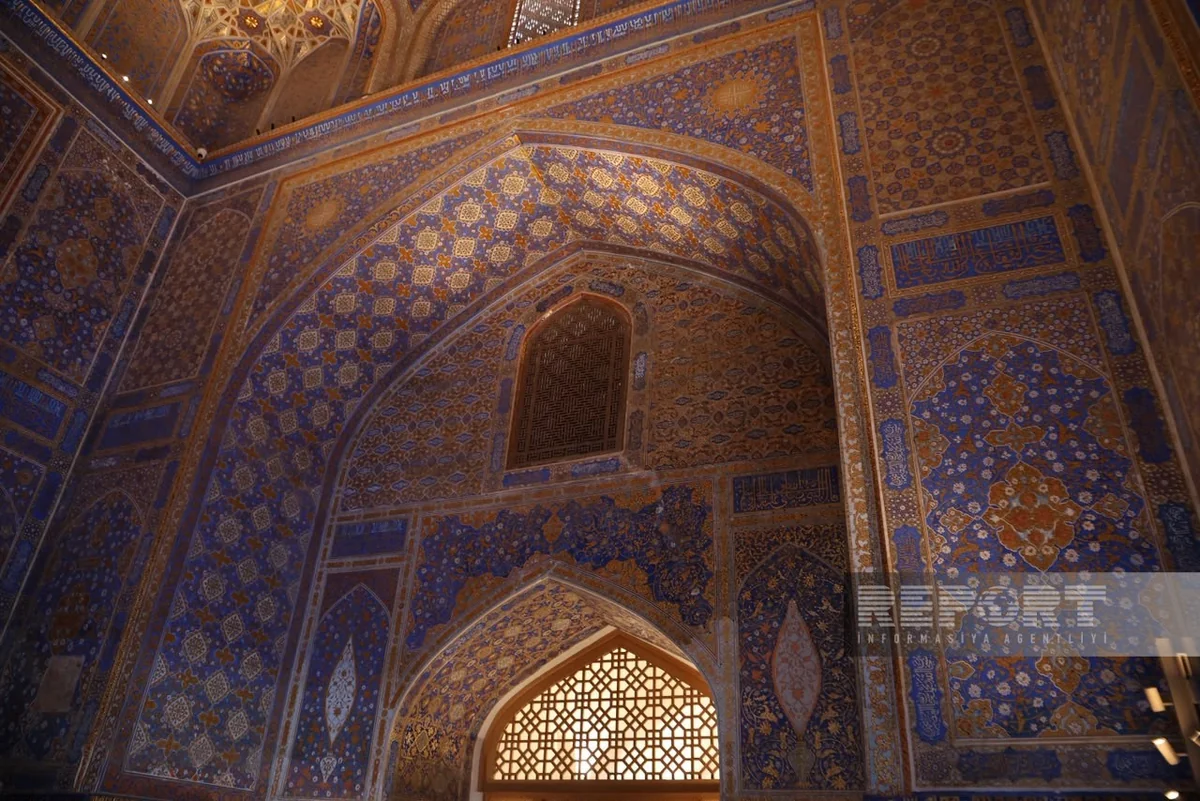
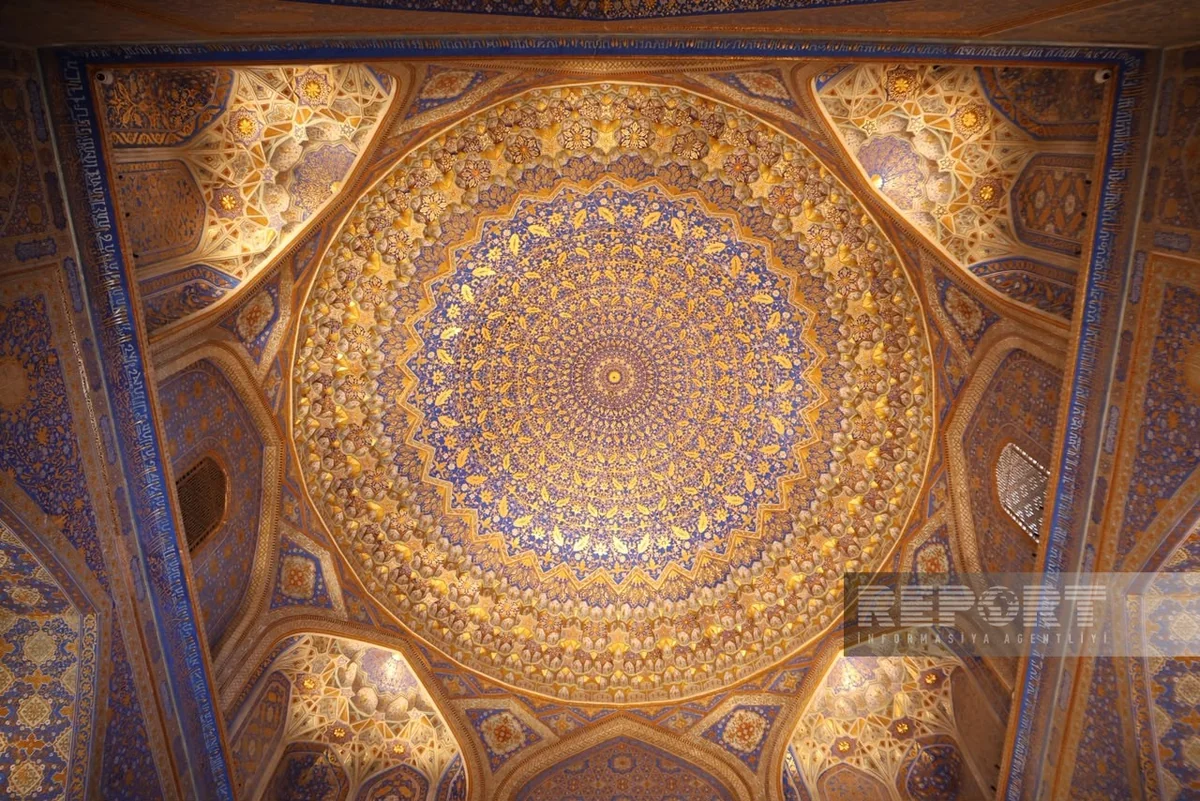
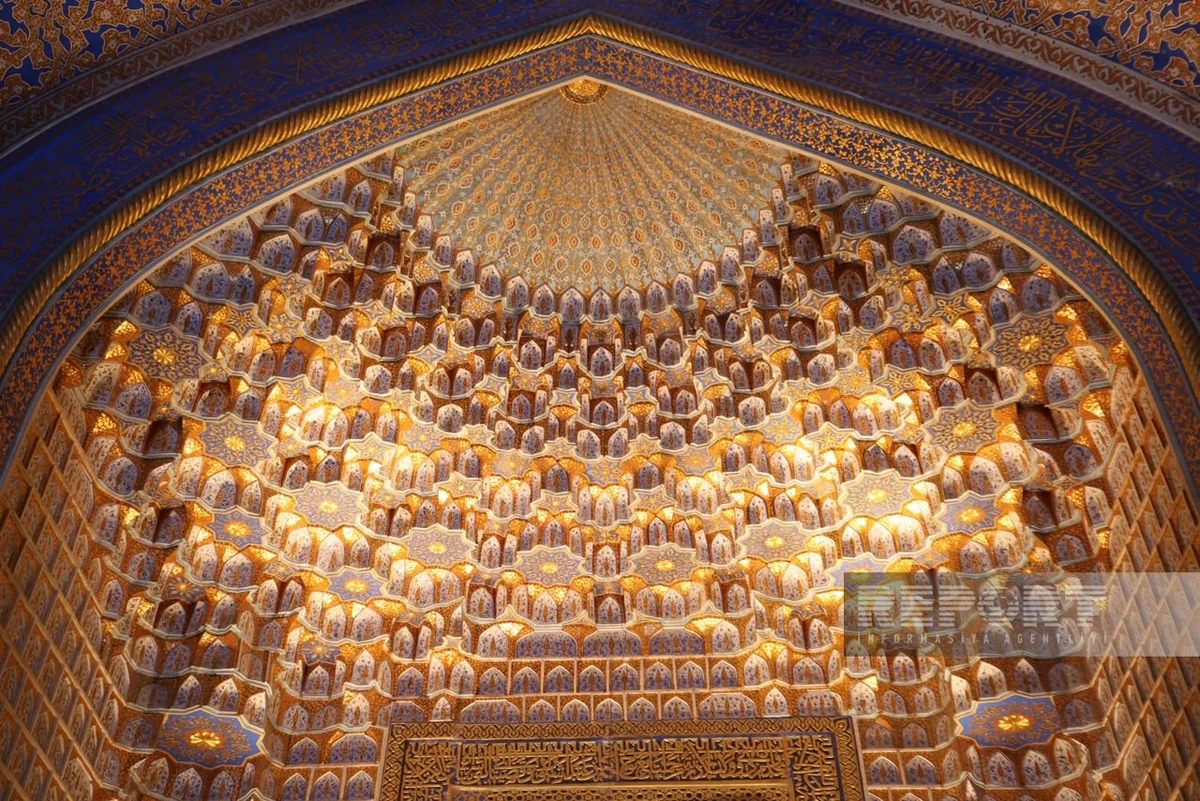
Decorative craftsmanship is particularly striking inside Tilla-Kari. The name of the madrasah translates as "decorated with gold" or "covered with gold." The walls, arches and domed space of the mosque located in the western part of the complex are richly decorated with kundal paintings featuring extensive use of gilding.
While the exterior of Tilla-Kari is dominated by a combination of cool blue, light blue and turquoise shades, its interior is literally filled with the warmth of golden decoration. The ornaments cover a significant part of the interior, creating the effect of a single decorative canvas.
Tilla-Kari served both as a madrasah and a mosque. Religious subjects were taught there, while Samarkand's educational tradition also included the study of mathematics, astronomy, law and other sciences.
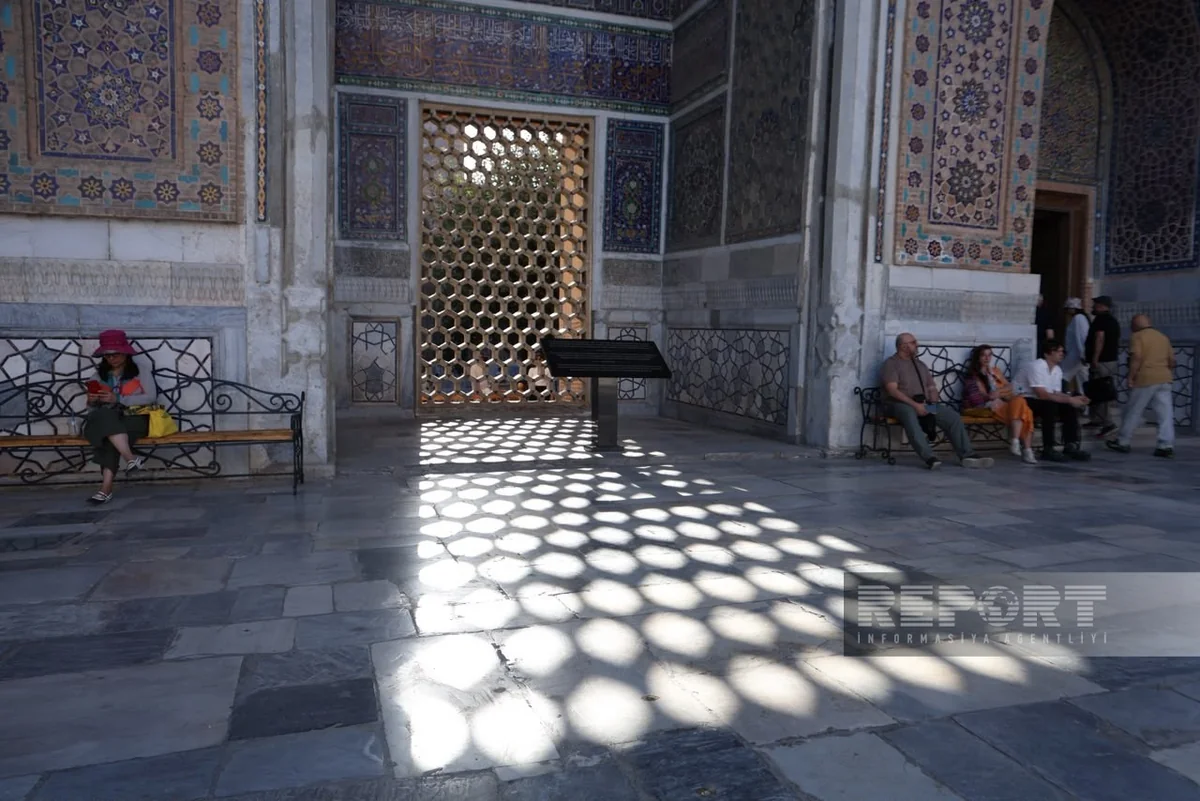
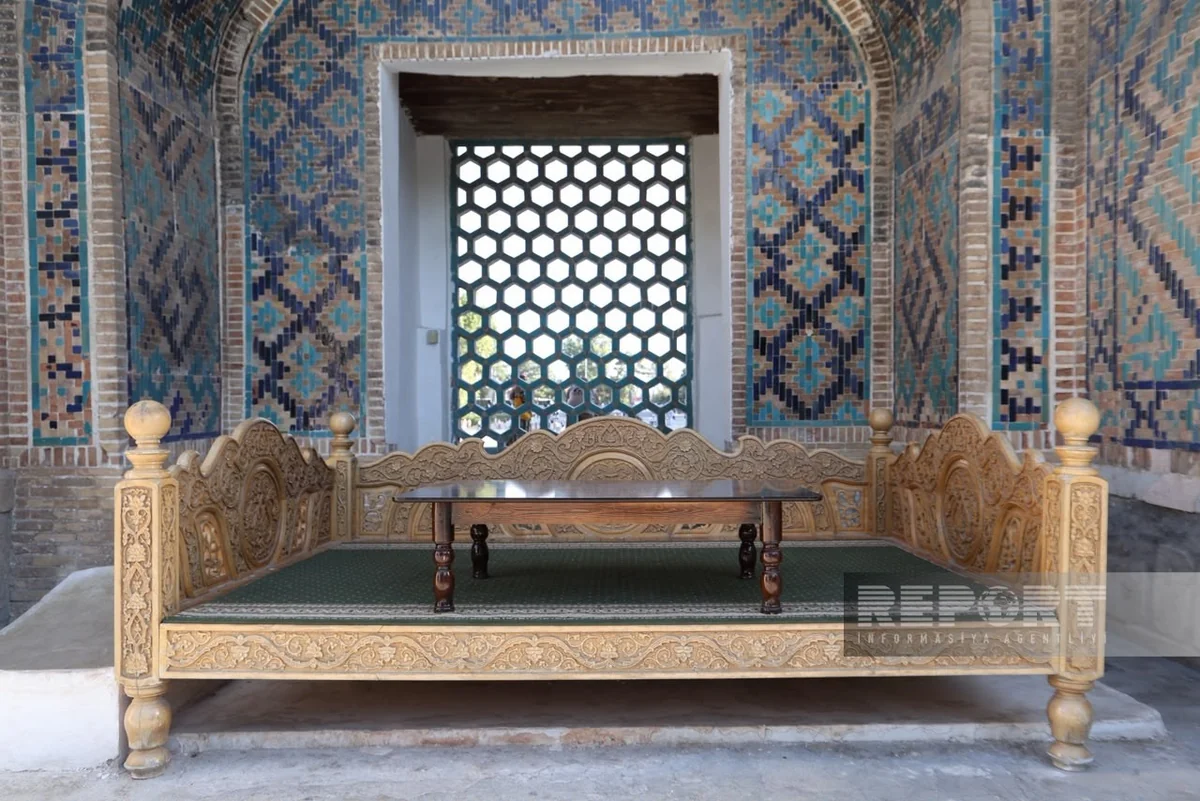
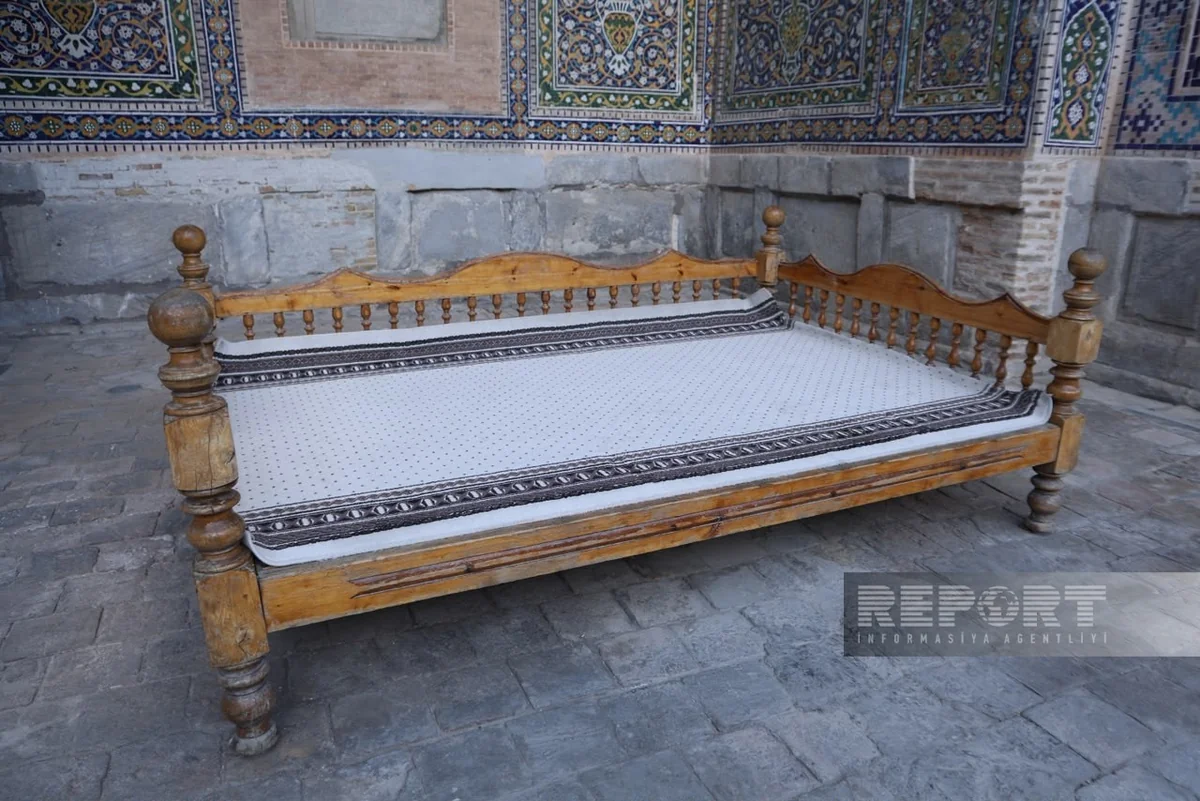
The courtyard contains hujras - small rooms intended for students to live and study. They form a unified space around the central courtyard, combining the madrasah's educational and residential functions.
Today, Registan remains one of Samarkand's main symbols and one of the most recognizable architectural monuments in Central Asia. The historic center of Samarkand, including Registan Square, was inscribed on the UNESCO World Heritage List in 2001.
Registan remains an important cultural and tourism center of Uzbekistan, attracting visitors from around the world.
Author

Photo