Baku 22° C
FAKTI on Pashinyan being solely honored for South Caucasus peace: 'This in itself is nonsense'
- 24 September, 2026
- 17:07
Stay up to date with the top news!
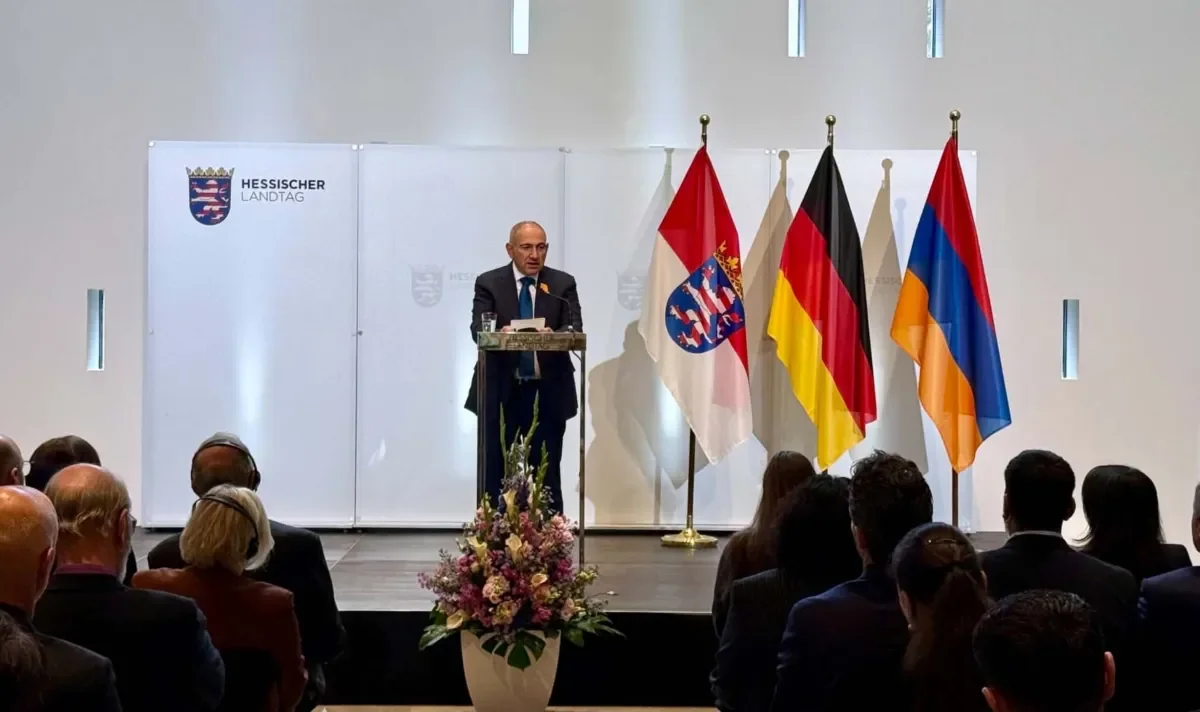
Bulgarian publication FAKTI has published an article questioning the rationale behind awarding the Hessian Peace Prize to Armenian Prime Minister Nikol Pashinyan for his contribution to establishing peace in the South Caucasus, calling the decision absurd.
According to Report, the author of the article expresses surprise that the organizers of the award took a one-sided approach and did not mention Azerbaijani President Ilham Aliyev, noting that the conclusion of the Armenian-Azerbaijani conflict was the result of political will and compromises on both sides.
The publication recalls that in the summer of 2025, the leaders of Azerbaijan and Armenia laid the groundwork for finally ending their long-running confrontation by signing a joint declaration under the mediation of US President Donald Trump.
"Although the end of the conflict was the result of political will and compromises on both sides, the award was awarded and presented only to Pashinyan. The Armenian prime minister made a special trip to Germany and accepted the award, pretending not to notice the jury's one-sided approach," the article says.
According to the author, the decision to award the Hessian Peace Prize stands in particularly sharp contrast to other international awards, where Armenian-Azerbaijani reconciliation was viewed as a joint achievement of the leadership of Azerbaijan and Armenia.
"In February 2026, Aliyev and Pashinyan jointly received the 'Zayed' Prize for Human Fraternity - the award included an international jury and a cash fund of $1 million. In April this year, - The 'Guernica' Award for Peace and Reconciliation. The administration of the Hessian Prize ignored this international context and deleted Azerbaijan from the general formula for peace, turning the bilateral political achievement into a personal merit of Nikol Pashinyan," the article says.
The author also draws attention to the fact that the organizers of the Hessian Peace Prize separately highlighted democratic reforms in Armenia, stating that Pashinyan "consistently leads the process of democratic reforms" and is making "tireless efforts to build democratic institutions in the country."
At the same time, the author cites a number of facts that, in his view, cast doubt on these assessments: "However, the indisputable facts speak to the contrary - the criminal prosecution of the opposition in Armenia has reached its peak, and during the parliamentary elections on June 7, 2026, European observers identified a number of significant violations."
The article also cites remarks by Farah Karimi, the OSCE Special Coordinator and Head of the Short-Term Observer Mission, who said that the election campaign in Armenia "was extremely confrontational, accompanied by divisive rhetoric," while allegations of vote-buying and other violations of electoral legislation were also reported.
In the context of alleged pressure on the election campaign, the article cites statistics from Armenia's Prosecutor General's Office itself: between February 7 and June 7, 2026, 210 criminal cases related to the elections were opened, and criminal proceedings were initiated against 349 people.
At the same time, the author notes, an unprecedented criminal case has been launched in Armenia against the head of the Armenian Apostolic Church amid Pashinyan's open confrontation with its leader, Catholicos Garegin II. The latter has been one of the prime minister's most consistent critics, calling for his resignation and accusing his government of losing the 2020 Karabakh war. On February 14, a criminal case was opened against the Catholicos. He was also barred from leaving the country.
"Awarding a politician for the development of peace in the entire region - this in itself is nonsense. But it is doubly strange that the administration of the award refers to the 'democratic achievements' of Armenia, which so far represent nothing more than a series of criminal cases, arrests and trials against opposition activists," the article says.
In this context, the author concludes, awarding the prize to Nikol Pashinyan appears not as an impartial assessment of his contribution to peace, but as a deliberate and brazen political gesture by European elites toward Armenia because of its geopolitical shift toward the European Union (EU).
Author