
 Baku 25° C
AnewZ: Campaign to defend Ruben Vardanyan driven by biased commissioning parties
- 09 September, 2026
- 13:38
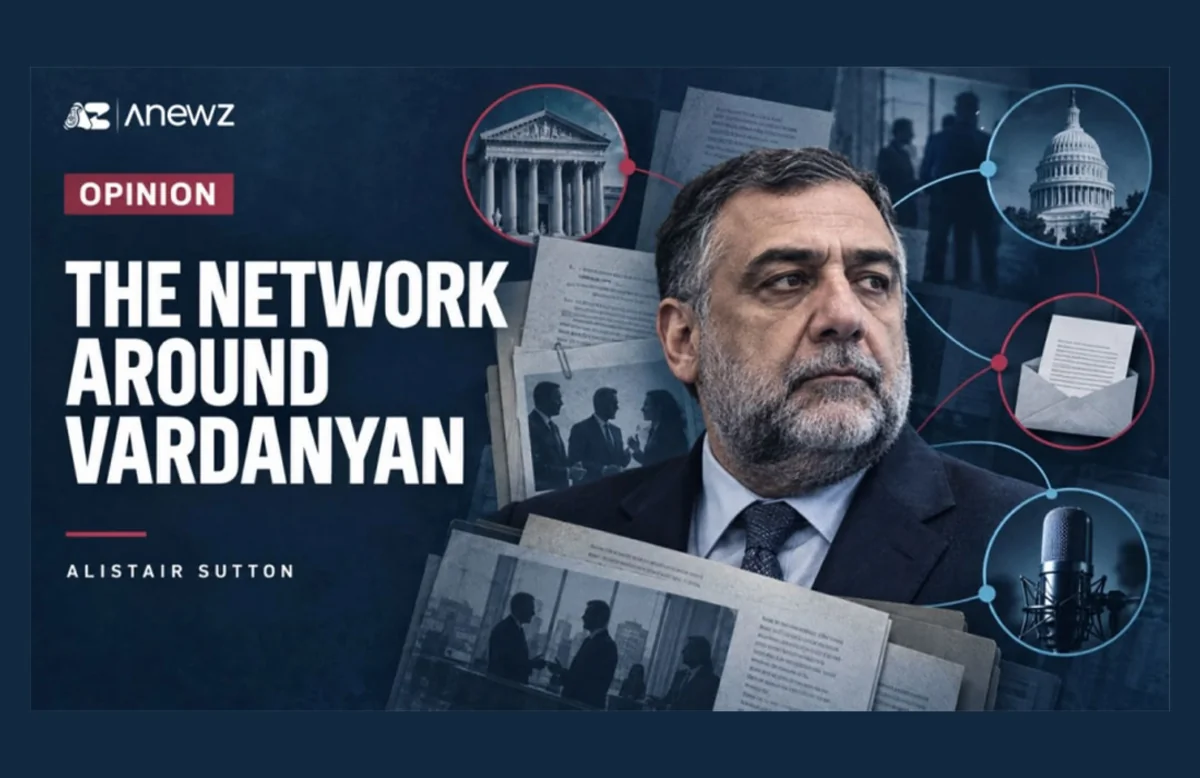
The defense campaign surrounding Russian businessman and former Karabakh separatist leader Ruben Vardanyan is based on the biased position of its commissioners, according to an investigative article published on the AnewZ TV channel website titled "From Moscow to Capitol Hill: The campaign network around Ruben Vardanyan," Report informs.
The material indicates that the primary client behind the campaign is the Ruben Vardanyan Foundation, which finances the Free Armenian Prisoners website and publishes various information and petitions on behalf of the fund. The campaign also involves the law firm Perseus Strategies, which represents the interests of Ruben Vardanyan's son, David.
According to AnewZ data based on official public records, Perseus Strategies' total revenue from lobbying activities amounted to $75,000, though the investigation emphasizes that this figure does not capture the full scale of expenditures on legal and communications work.
As part of their lobbying efforts, representatives involved in the campaign have contacted the US Senate and House of Representatives, the Department of State, and the National Security Council. Concurrently, the campaign has utilized international legal mechanisms, with Vardanyan's team appealing to UN bodies and disseminating allegations of mistreatment.
"But the record is not uniformly favourable to the campaign. In Opinion 46/2024, the UN Working Group on Arbitrary Detention concluded that his case was not one of arbitrary detention. Supporters later challenged the opinion's integrity, alleging a conflict of interest involving the Working Group's chair. No public UN record located for this review showed that the opinion had been withdrawn or replaced by the research cut-off," reads the article.
The TV channel's report also names several lobbyists engaged in the campaign, including Jared Genser, Brian Tronic, Zara Salman, and Yumei Lin, illustrating how lobbying documentation tracks influence operations. It notes that Vardanyan possesses an extensive international network built through business and philanthropy, which has been leveraged to support the campaign.
While acknowledging that the campaign may appear legitimate and legally grounded, the article stresses that media outlets must exercise diligence when publishing material on Vardanyan by disclosing the full chain of affiliation among commissioners.
"The central journalistic question is therefore not whether Vardanyan should have advocates. Every detainee is entitled to legal representation, family contact, humane treatment and a fair process. The question is whether audiences are told when a message comes from a foundation bearing his name, from his son's registered lobbyists, from allied diaspora groups or from a professionally distributed campaign release.
Rights advocacy can be principled and strategically organised at the same time. These propositions are not contradictions. What should be unacceptable is allowing professional repetition to turn an interested party's conclusion into an unlabelled fact.
A petition counts supporters. A lobbying filing records influence work. A press release records distribution. None of them, alone, proves the truth of the underlying case. Journalism's first duty is to show the chain of custody of a claim - who made it, who paid to advance it, who amplified it and what contrary evidence remains," the article concludes.
Author