 Baku 19° C
Andriy Hnatov: Hard to predict course of war with Russia - INTERVIEW
- 15 May, 2026
- 17:25
Stay up to date with the top news!
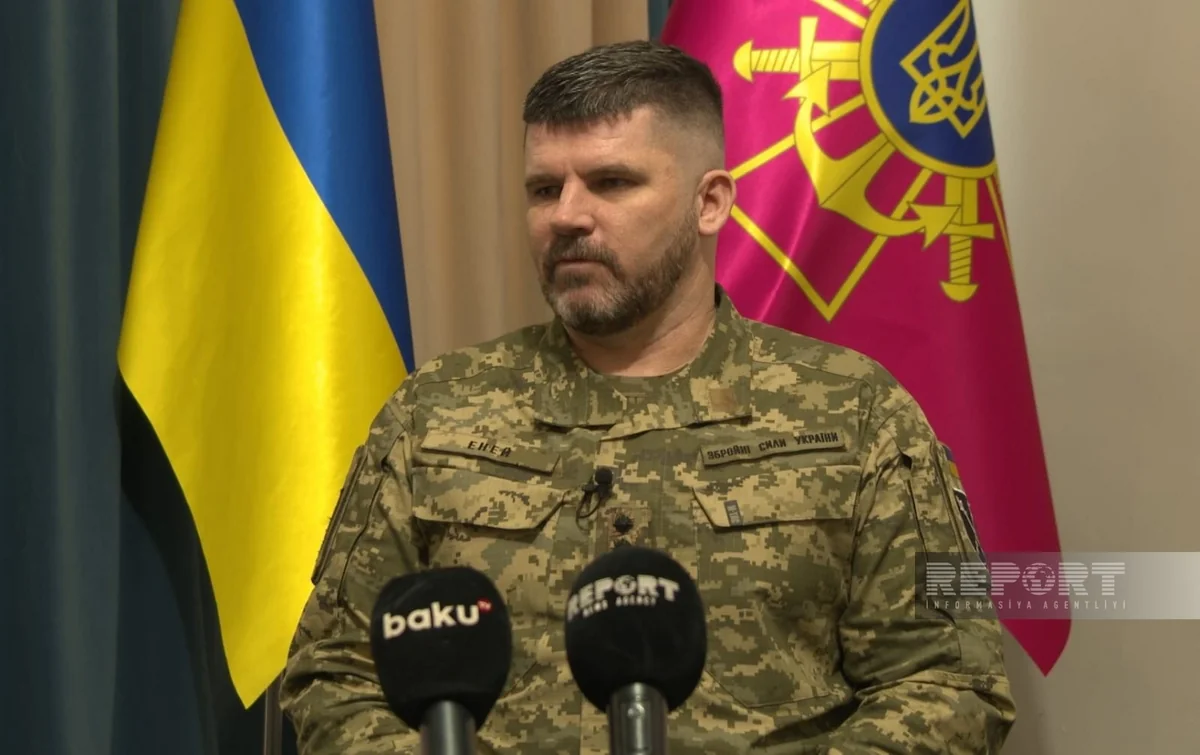
In an interview with Report, Lieutenant General Andriy Hnatov, Chief of the General Staff of Ukraine's Armed Forces, discussed ongoing military reforms, his joint visit to Azerbaijan with President Volodymyr Zelenskyy, cooperation with Türkiye, and the latest situation in the war.
Report presents the interview:
- How have the Ukrainian army and its arsenal changed in the four years since the start of the full-scale war?
- Our Armed Forces have undergone a very serious combat journey over the past four years, accumulating unique experience. While waging such a large-scale war, the country's military and political leadership carried out reforms that led to significant changes in the army.
First and foremost, we have managed to significantly increase the combat potential of the Armed Forces. During this period, numerous new organizational structures, brigades, regiments, combat and logistical support units have been formed.
A crucial step was the decision to restructure the command system at the operational level. Corps command bodies have been established, and corps teams have been formed. This made it possible to strengthen the command and control component of the Ukrainian Armed Forces, optimize the command and control system, and transition from temporary military command structures to established ones. The reorganization continues: its second phase is currently underway.
The decision to create the Unmanned Systems Forces of the Ukrainian Armed Forces deserves special attention. This was a timely and very appropriate decision.

- Based on all of the above, what is unique about the changes taking place?
- Only two countries in the world have experience in waging modern warfare on such a scale. One is Ukraine, and the other, unfortunately, is Russia. Ukraine today has a colossal and truly unique experience. This refers to a well-established system for protecting the airspace and critical infrastructure of a country with a vast territory. We are not talking about isolated systems that can be manufactured or contracted elsewhere, but rather a unique system that integrates multiple aspects.
Without such a system, talking about truly protecting the country and its facilities from modern air threats is simply naive. It is simply impossible. A comprehensive, well-established air defense system is needed. Ukraine has such experience.
- You recently visited Azerbaijan as part of a delegation led by President Volodymyr Zelenskyy. What topics were discussed during the talks?
- This visit is, first and foremost, a step toward strengthening the strategic partnership between the two countries, which is beneficial for both sides. First and foremost, Ukraine is ready to share its expertise and assist in organizing and strengthening its air defense system. I won't go into many aspects of this cooperation now-that's a matter for both countries. Overall, the goal is the same: to help Azerbaijan modernize its defense and bring it in line with today's challenges.

- During the visit of President Zelenskyy's delegation to Türkiye, which included you, the creation of a new military alliance-Türkiye, Ukraine, Norway, and the United Kingdom-for regional security was discussed. What can you say about this?
- I wouldn't like to talk about creating any alliances-we're talking about a mutually beneficial partnership. These are countries that recognize that something may pose a threat to their sovereignty in the near future. That's why they're looking for ways to strengthen their security and are turning to Ukraine-working with it, concluding agreements, strengthening relations, and exchanging experiences. At the same time, they're providing us with support.
We, in turn, are prepared for this cooperation and provide our partners with the assistance Ukraine can offer today. Over the years, we've accumulated invaluable experience fighting an adversary that significantly outperforms us in every respect-resources, capabilities, and the size of its armed forces.
- You mentioned a partnership with Türkiye. Given the similar experiences of both countries, is a joint supply of drones possible?
- The fact is that this partnership has been in place for a long time and continues to this day. We use not only Bayraktar products, but a wide range of other systems. The dynamics of combat operations today are so intense that it is difficult to make predictions. As the war progresses, we periodically improve both our own production and the weapons we purchase-it's a necessity.
- What is the situation at the frontline?
- There are currently no significant changes at the frontline. Russia, despite losses, is trying to continue its offensive operations on a daily basis. The enemy's main efforts remain focused on the Pokrovsk and Oleksandria (Donetsk Oblast) sectors. I can confidently say that, despite all efforts, the Russian Armed Forces lack either strategic or operational initiative.
Another significant fact is that enemy losses have come very close to, and sometimes even exceeded, the number of contract soldiers called upon to replace them. Russia is essentially already conducting combat operations under conditions of a significant shortage of manpower. This situation, according to our forecasts, will only worsen.

- Media outlets have been talking about new counteroffensive operations lately...
- I won't talk about what the Ukrainian Armed Forces are planning, but I can assure you that we will do everything necessary to stabilize the situation, stop the enemy, and create conditions that will force them to come to the negotiating table.
- Predictions of a protracted war are becoming more and more common. Is Ukraine prepared for a long-term confrontation?
- How long the war will last depends on the Russian leadership's willingness to continue it. Ukraine is ready to end the war and strives to end it, to ensure peace on its territory where military action is taking place, and not to resolve these issues militarily. We never intended to wage war. How long it might last depends on their actions. Opinions vary. Making predictions about this war is quite difficult. We once heard predictions that Russia's operation on the occupation of Ukraine would last three days. This wasn't just from Russian experts-there were different assessments. I don't think that from a resource standpoint, Russia will be able to wage war for several more years.
Author