
 Baku 24° C
Volcanic pumice blocks coastline in Papua New Guinea
- 10 June, 2026
- 10:33
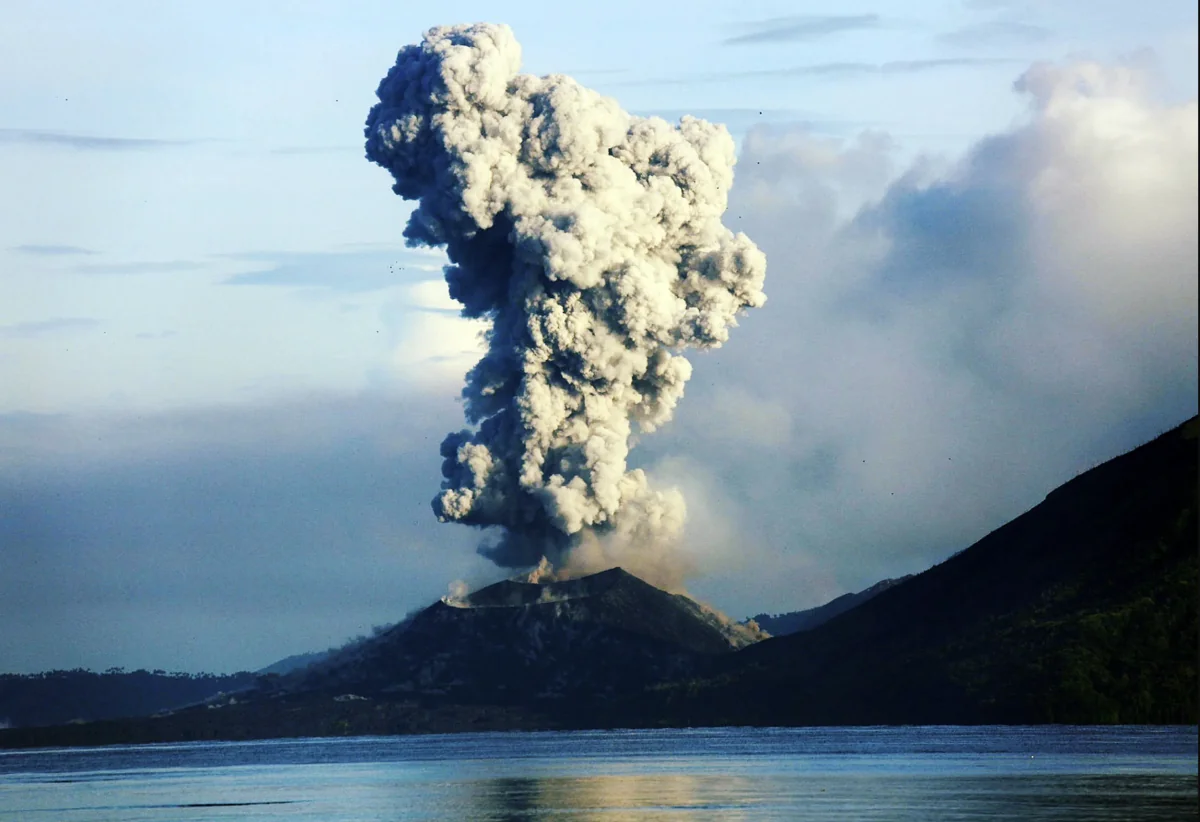
In Papua New Guinea, a massive eruption of an undersea volcano in the Bismarck Sea has created large floating fields of volcanic pumice, blocking boat traffic, damaging fishing areas, and raising concerns about potential food shortages.
According to Reuters, cited by Report, the eruption has disrupted daily life along the coastline.
NASA's satellite observations show that the ongoing eruption began on May 8, approximately 125 kilometers southeast of the island. Since then, vast amounts of pumice have risen to the ocean surface, and the water around the eruption site has changed color.
Residents say that in some areas it is now possible to walk where water previously existed, while boat movement has become difficult, raising fears of a possible humanitarian crisis.
Scientists note that pumice itself is not dangerous, but the main issue is the sheer volume, which makes navigation nearly impossible. They add that, driven by currents and tides, pumice fields can remain afloat for months or even years before eventually becoming waterlogged and sinking.