
 Baku 19° C
Taiwan's 2027 defence spending to rise 16%
- 09 August, 2026
- 14:57
Stay up to date with the top news!
Taiwan's cabinet will propose a 16% annual rise in defence spending for 2027 which will for the first time exceed T$1 trillion ($31 billion), the official Central News Agency said on Sunday, as Taipei bolsters its military, Report informs via Reuters.
The move will come as China, which views Taiwan as its own territory, has ramped up military and political pressure over the past few years to assert its claims, which Taipei strongly rejects.
But Taiwan also faces calls from Washington to spend more on its own defence, mirroring pressure from the United States on Europe, something President Lai Ching-te has enthusiastically embraced.
The proposed budget of more than T$1.1 trillion, to be unveiled on August 20, includes funding for the coast guard, veterans and special projects, and will - like this year - exceed 3% of gross domestic product, the Central News Agency said.
Detailed figures await the final cabinet meeting, it added.
The island's government has made military modernisation a key policy platform and has repeatedly pledged to spend more on its defences, including developing made-in-Taiwan submarines, given the rising threat from China.
China's military operates almost daily around Taiwan, and holds periodic war games, the last in late December.
China is also rapidly modernising its armed forces, with new aircraft carriers, stealth fighter jets and missiles.
In March, China unveiled a rise of 7% in this year's defence spending, to 1.91 trillion yuan ($283.08 billion).
China refuses to talk to Lai, saying he is a "separatist". He says only Taiwan's people can decide their future.
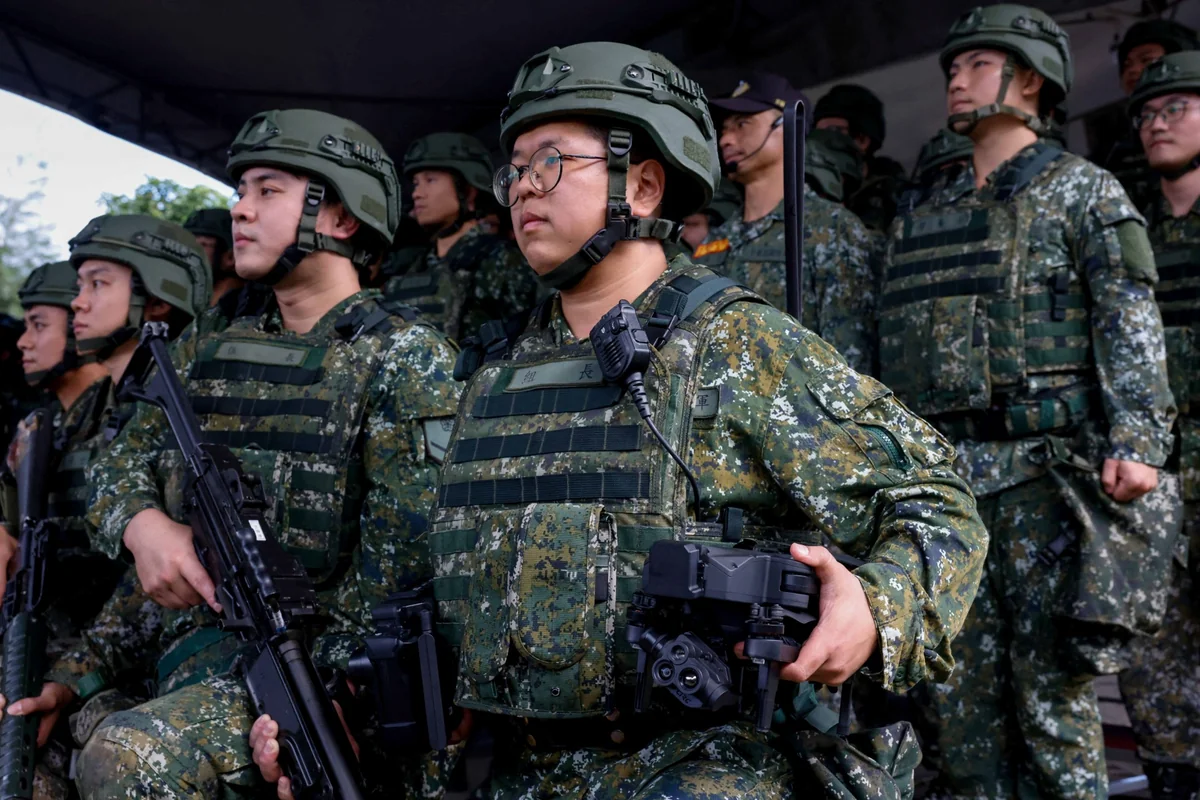
Taiwan is currently in the middle of its annual Han Kuang military exercises.
On Taiwan's east coast on Sunday, the military also carried out a nuclear, biological and chemical decontamination drill, simulating a chemical weapons attack.
Soldiers, tanks and armoured vehicles were decontaminated and disinfected in a drill aimed at testing the ability to respond quickly to such an event and get personnel and equipment back out to the front lines as soon as possible.