 Baku 17° C
Nataliia Naumenko: 8 million citizens left Ukraine since war began - INTERVIEW
- 04 June, 2026
- 10:32
Stay up to date with the top news!
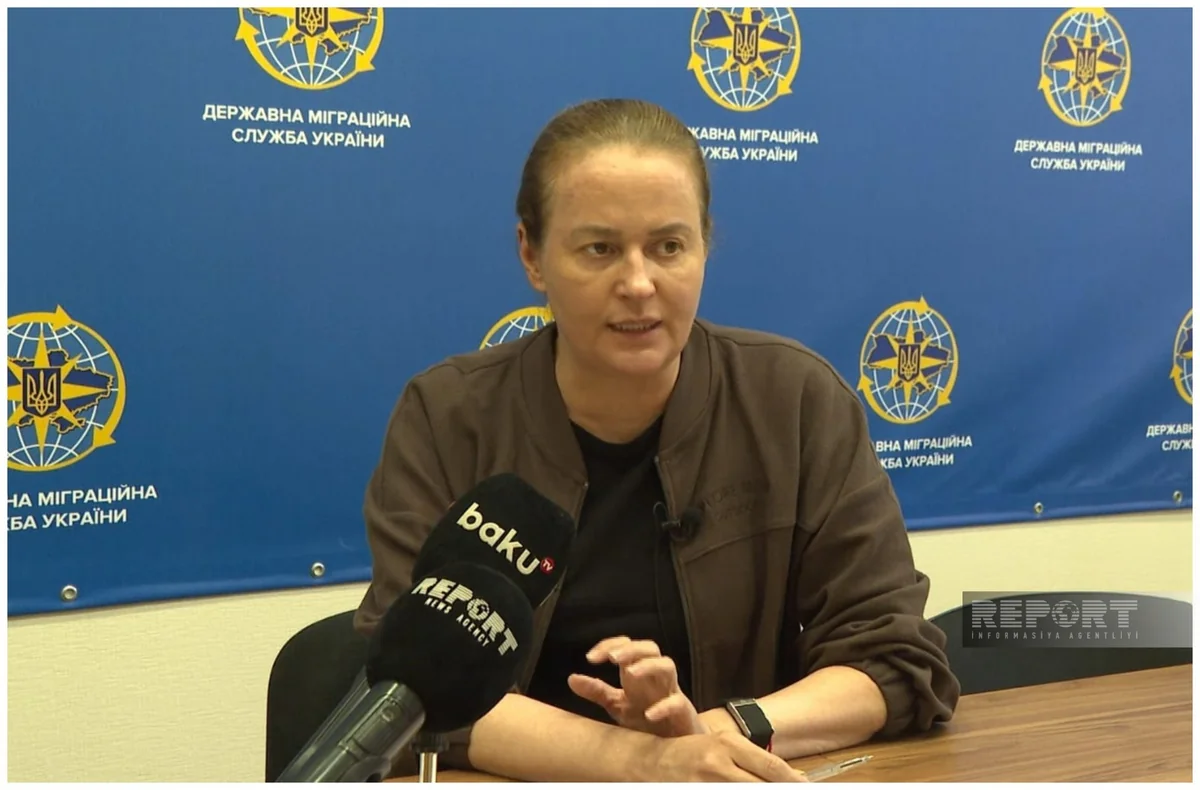
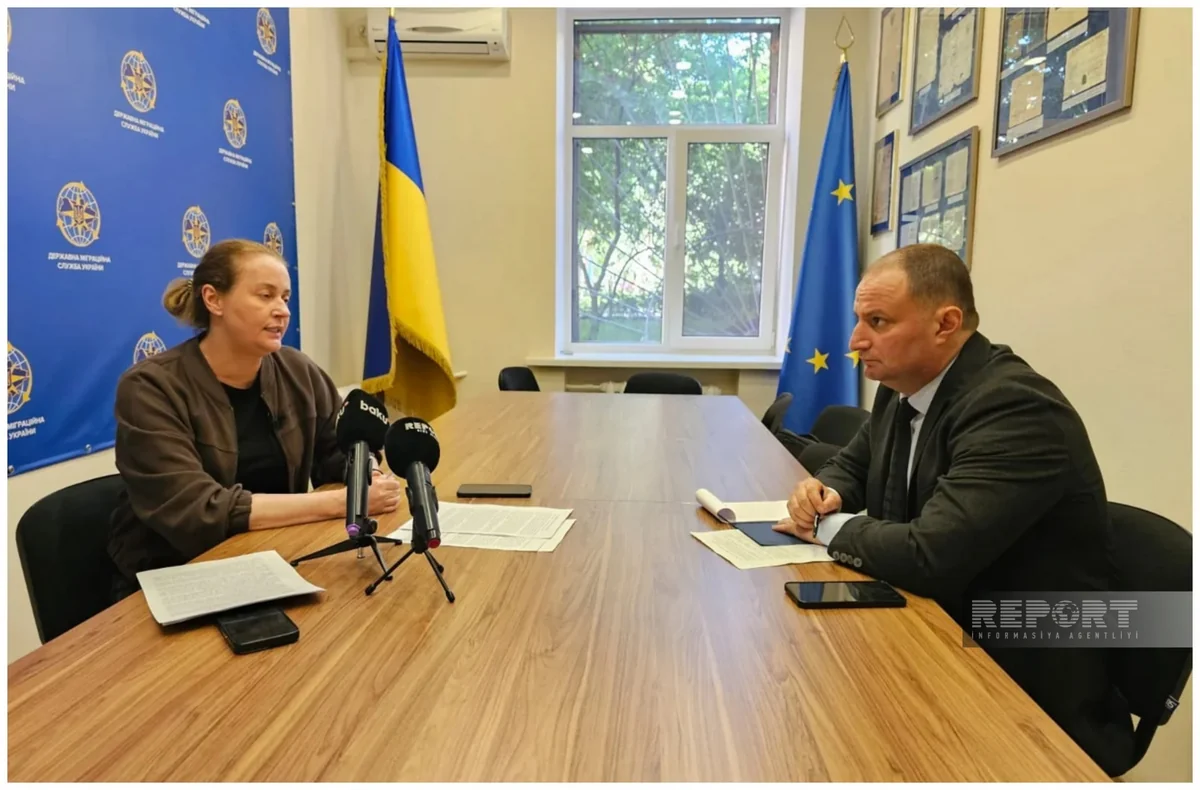
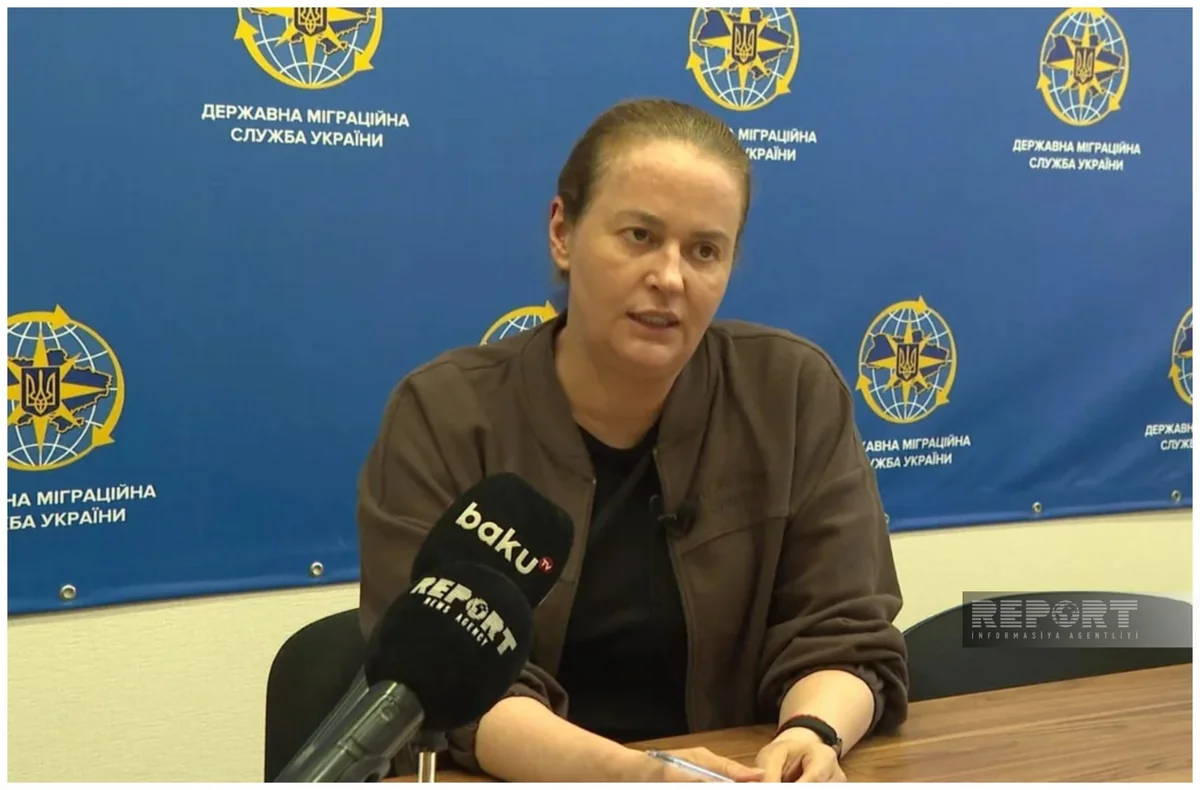
In an interview with Report's Eastern European Bureau, Nataliia Naumenko, head of the State Migration Service of Ukraine, discussed the migration situation in Ukraine since the start of the Russian-Ukrainian war, specifically regarding citizens who have fled the country and foreigners residing in Ukraine, as well as the state's migration policy.
- How has the migration situation in Ukraine changed during the war?
- Since the beginning of Russia's full-scale war against Ukraine, we have faced very significant changes in all areas of our lives. And, unfortunately, these changes have not been positive. The migration situation has changed primarily due to the departure of Ukrainian citizens abroad. Today, we are talking about approximately 8 million citizens who have left Ukraine. Of course, the state is currently doing everything possible to maintain contact with them.
To this end, we have expanded the State Migration Service's authority abroad through the representative office of the state-owned enterprise "Document." This enterprise currently operates in European countries and Canada. This year, we will also expand our cooperation with the United States.
This means that every citizen abroad can contact us at our representative office or branch and obtain an ID card or passport. This way, the state maintains contact with its citizens, and Ukrainian citizens maintain contact with their country.
Regarding the situation with foreign citizens in Ukraine, there are a number of issues. Firstly, we have significantly tightened the conditions for staying in Ukraine for citizens of the Russian Federation. Everyone knows that a visa regime has been introduced for Russian citizens, and they must undergo a series of security checks to enter Ukraine. These checks are carried out by the Security Service of Ukraine, the Border Service, and, of course, the Migration Service.
Furthermore, there have been situations where foreigners were unable to renew their temporary or permanent residence permits due to the war, but wanted to remain in Ukraine. Therefore, in 2022, a decision was made to extend such permits even after their expiration, and such individuals were considered legally residing in Ukraine.
We have only now changed these rules. This means that people whose temporary residence permits have expired must either renew them or otherwise regulate their legal status.
Furthermore, entry procedures into Ukraine and the issuance of permits have been significantly simplified for foreigners who wish to defend Ukraine's territorial integrity and have signed a contract with the Armed Forces of our country. Until May of this year, a military ID card served as an identity document for such foreigners.

At the same time, we currently have commitments to the European Union. We are adapting our migration legislation as much as possible to the requirements of European integration.
First and foremost, this concerns the Pact on Migration and Asylum, adopted by the European Union in May 2024. We have revised our migration legislation. We have a roadmap approved by the Cabinet of Ministers of Ukraine. An important bill, "Unified Work Permit for Foreigners Staying in Ukraine for Employment Purposes," is already pending in the Verkhovna Rada.
We hope that, following its adoption by the Verkhovna Rada, procedures for foreign citizens' access to the labor market will be significantly simplified, improved, and become more understandable and transparent for both the state and foreign citizens and employers.
- How many foreigners hold permanent or temporary residence permits in Ukraine?
- As for foreigners with permanent or temporary residence permits, as of 2026, approximately 354,000 foreigners and stateless persons reside in Ukraine. Of these, more than 305,000 reside permanently, meaning they have immigration permits and permanent residence permits.
Another 48,000 people hold temporary residence permits. Therefore, today we are talking about 354,000 foreign citizens residing in Ukraine. This represents approximately 1% of the country's total population. About half of them are citizens of the Russian Federation, or approximately 151,000 people.
Next in line are citizens of Moldova, with 21,000, and citizens of Azerbaijan, with over 17,000. Then come Armenia, Georgia, Belarus, Uzbekistan, and Vietnam.
I should immediately note that Russian citizens are not new arrivals. They are people who have been living in Ukraine since before the war. Typically, they are related to Ukrainian citizens. Their spouse is a Ukrainian citizen, or their children hold Ukrainian citizenship. Family reunification is the basis for issuing most permanent residence permits in Ukraine.
Regarding temporary residence permits, the largest number of such documents were received by citizens of Azerbaijan, with over 4,000 people. Next come Türkiye, with over 4,000, Moldova, Belarus, the US, India, Uzbekistan, Georgia, China, and Israel.
Thus, we have compiled a kind of migration map to understand the current migration situation in Ukraine.
- What measures are being taken in the migration sphere to counter the threat of saboteurs and agents infiltrating the country from abroad?
- Of course, security is currently the primary determining factor when admitting foreign citizens to Ukraine. Since the start of the war, security protocols have been radically changed. Furthermore, over the past four years, the State Migration Service, together with law enforcement agencies, has been reviewing the profiles of all foreign citizens who have applied for permanent or temporary residence permits in Ukraine or have undergone the procedures for obtaining such permits or citizenship.
We constantly conduct migration operations in the country-both independently and jointly with the Security Service and the National Police of Ukraine-to identify individuals who may pose a security threat.
When it comes to saboteurs or foreign agents, this issue should be considered from several perspectives.
First, when a person attempts to obtain a visa to enter Ukraine, the Ministry of Foreign Affairs is involved in the process, and this is the first stage of the security screening process. Furthermore, we have a list of high-risk countries. This list includes over 70 countries. We more thoroughly check their documents, connections, biographies, social media activity, statements regarding the situation in Ukraine, and much more.
- Ukrainian society is asking when the procedure for obtaining Ukrainian citizenship will be simplified for foreigners fighting for the country. Are such changes expected?
- From 2016 to 2026, Ukraine has been consistently and systematically working to continually simplify the procedure for obtaining Ukrainian citizenship for foreigners fighting for our territorial integrity.
If a person receives Ukrainian citizenship, they are no longer required to first renounce their nationality. It is sufficient to have a valid military contract or to have participated in military operations.
After signing a military contract, a person can apply for Ukrainian citizenship within a year. They can either obtain an immigration permit or obtain Ukrainian citizenship.
Furthermore, we have simplified access to immigration matters for them. A deferment is also provided for exams in the Ukrainian language, history, and the Constitution of Ukraine. This is important, as someone who fought on the front lines is not always able to pass such exams immediately.
- After any war, a large-scale reconstruction phase inevitably begins. Given the scale of the war in Ukraine and the extent of the destruction, a large labor force will be needed for reconstruction. Are you considering the possibility of attracting migrant workers?
- Today, Ukrainian society, across all levels, is engaged in a serious and very important discussion about labor migration, the number of migrants Ukraine needs, and what will happen after the war.
I generally believe that labor migration is a completely natural process. It existed before, it exists now, and it will continue to exist in the future, regardless of what anyone says or how they envision the country's future.
Before the war, more than 21,000 work permits were issued in Ukraine. Currently, this figure stands at 8,000-9,000. And, of course, it will only be possible to discuss how much labor Ukraine will need after the war is over.
When all our guys return from the war and take their jobs, economic recovery begins, construction work begins, and we will see how many specialists the economy really needs and in what sectors.
Of course, this is my personal opinion. And then we can say that a certain region of Ukraine, a certain sector of the economy, needs 10, 20, 30, or 40,000 people to help the country rebuild its economy.
These are completely natural processes, and we take them calmly. Frankly, I don't care at all which country the skilled labor comes from. The main thing is that people work here.
Of course, I prefer countries that have historical, close, and friendly ties with Ukraine and that have traditionally been integrated into these labor processes.
For example, before the war, Turkish citizens were excellent road builders, Azerbaijani citizens were successful in business, and Belarusians were excellent doctors.
- Recently, an anti-migrant rally took place in central Kyiv under the slogan "Ukraine for Ukrainians!" What do you think are the social causes of such sentiments?
- In fact, similar things have already happened in Ukraine. In 2016, I opened a refugee center in the Kyiv region. There were many protests there, people demonstrating against foreigners.
We're talking about manipulation. This isn't about real public sentiment. Russia is very adept at using such situations against us. When our men die at the front, rumors spread that they are supposedly being replaced by foreign men.
These are all attempts to exert psychological pressure. We conducted an analysis, studying both Ukrainian and Russian Telegram channels. We managed to find the original source of this.
Sometimes, perhaps, the somewhat inaccurate statements of some Ukrainian experts, who dare to suggest that Ukrainians will be replaced or that Ukraine's population will be replaced by migrants, play a role.
Therefore, dialogue with society is crucial here. It's important to convey to people that labor migration, in a normal format, is an opportunity for the country's economic recovery.
Author