
 Baku 23° C
Isar Aerospace becomes first European commercial space firm to deliver satellites into orbit
- 06 September, 2026
- 11:43
Stay up to date with the top news!
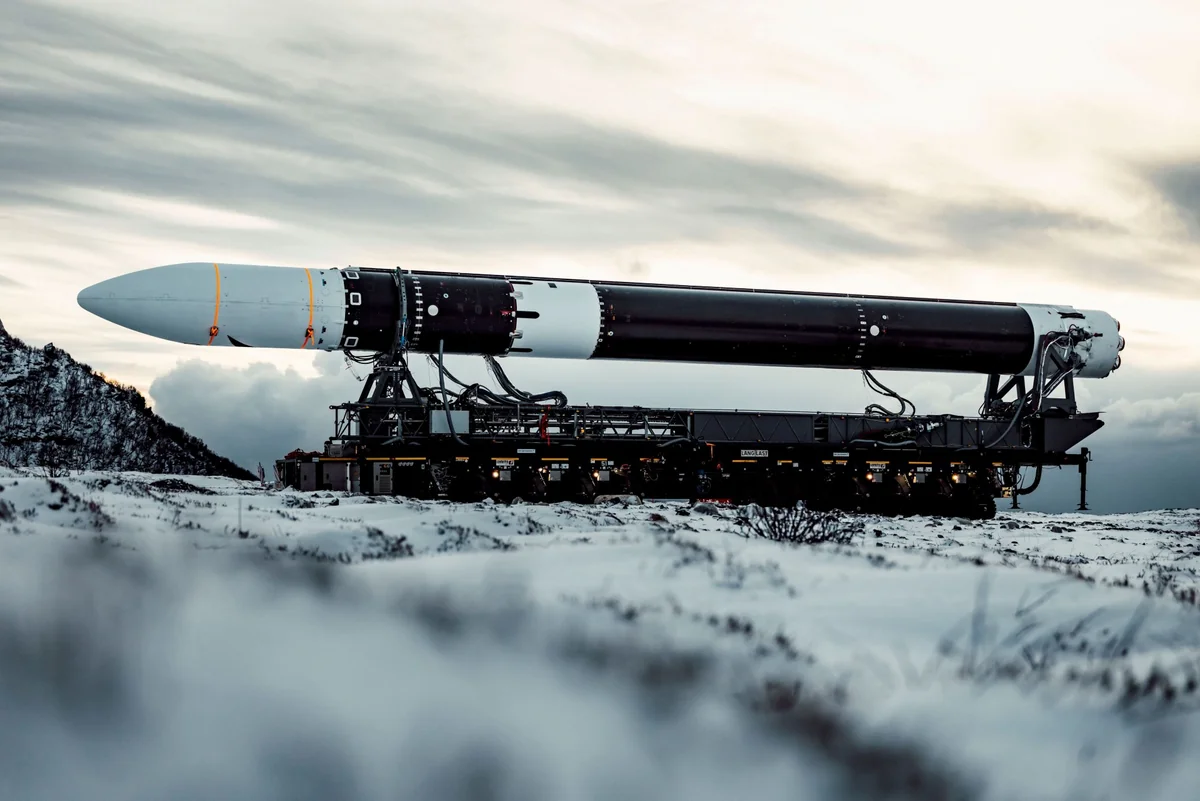
German rocket maker Isar Aerospace said its Spectrum launch vehicle successfully reached orbit and deployed satellites on its second flight, marking a major milestone for Europe's commercial space industry, Report informs, citing the company.
The "Onward and Upward" mission lifted off from Isar Aerospace's dedicated launch complex at Andøya Space in Norway at 10:12 p.m. CEST on September 5.
The company said the rocket passed through maximum aerodynamic pressure, completed main-engine cutoff and stage separation, and successfully ignited its second stage. It crossed the Kármán line at an altitude of 100 km, jettisoned its payload fairing and later completed a circularization burn before separating the spacecraft.
Isar Aerospace said it was working with customers to confirm the status of the deployed satellites.
Chief Executive and co-founder Daniel Metzler said the flight demonstrated that Europe now had an additional sovereign launch capability and that the company would focus on scaling rocket production and delivering on its order backlog.
The mission carried payloads selected through the German Space Agency at DLR's Microlauncher Competition, which provides educational institutions and start-ups with lower-cost access to space and is funded through the European Space Agency's Boost! program.
Isar Aerospace is also expanding its launch infrastructure. In addition to its Norwegian site, it is building a launch complex in Nova Scotia, Canada, intended to serve mid- to high-inclination missions including Earth-observation and communications satellites.
The company said Spectrum rockets numbered three through seven are already in production. Its new 40,000-square-meter manufacturing facility is designed eventually to support production of up to 40 launch vehicles a year.
Founded in 2018 and headquartered near Munich, Isar Aerospace employs more than 400 people across five locations and develops, manufactures and tests most of its launch vehicles in-house.

