
 Baku 17° C
Icelanders vote on whether to resume EU membership talks
- 29 August, 2026
- 14:43
Stay up to date with the top news!
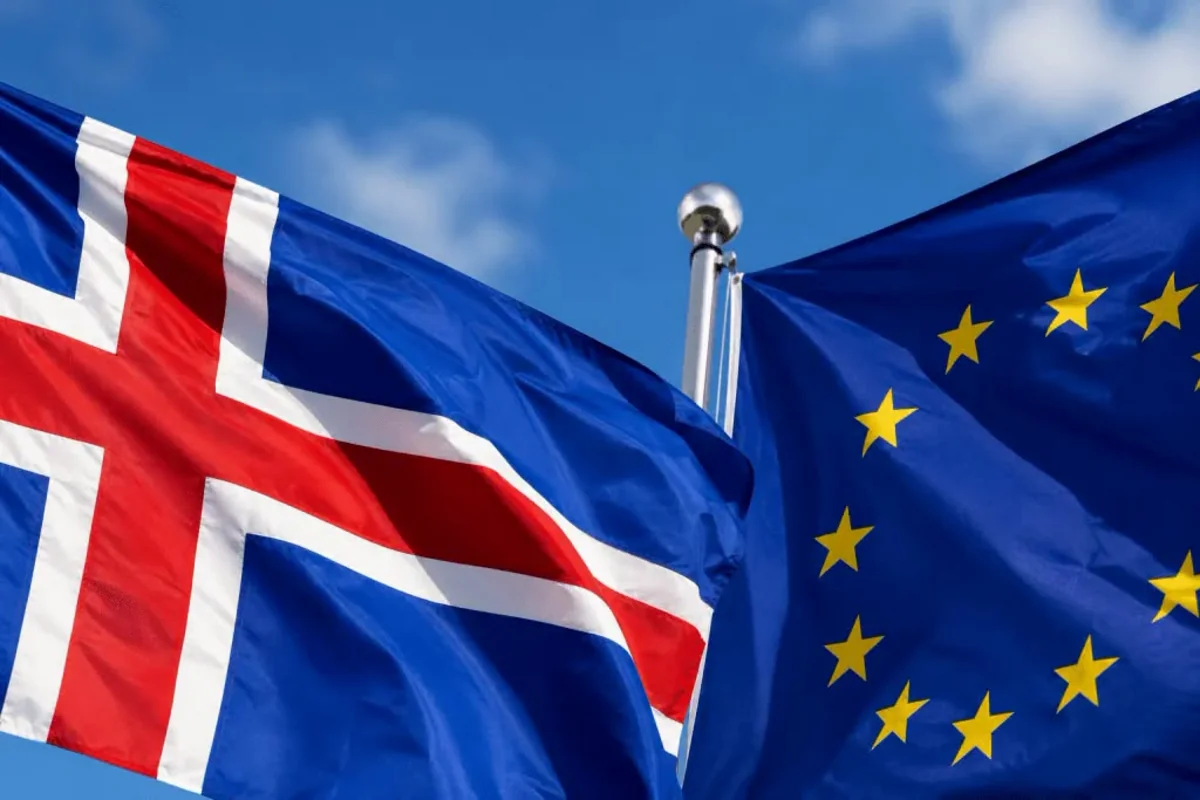
Icelanders began voting on Saturday on whether to reopen negotiations on European Union membership, a closely watched referendum that could mark a shift in the country's stance towards Europe as security tensions rise in the North Atlantic.
According to Report's European bureau, strong turnout in early voting has underscored interest in the issue, with 56,774 people - almost 20% of registered voters - having cast ballots in advance, according to Icelandic authorities.
Voters are being asked: "Should Iceland resume negotiations on membership of the European Union?"
A "yes" vote would not mean joining the EU. It would give the government a mandate to reopen talks with Brussels. Any eventual agreement on membership would have to be approved in a separate referendum.
The vote comes as Iceland reassesses its security and economic ties with Europe amid a rapidly changing geopolitical environment, including US President Donald Trump's repeated calls for control of Greenland, the Danish autonomous territory in the North Atlantic.
Greenland has become a major focus of security discussions in the Arctic and North Atlantic. For supporters of closer EU ties, Trump's stance has reinforced the case for stronger links with European partners at a time when Russia's war in Ukraine and growing competition in the Arctic are also reshaping the region.
Prime Minister Kristrún Frostadóttir has said the international situation has changed significantly over the past 18 months, including through the use of US tariffs as an instrument of pressure. Her government supports reopening negotiations but has stressed that Saturday's vote is not a direct vote on EU membership.
For many Icelanders, the more immediate concern is fishing.
Iceland is already closely tied to the EU through the European Economic Area, the Schengen zone and the European Free Trade Association. The arrangement gives it access to the EU single market but requires it to adopt much of EU legislation without having a vote on its creation.
EU membership would give Iceland a formal role in EU decision-making, but could also affect its control over fisheries - an issue deeply tied to the country's economic interests and national identity.
Fishing was at the heart of Iceland's previous negotiations with the EU. Reykjavik insisted on retaining control over fish stocks and quotas in its exclusive economic zone, reflecting the legacy of the "Cod Wars" with Britain, when Iceland fought to expand its fishing rights.
Iceland applied for EU membership in July 2009, after the global financial crisis had brought the country's banking system close to collapse. Negotiations began in 2010 and made significant progress, with 27 of 33 negotiating chapters opened and 11 provisionally closed before talks were suspended in 2013.
After elections that year, an anti-EU government took office. The negotiations were halted and in 2015 Reykjavik formally asked the EU to stop considering Iceland a candidate country.
Fishing, agriculture and sovereignty were among the main sticking points.
The issue returned to the political agenda after the 2024 election, when the coalition formed by the Social Democratic Alliance, the liberal Viðreisn party and the People's Party included a referendum on resuming EU talks in its programme. Parliament approved the referendum in May this year.
A "yes" vote would send Iceland back to the negotiating table, with the government expected to set out new objectives covering fisheries, agriculture, energy, currency, security and budgetary relations.
But the final decision on membership would remain with voters.
The campaign has nevertheless exposed a sharply divided electorate. The advantage held by supporters of reopening talks has narrowed in recent weeks, with recent polls showing the two sides almost evenly matched.
Opponents say geopolitical concerns should not override practical considerations.
Former prime minister and Centre Party leader Sigmundur Davíð Gunnlaugsson, who led the government that abandoned the EU application in 2015, has criticised the referendum question as too vague and said it creates no clear obligation for future governments.
He has also dismissed Trump's Greenland ambitions as insufficient grounds for reopening EU talks, describing them as another provocation unlikely to have lasting consequences.
Opponents also warn that EU membership could weaken Iceland's control over its fisheries, increase regulation from Brussels and constrain national sovereignty, while the country already enjoys access to the single market through the EEA.
For the EU, a "yes" vote would carry significance beyond Iceland's population of about 400,000. It would suggest that European integration may be regaining appeal after years of political and geopolitical upheaval and could revive debate over the bloc's relationship with Norway, the other major non-EU member of the EEA.
For now, however, Icelanders are being asked a narrower question: whether they want to give their government another mandate to negotiate.
Author