
 Baku 27° C
Gill: EU to mull how to formalize Canada's associate membership in union
- 18 September, 2026
- 16:00
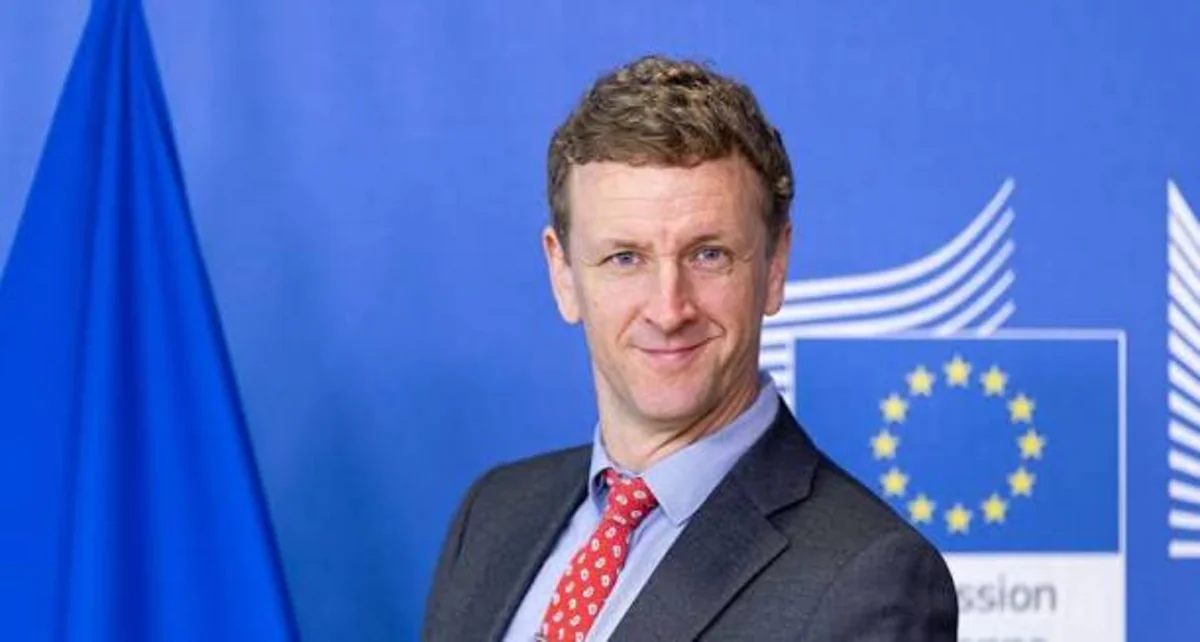
The EU will hold discussions with Canada and member states to practically formalize European Commission President Ursula von der Leyen's proposal for Canada's associate membership in the EU, as such status is not envisaged in the Union's treaties, European Commission spokesperson Olof Gill said at a briefing in Brussels, Report informs.
"Right now we have an idea. We have a shared commitment between the European Union and Canada to strengthen our relations for mutual benefit, in our own interests," Gill said, responding to a question about what specific rights the proposed status for Canada would entail.
He did not clarify whether associate membership would include the free movement of citizens or other elements of the four freedoms of the EU single market.
"We are focused on giving concrete substance to this idea," Gill emphasized. According to him, the European Commission will discuss with EU member states and Canada "what this could look like specifically."
The EC spokesperson also declined to comment on whether the implementation of the proposal would require amending EU treaties, stating that "we shouldn't get ahead of ourselves."
"This is an announcement the president made this week... and we have to figure out how to take it forward," he said.
The first significant opportunity for such discussions will be the summit in late October in Canada, Gill noted. According to him, the parties intend to determine the parameters for further deepening relations, and work on specific areas will continue after the summit.
Ursula von der Leyen, in her annual State of the Union address on September 16, stated that Brussels wants to take relations with Canada "to the highest possible level." She proposed moving from the current Comprehensive Economic and Trade Agreement (CETA) to an "alliance for the future," which should create a space of shared prosperity and economic security, and declared her readiness to "open the door" for Canada as an associate member of the EU.
Gill called this initiative a "very ambitious project" that will require the participation of many European Commission departments and coordination with member states.
"Major changes in the European Union happen only with the consent of our member states, and that will always be the case," he said.
At the same time, Gill emphasized that the proposal regarding Canada should not be confused with the EU's relations with non-EU European states. He referred to Article 49 of the Treaty on European Union, according to which "any European State" that respects the established conditions may apply to become a member of the Union.
"What we are talking about with this ambitious idea of opening the door for Canada to associate membership in the European Union applies to a partner country, not to a European state," Gill said, commenting on a question about the United Kingdom, which, like Canada, is part of the Commonwealth realms headed by the British King.
Gill also confirmed that the full entry into force of the Comprehensive Economic and Trade Agreement (CETA), which is currently being applied provisionally, remains a priority for the European Commission. According to him, over the nine years of the provisional application of the agreement, bilateral trade in goods between the EU and Canada has grown by more than 75%, and trade in services by 97%.
According to him, the EC calls on EU countries that have not yet completed the ratification of CETA to move forward in this direction. In parallel, Brussels will work on further deepening relations with Canada in preparation for the October summit.
Author