Baku 20° C
UN-Habitat: Cities expanding rapidly, but low-income families not seeing benefits of this growth
- 19 May, 2026
- 13:50
Stay up to date with the top news!
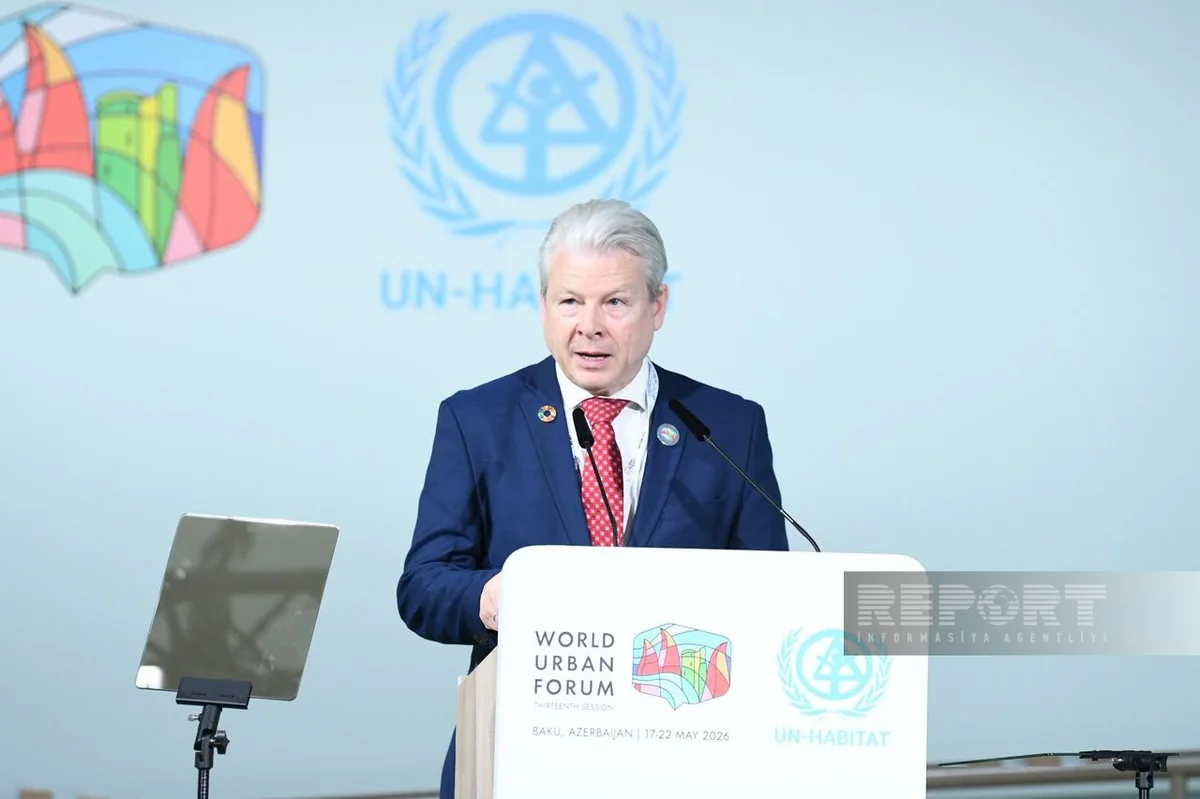
Cities are expanding rapidly, but the benefits of this growth are not reaching low-income families, leaving them marginalized from socioeconomic development, Rafael Tuts, director of the Global Solutions Division of the United Nations Human Settlements Programme (UN-Habitat), said at an event during WUF13 in Baku, Report informs.
"First and foremost, housing systems remain predominantly market-oriented and focused on short-term income, creating a tension between economic performance and social outcomes. They also lack diversity and flexibility; rental, phased, and community-managed solutions that reflect the realities of low-income families are insufficiently supported.
On the other hand, housing is still often viewed as a standalone sector, rather than as a system integrating land, infrastructure, finance, services, and urban form. This leads to fragmentation, which weakens both implementation and results. Finally, there remains a persistent gap between planning and implementation," noted Tuts.
He added that cities have excellent plans, but often lack the financial capacity, regulatory frameworks, institutional capacity, and project preparation mechanisms to turn these plans into profitable and effective investments.
The UN-Habitat representative emphasized that transitioning to inclusive housing solutions requires rebalancing housing systems, moving from purely market-based approaches to more diverse and inclusive solutions: "This means expanding the rental housing market, supporting community-managed and cooperative models, and implementing phased housing delivery and innovative financing approaches that reflect the realities of low- and middle-income families. Second, we should move from piecemeal measures to integrated housing systems."
Tuts stated that housing cannot be addressed in isolation: "To achieve more effective and equitable results, housing provision must be planned and implemented in conjunction with land, infrastructure, services, and urban development. Finally, we must strengthen the public sector's capacity to lead and implement at scale. This requires stronger institutions, better regulatory frameworks, and investment in project preparation so that cities can translate plans into real investments. In this context, public funding also plays a catalytic role not only in direct provision but also in mitigating investment risks and attracting private capital to affordable and inclusive housing."
Author