
 Baku 16° C
Shahin Baghirov: Azerbaijan close to joining transit system used by 27 EU countries
- 25 June, 2026
- 15:29
Stay up to date with the top news!
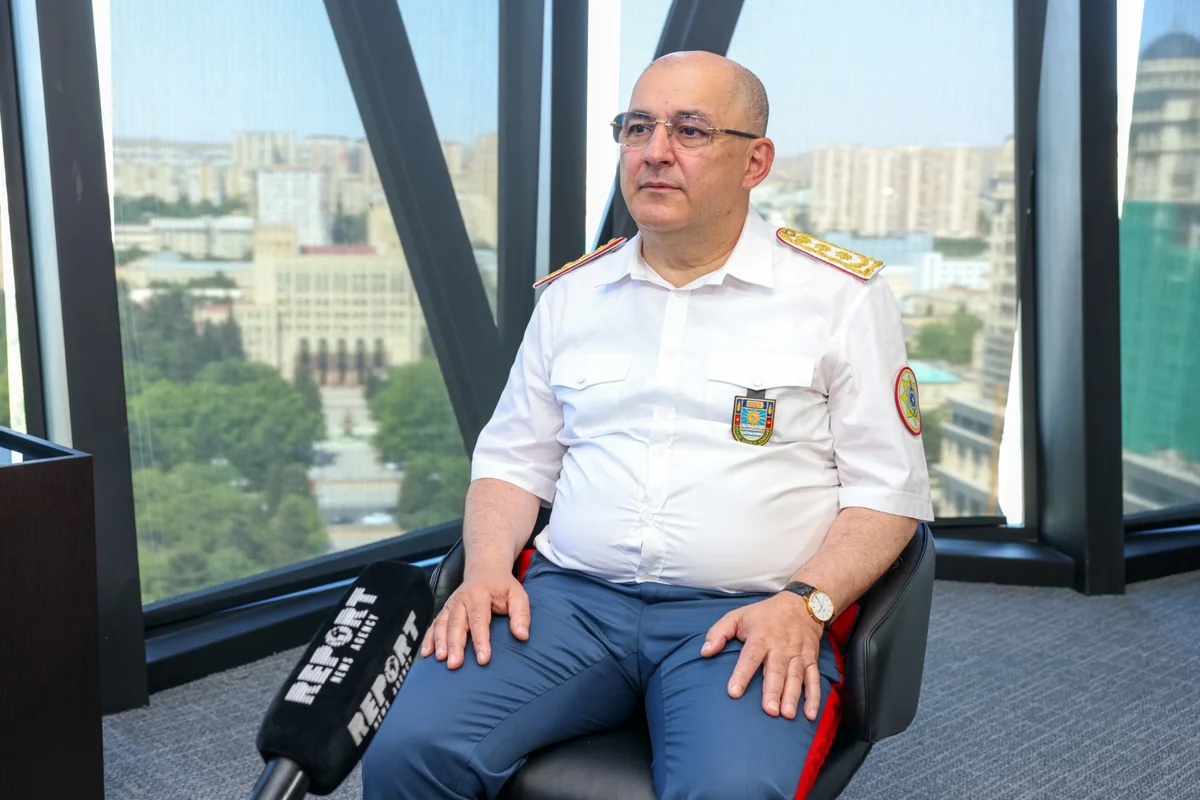
Azerbaijan is preparing to join a new computerized transit system used by European Union member states and several other countries, Chairman of the State Customs Committee of Azerbaijan, Colonel General of the Customs Service Shahin Baghirov, said in a joint interview with Report News Agency and Azerbaijan Public Television.
Baghirov noted that Azerbaijan has already acceded to several international conventions in the field of road transport.
"We continue our work in this direction and, based on international standards, seek to expand our country's transit capabilities, create conditions for the free movement of goods, reduce clearance times, and conduct inspections based on a risk-oriented approach," the head of the Customs Committee said.
He added that efforts are also underway to introduce new instruments that meet modern requirements.
"We are working on joining the New Computerized Transit System (NCTS), which is used by all 27 EU member states and, overall, by 39 countries. We are on the verge of acceding to two conventions – the Convention on a Common Transit Procedure and the Convention on the Simplification of Formalities in Trade in Goods," Baghirov stated.
According to him, the accession process will be completed in the near future, after which Azerbaijan will be able to implement electronic and guarantee-based transit procedures applied in neighboring countries, as well as paperless customs clearance technologies.
"These mechanisms will be applied along the corridor in the European direction. At the same time, Azerbaijan is carrying out similar work with the Asian region. Efforts to simplify transit operations with the countries of Central Asia, China, and other partners are ongoing, including with the support of the Asian Development Bank. We believe positive results will also be achieved in this area, which will contribute to increasing the attractiveness of the Middle Corridor from a customs perspective," Baghirov said.
The chairman stressed that the Middle Corridor is of tremendous importance and enjoys a number of advantages compared to other transport routes.
"Alongside geographical location, distances, and infrastructure capabilities, customs regulation also plays a significant role," he emphasized.
Baghirov also noted that infrastructure development is progressing in parallel with efforts to expand transit potential. According to him, the action plan aimed at increasing Azerbaijan's transit capacity includes measures to expand infrastructure capabilities.
He recalled that a state-level decree has been adopted to increase transit volumes through Azerbaijan and further expand the country's transit opportunities.
According to Baghirov, the document covers the period from 2024 to 2026, and active implementation is already underway.
"Together with other agencies, we must implement a number of measures to develop transit potential and cargo flows. This primarily involves improving road infrastructure, increasing throughput capacity, and advancing other related areas. However, one of the key issues is simplifying transit operations through customs regulation and the application of modern customs procedures," he said.
The head of the State Customs Committee noted that more than 18 million tons of cargo passed through Azerbaijan under customs transit procedures in 2025. During the first five months of this year, the figure reached 8.2 million tons.
"These figures clearly demonstrate the need for flexible customs regulation. It is crucial that customs operations are carried out efficiently and on time, without creating unjustified obstacles to transit flows," Baghirov stressed.
According to him, the State Customs Committee has primarily mobilized its own internal resources to achieve this goal.
"The electronic declaration system, as well as the collection of preliminary data before goods or vehicles arrive in the country, is one of the key prerequisites for efficient customs clearance. Therefore, we continue to cooperate with the relevant institutions in this area," the committee chairman concluded.
Author