Baku 23° C
Jasurbek Choriev: Uzbekistan, Azerbaijan may introduce permit-free regime for road transport – INTERVIEW
- 24 September, 2026
- 13:55
Stay up to date with the top news!
The development of the Middle Corridor and the increase in its throughput capacity open new opportunities for expanding transport and logistics cooperation between the countries of Central Asia and the South Caucasus. In this process, the interaction between Uzbekistan and Azerbaijan, located on key sections of the Trans-Caspian International Transport Route, acquires special significance.
In recent years, cooperation between the two countries in the field of railway, road, and maritime transport has been noticeably expanding, regular air traffic is developing, digital tools are being introduced, and new joint projects are being elaborated. One of the directions of this work is the creation of a joint fleet on the Caspian Sea, which should provide an additional infrastructural basis for the growing cargo flow.
An important role in coordinating these processes is played by the Permanent Secretariat of the TRACECA Intergovernmental Commission, within the framework of which the participating countries are working to eliminate infrastructural and administrative barriers, digitalize transport, and increase the efficiency of the Middle Corridor.
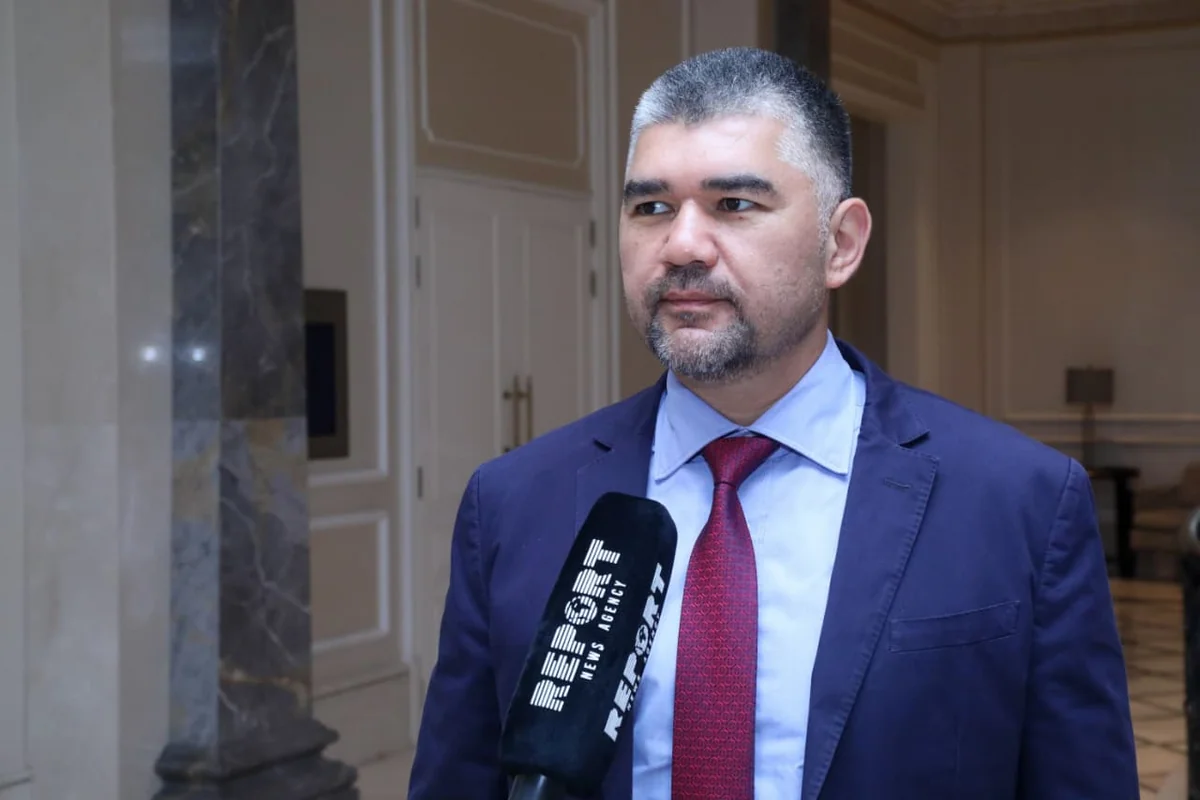
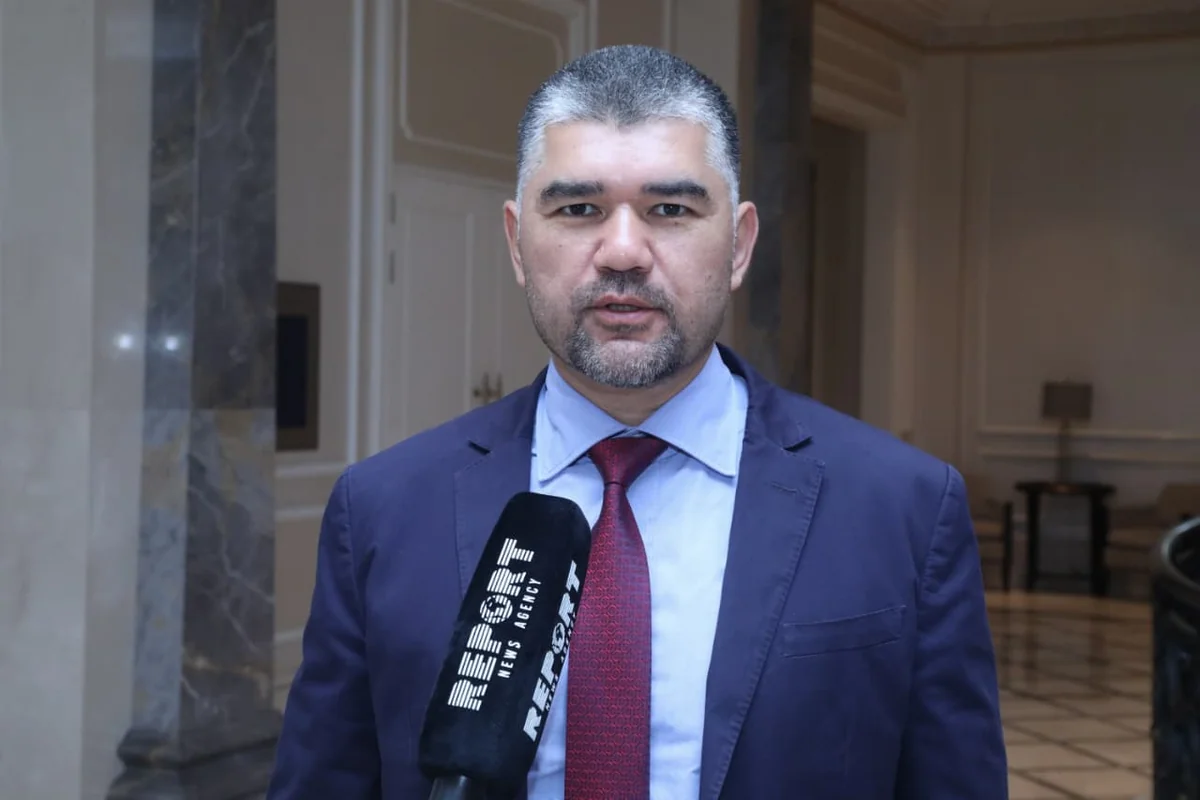
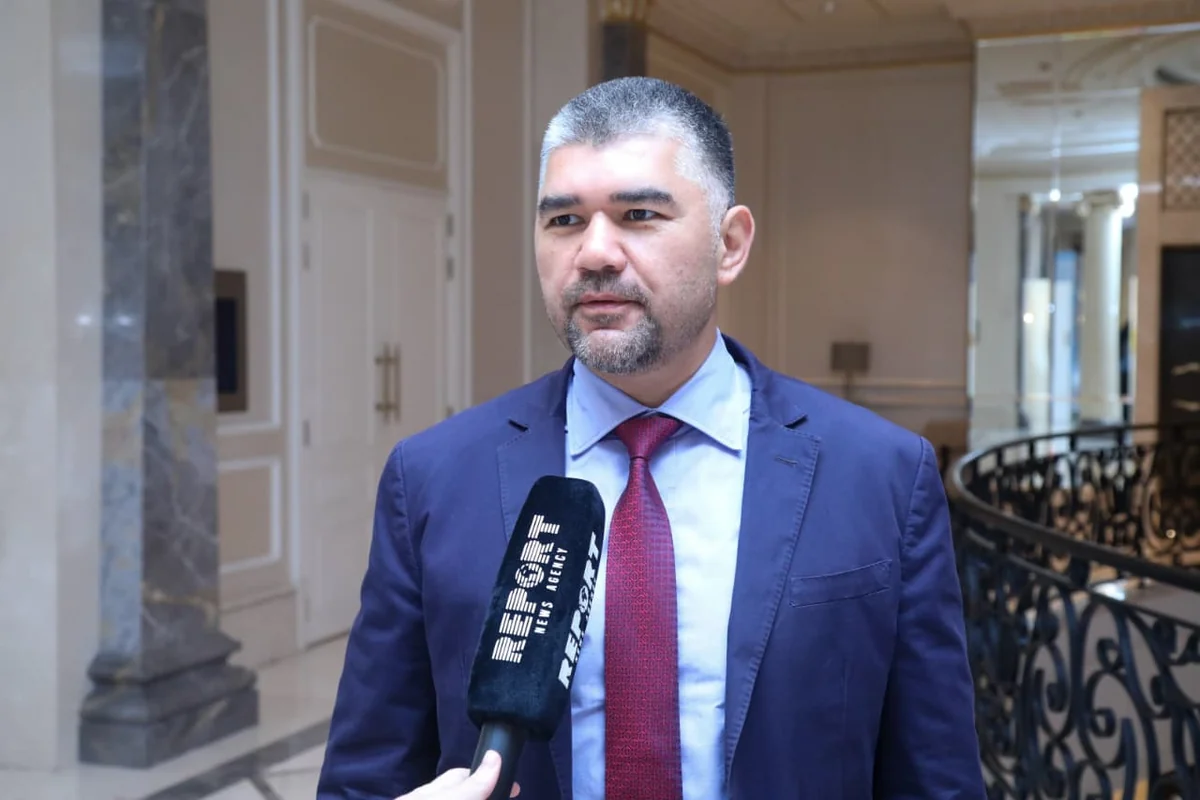
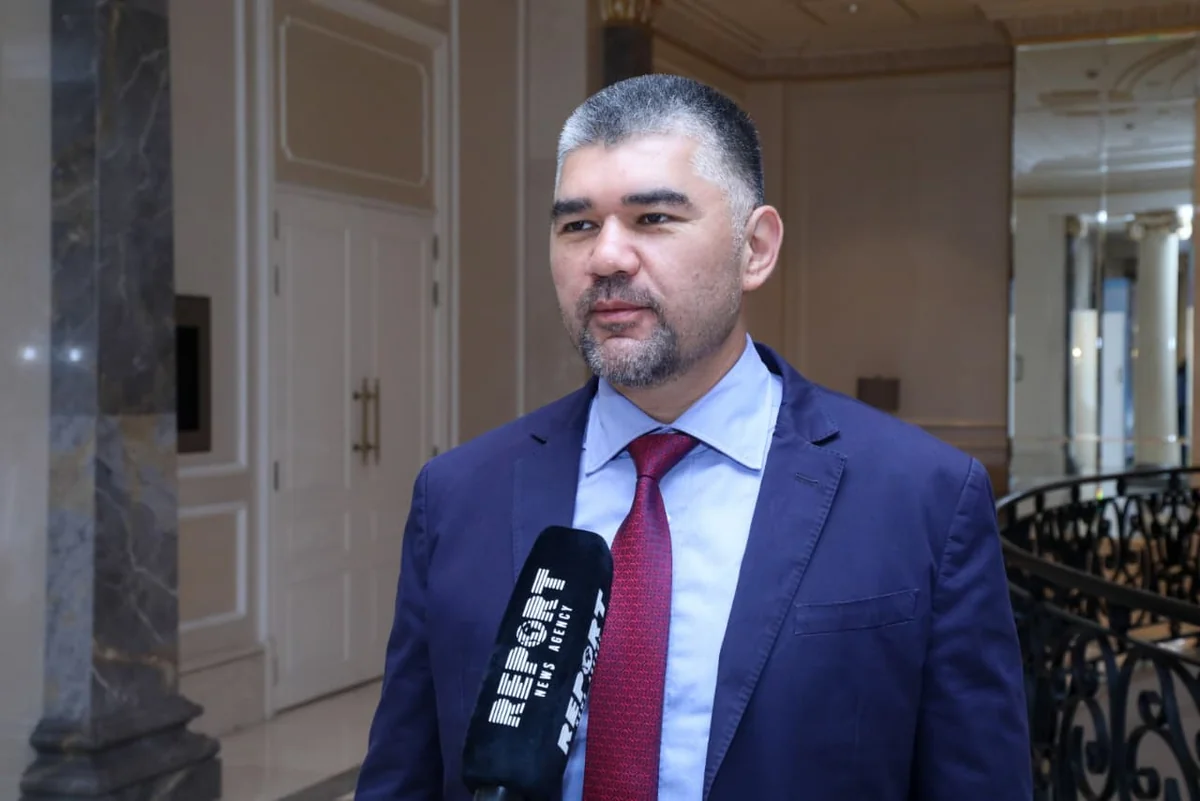
Jasurbek Choriev, Secretary General of the Permanent Secretariat of the TRACECA Intergovernmental Commission, who at the time of preparation also held the position of Deputy Minister of Transport of Uzbekistan, spoke in an exclusive interview with Report about the changes taking place in transport flows between Uzbekistan and Azerbaijan, the measures being taken to increase the efficiency of the Middle Corridor, the current stage of the project to create an Uzbek-Azerbaijani fleet in the Caspian, and how digitalization is changing the organization of transport.
Report presents the interview:
- Today, the Middle Corridor is becoming one of the key directions in the development of transport links between Central Asia and Europe. What are the main barriers that still hinder the increase of its efficiency? In particular, what regulatory and pricing problems do carriers face on the Azerbaijani section of the route? Is a transition to a single through tariff possible in the future?
- First of all, it should be noted that the issues of forming specific tariffs, port dues, and other commercial conditions fall within the competence of the respective states, transport administrations, and operators. The mandate of the Permanent Secretariat of the TRACECA IGC is to facilitate coordination, increase transparency, and improve the predictability of transport along the entire corridor.
Significant progress has been made on the Azerbaijani section in reducing administrative barriers. Azerbaijan is actively participating in the transition to the electronic exchange of transport data, including within the framework of the E-Permit project and the introduction of the e-CMR electronic consignment note. As noted in the draft of the new TRACECA Strategy, these tools contribute to reducing administrative processing times and accelerating the transit of goods.
At the same time, systemic challenges remain that are related not to one specific country, but to the functioning of the multimodal chain as a whole. These include periodic accumulations of cargo vehicles in the Caspian Sea region due to adverse weather conditions, the accelerating shallowing of the Caspian Sea, differences in the throughput capacity of port and transshipment terminals, the need for closer synchronization of the work of maritime, railway, and road operators, differences in legal procedures and requirements, as well as insufficient predictability of transit times and transport costs on certain sections of the route.
The Permanent Secretariat of the TRACECA IGC is carrying out practical work to eliminate these barriers. In particular, direct interaction between port administrations is being established, common approaches to digitalization and legal regulation are being developed, and work is underway to harmonize procedures.
One example is a pilot project on the application of the e-CIM/SMGS electronic consignment note instead of a paper equivalent, with the participation of the railways of Azerbaijan, Georgia, Kazakhstan, Türkiye, Ukraine, and Moldova. Within the framework of the project, electronic data exchange testing was conducted, and the integration of national information systems between Azerbaijan and Georgia, as well as between Georgia and Türkiye, was ensured. In addition, the Permanent Secretariat has prepared a draft multilateral agreement designed to provide a legal basis for the application of the CIM/SMGS electronic consignment note.
In parallel, the Permanent Secretariat coordinates the work of the Working Group on Digitalization, which includes corresponding subgroups in the TRACECA countries. A draft general agreement on the digitalization of transport along the TRACECA corridor is also being elaborated.
As for a single through tariff, the Permanent Secretariat cannot set tariffs by directive. At the same time, the TRACECA platform created by the countries can contribute to the formation of more favorable and predictable conditions for coordinating tariffs between interested operators and administrations.
The draft of the new TRACECA Strategy for 2027-2036 envisages practical tools for this work, including a system for monitoring the corridor's performance indicators and a matrix of bottlenecks and the throughput capacity of its individual segments.
It is the availability of objective data on delivery times, transport costs, delays, and congested sections that will allow the TRACECA IGC to offer logistics operators practical solutions to increase transparency in tariff formation and coordinate the conditions for through multimodal transport.
- After COP29 in Baku, the issues of greening transport and reducing the carbon footprint have acquired additional relevance. How is the green corridor concept being advanced within TRACECA, and what role does Azerbaijan play in this process?
- The Permanent Secretariat of the TRACECA IGC, within its mandate, coordinates the interaction of the parties on a wide range of issues concerning the development of the international transport corridor - from eliminating infrastructural and procedural barriers to digitalization, increasing the sustainability of transport, and introducing environmentally friendly technologies.
The environmental component occupies a separate place in the draft TRACECA IGC Strategy for 2027-2036, which is currently being coordinated by the parties, including Azerbaijan. The document envisages the formation of a comprehensive basis for the development of green and sustainable transport at the level of the entire corridor, taking into account the national policies and competencies of the states.
In particular, the new Strategy envisages a mechanism for voluntary accession to the TRACECA green corridor concept. It presupposes a harmonized set of sustainable development indicators for multimodal transport, ports, logistics centers, checkpoints, and other key infrastructural hubs.
Among such indicators are emission intensity, energy efficiency of transport and logistics operations, the use of alternative fuels, as well as the level of digitalization, including paperless transport and intelligent traffic management.
A practical mechanism for implementing this concept will be a certification scheme for green ports and green logistics hubs. It will be applied on a voluntary and incentive basis and will allow assessing the environmental performance of seaports and inland ports, dry ports, logistics centers, and intermodal terminals. The Permanent Secretariat will coordinate the selection and application of the certification methodology, the conduct of pilot certification, and the maintenance of a public register of certified facilities.
An important basis for the sustainable development of the corridor is already the digitalization of the transport process today. In particular, with the assistance of the Permanent Secretariat, the e-CIM/SMGS pilot project is being implemented with the participation of the railways of Azerbaijan, Georgia, Kazakhstan, Türkiye, Ukraine, and Moldova.
Azerbaijan acts as one of the most active parties in this project, ensuring effective interaction and exchange of experience with other participants. A gradual integration of national information systems is underway, and the application of interoperable UN standards for the digitalization of transport corridors is being ensured.
Thus, Azerbaijan's participation in coordinating the new Strategy and implementing digital projects creates conditions for its further active involvement in the formation and practical implementation of the TRACECA green corridor concept.
- Speaking about the practical results of cooperation between Azerbaijan and Uzbekistan, what indicators have been achieved in the field of transportation and what tasks have been set for the near future?
- We have managed to bring the volume of transit cargo transportation through Azerbaijan to 1.5 million tons. In the first seven months of this year, the transit of 760,000 tons was ensured, which is 8.2% more than in the same period last year. We are continuing our joint work to unconditionally achieve the annual target.
Positive dynamics are observed in other areas as well. The volume of bilateral cargo transportation doubled and reached 160,000 tons, whereas for the entire year of 2025, this figure reached 154,400 tons (a 28% growth).
The transshipment of Uzbek cargo directly through the Alat International Sea Trade Port amounted to 600,000 tons.
To provide infrastructure support for the growing cargo flow, the development of a feasibility study for the project to acquire sea vessels was completed jointly with BCG. The key technical and financial parameters of the purchase and the mechanisms for operating the fleet on the Caspian Sea have been determined.
The next practical step was the start of the registration procedure for a joint venture involving the specialized companies of the two countries.
In addition, thanks to the increase in the number of exchanged permit forms and the transition to the electronic E-Permit system, the volume of international road transport increased by 1.5 times and reached 72,000 tons.
Given the strategic importance of the China-Kyrgyzstan-Uzbekistan railway currently under construction and the expected growth of transit cargo flows towards the Middle Corridor, we have been tasked with forming the necessary transport and logistics infrastructure in advance.
In close cooperation with our Azerbaijani partners, practical measures are being taken to increase the throughput capacity of the infrastructure, expand terminal capacities, and create favorable conditions for organizing cargo transportation.
The implementation of these measures will ensure the full integration of the new route into the Middle Corridor and maximize the efficiency of its transit potential.
- How has the structure of cargo flows changed in 2026? What figures have been recorded for export, import, and transit transportation?
- In January-July 2026, export cargo transportation amounted to 45,000 tons, an increase of 50%. Import transportation reached 77,200 tons, showing a 2.8-fold growth.
The transit of Azerbaijani cargo through the territory of Uzbekistan amounted to 37,500 tons, an increase of 27%.
For comparison, in 2025, export transportation amounted to 57,500 tons, a decrease of 20%, import transportation was 61,000 tons, an increase of 82%, and the transit of Azerbaijani cargo through Uzbekistan was 35,800 tons, which is twice the figure of the previous period.
- How has the volume of Uzbek cargo passing through the Alat International Sea Trade Port changed?
- In 2025, the transit of Uzbek cargo through the Alat International Sea Trade Port amounted to 1.2 million tons, an increase of 7%.
In January-July 2026, about 600,000 tons of Uzbek cargo passed through the port. This is 3.6% less than in the same period last year.
- How has the railway component of cargo transportation between Uzbekistan and Azerbaijan changed? What directions and types of cargo provide the main volume of transportation?
- In January-July 2026, the volume of railway cargo transportation between Uzbekistan and Azerbaijan amounted to 87,300 tons, a 2.6-fold increase.
Export railway transportation amounted to 6,300 tons, an 8-fold increase. The main cargoes were ferrous metals and cars.
Import transportation reached 49,200 tons, increasing 4.8 times. The main cargo was sugar.
Transit railway transportation amounted to 32,000 tons, an increase of 40%. In their structure, the main cargoes were oilcake, petroleum products, and sugar.
Of the total volume of transit railway transportation, 30,900 tons accounted for shipments originating from Azerbaijan. This indicator increased by 58%. Shipments destined for Azerbaijan amounted to about 1,000 tons, a decrease of 58%. This mainly involved empty railcars.
- How did road cargo transportation between the two countries change in 2026? How is the volume distributed among export, import, and transit, and what cargoes predominate?
- In January-July 2026, the total volume of road cargo transportation amounted to 72,200 tons, an increase of 58%.
Of these, export transportation amounted to 38,600 tons, increasing by 33%, import transportation was 28,000 tons, increasing 2.8 times, and transit transportation was 5,600 tons, decreasing by 15%.
In export road transportation, the main cargoes are agricultural products, construction, and chemical materials. In import transportation, food and agricultural products, as well as base metals, predominate.
- What is the situation with permits for international road transportation between the two countries? What quota did the parties agree on for 2026, and is a transition to a permit-free system being considered?
- For 2026, the parties exchanged 10,500 electronic permit forms. Of these, 2,500 permits are intended for bilateral transportation. With an established quota of 1,500 permits, an additional 1,000 permits were exchanged.
For transit transportation, 7,500 permits are provided. With a quota of 3,500 permits, an additional 4,000 were exchanged. Another 500 permits are intended for transportation to/from third countries.
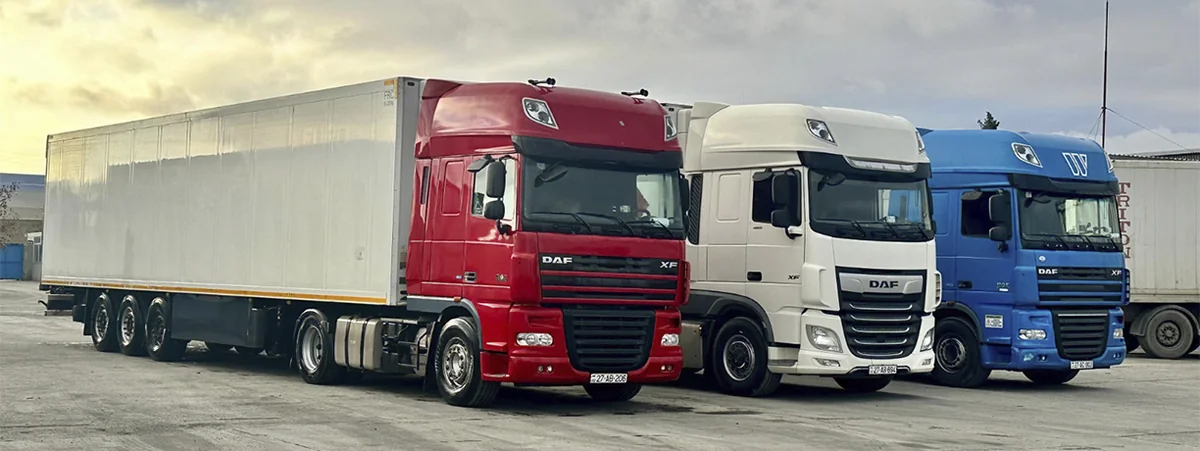
Currently, it is proposed to transition to a permit-free system for bilateral and transit road transportation.
- The transition to electronic permits has become one of the important elements of the digitalization of road transportation. How does E-Permit work today, and what next steps are planned in this area?
- On February 19, 2025, a meeting of the Joint Commission on Road Transport was held. The parties agreed to increase the quota of exchanged permit forms by 1.5 times and ensure the full launch of the E-Permit system by the end of September 2025. This task was completed, and the system was launched.
Currently, the experience of introducing the e-CMR electronic consignment note between Azerbaijan and Türkiye is also being studied. Its application may become the next important stage in the digitalization of road transportation.
- In parallel with cargo transportation, passenger air traffic is developing. How are regular flights between Uzbekistan and Azerbaijan organized today?
- In accordance with the Agreement of May 27, 1996, national air carriers have been designated to operate the agreed airlines: from Uzbekistan - Uzbekistan Airways and My Freighter (Centrum Air), from Azerbaijan - Azerbaijan Airlines (AZAL) and Imair Airlines. However, Imair Airlines completely ceased operations in December 2009.
Currently, regular flights between Uzbekistan and Azerbaijan are operated 16 times a week. On the Tashkent-Baku-Tashkent route, Uzbekistan Airways operates four flights a week, My Freighter/Centrum Air - three flights, and AZAL - seven flights.
In addition, AZAL operates two flights a week on the Baku-Samarkand-Baku route.
In January-July 2026, 1,017 regular flights were performed between Uzbekistan and Azerbaijan, which is 56% more than in the same period last year. During this period, 120,900 passengers were carried - 63% more than the year before.
In January-July 2026, the national airlines of Uzbekistan performed 410 regular flights, which is 62% more than a year earlier, and carried 55,100 passengers, increasing the figure by 60%.
The Azerbaijani airline performed 607 regular flights - 58% more than in the same period of 2025. Passenger traffic amounted to 65,800 people, an increase of 65%.
The volume of cargo air transportation between the countries amounted to 206 tons, an increase of 31%. Of this volume, 104 tons, or about half, were transported by the national airlines of Uzbekistan, increasing the figure by 48%. The Azerbaijani airline transported 102 tons of cargo - 17% more than in the same period last year.
- The growth of cargo flows requires the development of Caspian transport infrastructure. At what stage is the project to create a joint Uzbek-Azerbaijani fleet? What types of vessels are being considered, and is the acquisition of an existing fleet envisaged?
- According to studies conducted, three vessels are currently under construction at the Baku Shipyard by order of the Azerbaijani company ASCO: a tanker, a dry cargo vessel, and a Ro-Pax type cargo-passenger vessel. The completion of the construction of the tanker and the Ro-Pax vessel is planned by the end of this year.
Previously, interest in purchasing sea vessels was expressed by the Uzbek company Akfa Group and the Turkish Calik Holding, with the participation of the Turkish company Al Koc Group. According to the feasibility study, the cost of a new vessel is $50-55 million, and its construction period can reach up to three years.
Taking into account the construction cost and the long payback period, the interest of Akfa Group and Calik Holding in the project is currently no longer valid.
At the same time, taking into account the agreements of the Caspian littoral states, according to which vessels of other countries can be registered in one of the Caspian countries and sail under its flag, an agreement was reached with the Azerbaijani side on the implementation of the vessel acquisition project through the creation of an Uzbek-Azerbaijani joint venture.
At the proposal of the Azerbaijani side, Uztemiryo'lcargo JSC, together with the Azerbaijan Transport and Communication Holding (AZCON), is developing a feasibility study for the project to create Uzbekistan's fleet on the Caspian Sea with the involvement of the international consulting company BCG. Simultaneously, sources of financing for the project have been determined.
Following negotiations held in April this year in Azerbaijan, an agreement was reached on the following distribution of shares in the project: Uztemiryo'lcargo JSC - 25.5%, AZCON holding - 25.5%, Uzbek-Azerbaijani Investment Company - 49%.
Currently, the first version of the feasibility study has been prepared. In parallel, a comprehensive study of the possibility of acquiring vessels on the secondary market is being conducted. In particular, the possibility of acquiring one of two Ro-Ro type vessels intended for transporting cargo vehicles and belonging to the founder of the Georgian holding GIG Holding, David Bezhuashvili, is being considered.
One of the vessels is located in the Black Sea, in the Istanbul port area, and the second is in the Azov Sea, waiting to pass through the Volga-Don Shipping Canal.
It is planned to organize a meeting in Istanbul to inspect the vessel and discuss prospects for implementing the project to create Uzbekistan's fleet in the Caspian Sea.
- In addition to transport infrastructure, bilateral cooperation is receiving a new impetus through investment projects. What initiatives were launched during the recent visit of Azerbaijani President Ilham Aliyev to Uzbekistan?
- During the visit of the President of Azerbaijan to Uzbekistan on August 23-24, a number of major investment projects were launched.
In total, 10 investment projects with a total value of $389 million were launched. Among them is the construction of a network of gas stations for the State Oil Company of Azerbaijan Republic (SOCAR). At the first stage, the construction of five gas stations is planned in the Namangan, Jizzakh, Samarkand, Syrdarya, and Tashkent regions.
In addition, construction of the four-hectare Azerbaijan Park has begun on the territory of the New Tashkent area.
These projects demonstrate that cooperation between the two countries goes beyond traditional trade and transport and is gradually acquiring a broader investment character.
Author

Photo