
 Baku 23° C
Global air passenger demand up 0.2%, cargo grows 3.9% in July 2026, IATA says
- 02 September, 2026
- 14:19
Stay up to date with the top news!
Global air passenger demand grew by 0.2% year-on-year in July 2026, while the air cargo segment expanded by 3.9%, Report informs, citing the International Air Transport Association (IATA).
According to IATA, the passenger load factor (PLF) reached 85.2% in July, down 0.1 percentage points compared to July 2025.
International passenger traffic fell by 0.1% year-on-year, while capacity rose by 0.3%, pushing the load factor down to 85.2% (-0.3 percentage points). Domestic passenger traffic grew by 0.6% year-on-year, capacity increased by 0.2%, and the load factor reached 85.3% (+0.3 percentage points).
"The peak Northern summer travel season was mostly positive for the air transport industry. Despite weaker performance among North American and Middle Eastern carriers compared to last year, global passenger traffic in July still grew by 0.2%. The ongoing recovery of passenger traffic through Gulf hubs deserves special attention. Although the industry continues to face pressure from high jet fuel costs, economic uncertainty, and geopolitical risks, airlines remain confident in demand stability through the end of the year, supported by a planned capacity expansion of nearly 3% in September," emphasized IATA Senior Vice President for Sustainability and Chief Economist Marie Owens Thomsen.
The regional breakdown of global passenger traffic in July 2026 was as follows: Africa accounted for 2.2%, Asia-Pacific 34.4%, Europe 26.7%, Latin America and the Caribbean 5.4%, Middle East 9.5%, and North America 21.8%.
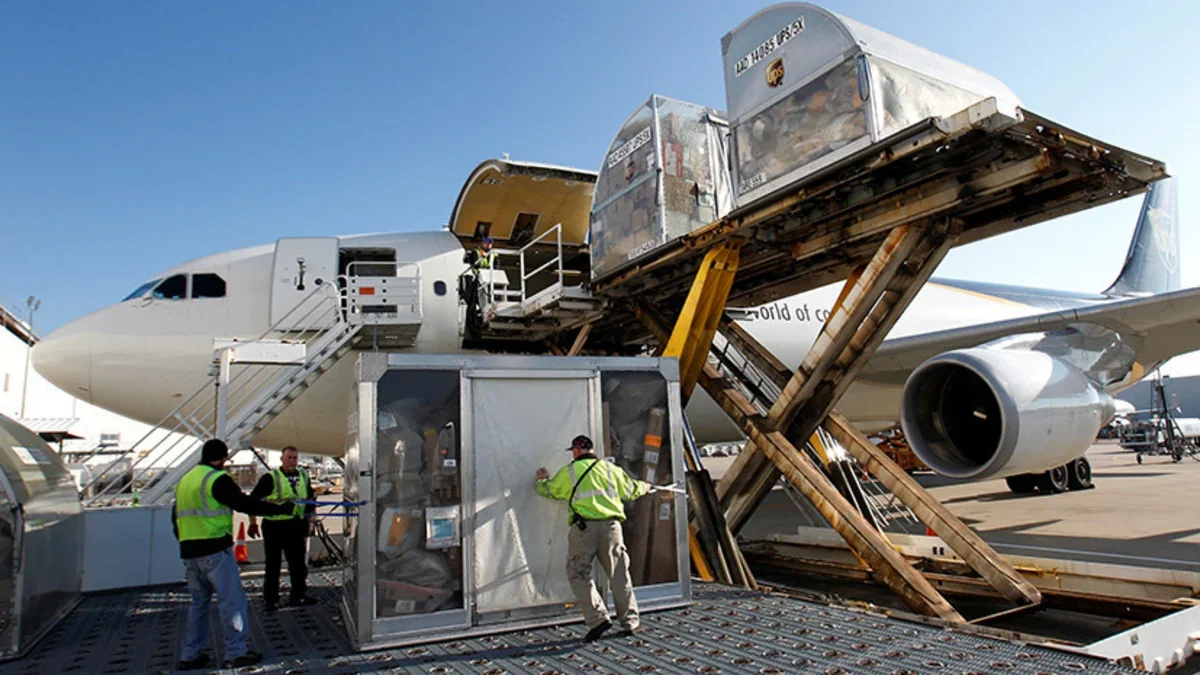
"Air cargo demand increased by 3.9% in July compared to the same period last year. Positive dynamics were recorded across all regions, with over 90% of total growth driven by carriers in the Asia-Pacific region, Europe, and North America. Dedicated freighters gained market share as belly-hold capacity on passenger aircraft declined. This was likely driven by higher demand for oversized or specialized shipments, as well as the greater operational flexibility offered by cargo aircraft. Looking ahead, the long-term outlook remains generally positive, supported by industrial recovery, growing export orders, and expanding international trade. At the same time, the impact of high fuel prices, geopolitical tensions, and tariff-related uncertainty must be monitored closely," noted Owens Thomsen.
The regional structure of air cargo traffic in July 2026 stood at: Africa 2.1%, Asia-Pacific 35.8%, Europe 21.4%, Latin America and the Caribbean 2.9%, Middle East 13.2%, and North America 24.6%.
"On the Asia–North America route, annual growth reached 9.2% (market share 23.5%); Europe–Asia grew by 3.1% (21.5%); Middle East–Europe fell by 16.1% (5.2%); Middle East–Asia dropped by 14.1% (7.4%); intra-Asia traffic rose by 6.1% (7.3%); North America–Europe increased by 2.1% (13.5%); and Africa–Asia contracted by 14.7% (1.3%)," the report states.
Author