Baku 22° C
G7 investment in Middle Corridor: Strengthening Europe-Asia trade links
- 09 May, 2024
- 13:46
Stay up to date with the top news!
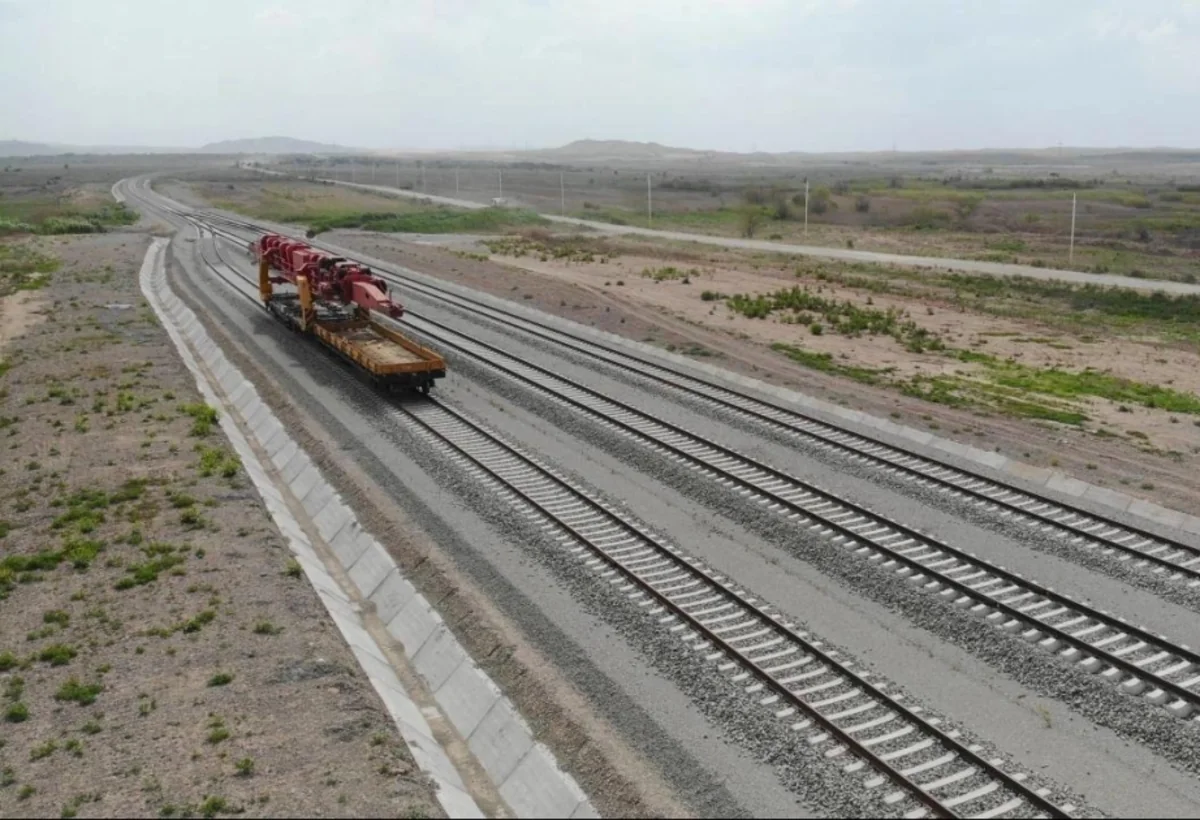
To strengthen the Middle Corridor’s key position in transcontinental Euro-Asian commerce, sustained investment, both foreign and domestic, is expected to further develop infrastructure along this route, reads a study by Fitch Solutions (a structural division of the Fitch Ratings), Report informs.
“The 2023 G7 Summit’s $600 billion global infrastructure commitment, with an emphasis on the Middle Corridor through 2027, is earmarked for targeted initiatives, such as expanding the Kuryk port facilities and improving multimodal transport services along the corridor. Domestically, the Khorgos Gateway, the world’s largest dry port, is set to enhance trade fluidity between Kazakhstan and Mainland China, thereby strengthening the market’s transportation network,” reads the report.
“Kazakhstan’s rail freight sector is anticipated to see robust growth, with an annual increase of 9.9% in 2024, and is expected to stabilize at an average annual growth rate of 6% from 2024 to 2028.
The Middle Corridor presents a competitive alternative for overland regional connectivity, being approximately 2,000 km shorter than the Northern route and offering increasingly cost-effective transportation options.
A significant 65.9% decline in twenty-foot equivalent units (TEUs) container volumes on the Northern Corridor from 2021 to 2023 partly benefited the Middle Corridor, with a 32.8% increase in TEU volumes in 2022 and an 86% surge in total tonnage in 2023,” Fitch Solutions noted.
“This route is becoming a favored conduit for cross-continental trade, providing Asian and European firms with enhanced supply chain flexibility. Significantly, this route enables companies to circumvent the geopolitical risks inherent in crossing Russian territories and Red Sea trading paths, transforming traditional transport corridors into economic conduits that enhance trade not only with end-destination countries but also with economies along the way.
Kazakhstan's well-developed oil, gas, and uranium sectors stand to gain from the increased freight flows along the Middle Corridor. Moreover, Europe, China, and the G7 countries are making substantial investments in the infrastructure of Kazakhstan and other regional markets to bolster the Middle Corridor's capacity as a cost-effective and efficient alternative route. In order to boost trade efficiency and reduce operational hurdles, Kazakhstan, Georgia, and Azerbaijan have also created a joint venture, Middle Corridor Multimodal, offering one-stop services and reliable delivery times, enhancing the Trans-Caspian International Transport Route for trade between China, Europe, Türkiye, and Central Asia,” reads the report.
“In our long-term outlook, we anticipate that foreign investment will play a pivotal role in developing the market's logistical infrastructure, particularly along routes that bypass Russia.
Nonetheless, Kazakhstan remains an essential gateway for Russian imports, accounting for 26.6% of Central Asia's imports from Russia, according to the UN. This highlights Kazakhstan's significant contribution to optimizing trade flows between Russia and the Central Asian markets, thereby reinforcing its position as a key trade enabler within the region. Given the ongoing shift of Europe-Asia trade from the Northern to the Middle Corridor, Kazakhstan is strategically positioned to capitalize on the opportunities presented by both routes,” Fitch Solutions added.
The volume of cargo transportation along the Middle Corridor will increase from 2.8 million tons in 2023 to 4.2 million tons in 2024.
Author