Baku 21° C
Former Mauritius president says free healthcare and sustainable housing reduced diseases
- 19 May, 2026
- 18:37
Stay up to date with the top news!
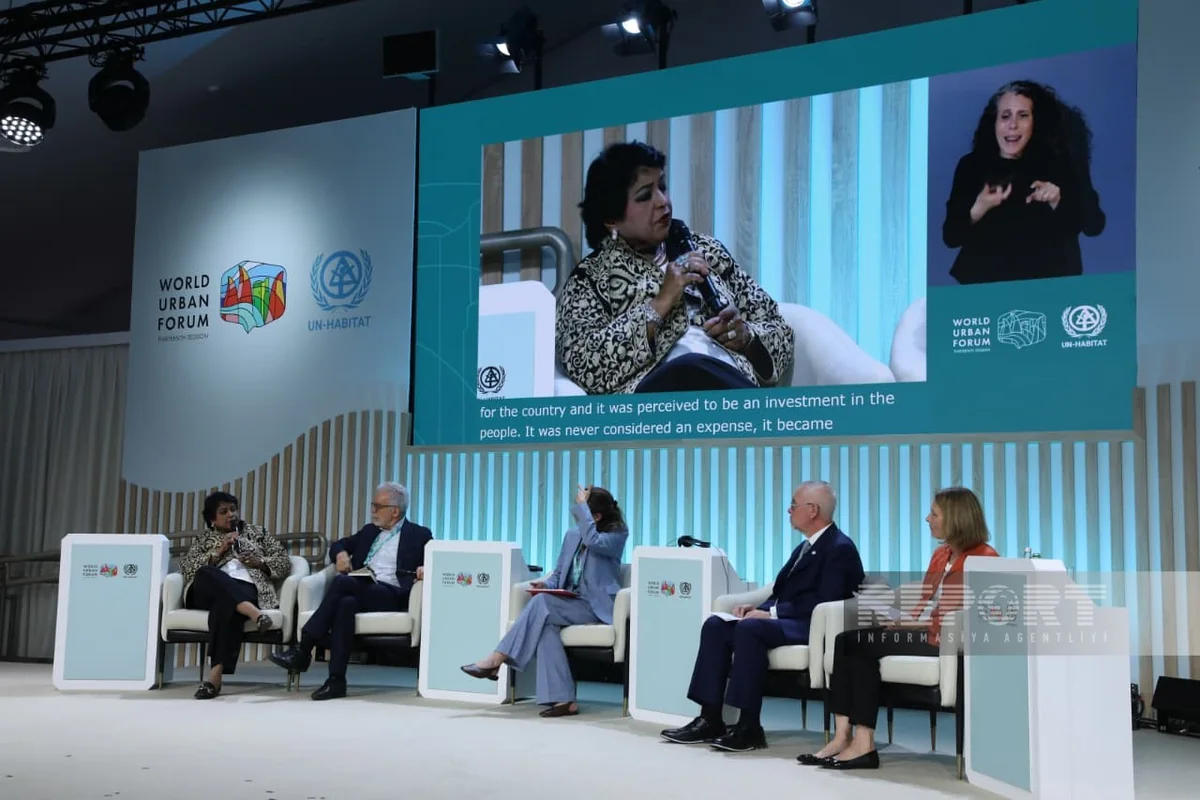
Free healthcare and sustainable housing have reduced diseases in Mauritius, stated former President of Mauritius Ameenah Gurib-Fakim at the event titled "Azerbaijan: The Pulse of Healthy Homes" organized within the framework of the 13th session of the World Urban Forum (WUF13) held in Baku, Report informs.
"Since we gained independence in 1968, healthcare has been accepted as a priority for the country, as an investment in people. It has never been considered a cost, it has been free for everyone, and currently everyone has free access to primary healthcare services. Of course, there is also a private sector whose services people can use, but in any case, people from vulnerable groups can easily access public healthcare services. Thus, when this opportunity was created, we observed a sharp decline in infectious diseases, as well as in some diseases we considered minor that affect our space," she noted.
The guest added that Mauritius is located in a tropical zone and is exposed to cyclones every year:
"Interestingly, one of the biggest cyclones occurred in 1960. And since then, I can say that we have been proactive in anticipating events, and the transformation in the construction sector has been taking place since that period. So, since this process began, we have become more resilient against climate. When these two features come together, we saw a decrease in many diseases in terms of infection, and diseases transmitted through transmission routes (via ticks, mosquitoes, etc.) decreased significantly. Thus, through these two pillars, we were able to create a home, a space for everyone, which of course includes at least a minimum level of healthcare and housing safety. However, not everything is 100% perfect. There are still people in vulnerable situations, and I personally witnessed this while I was in office; when very severe floods occur, you see desperate mothers struggling to find shelter for their children. So, our challenges still remain, but I think that by investing in our people within our own space, we have been able to find some solutions."
Author