Baku 20° C
Expert: Community participation crucial in urban health initiatives
- 19 May, 2026
- 20:35
Stay up to date with the top news!
Community participation in urban health initiatives is crucial.
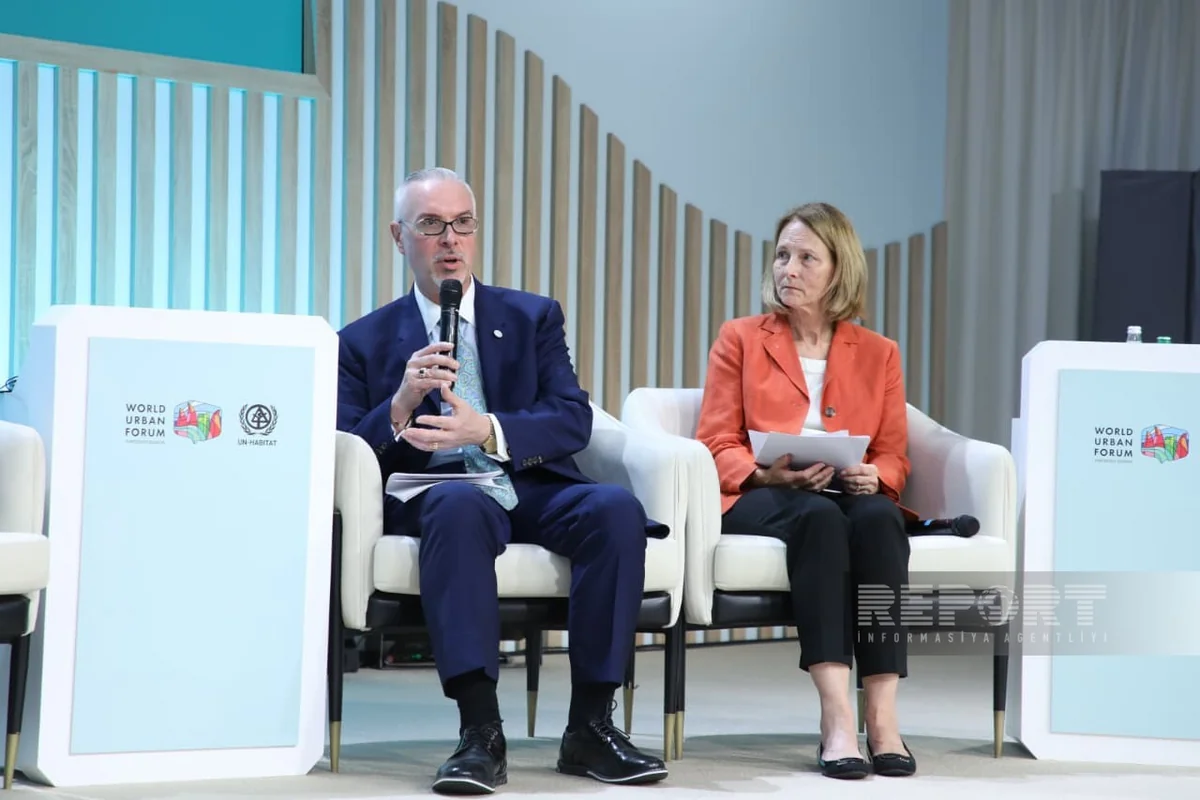
Report informs that Jose Zuniga, president and CEO of Fast-Track Health, IAPAC and the Fast-Track Cities Institute, said this at an event titled "Azerbaijan: The Pulse of Healthy Homes," held as part of the 13th session of the World Urban Forum (WUF13) in Baku.
He spoke about the Fast-Track Cities initiative:
"This initiative began in 2014, initially with 26 cities committing to accelerate their response to HIV, tuberculosis and viral hepatitis. Today, we cover more than 600 cities globally, in every region of the world. In 2024, we expanded our scope to include other infectious diseases, noncommunicable diseases and the health impacts of climate change. Because HIV, tuberculosis and viral hepatitis do not exist in isolation; other diseases and the impacts of climate change are equally interconnected. In this regard, the secret to the success of Fast-Track Cities includes sustained political will and commitment. That is, it is necessary to ensure that elected officials, city councils and, equally importantly, intra-city planning councils remain committed year after year to the goals of the Fast-Track Cities Paris Declaration."
The guest noted that the second important point is community ownership of this process: "Very often, we rely only on politicians to fulfill the mandate of urban health initiatives. Without community engagement and ownership of the process, the accountability mechanism that would ensure that political appointees or elected officials actually deliver on what they promised when signing declarations remains insignificant.
"Another point is the importance of data-driven action. If we do not understand the existing gaps and do not know where they are, it becomes very difficult to develop and implement strategies and interventions, or to direct resources specifically to areas where needs are greatest. Let me give an example: before this initiative was launched in Paris, the Public Health Department had long been spending funds for preventive interventions across the entire city. When we began mapping where the key target groups were actually located, we realized that there were specific districts where these resources needed to be prioritized. In this sense, the ability to take data, act on it, allocate resources behind it and measure its impact over time enabled Paris to achieve double-digit percentage-point increases in the indicators set for Fast-Track Cities."
Author