 Baku 22° C
Deputy minister: Future of Czech-Azerbaijani relations lies in renewables, smart cities, infrastructure - INTERVIEW
- 04 February, 2026
- 14:13

Stay up to date with the top news!
Against the backdrop of the global transformation of energy markets and the restructuring of supply chains in Eurasia, the economic partnership between the Czech Republic and Azerbaijan is reaching a qualitatively new level. Traditionally strong ties in the oil and gas sector, where the Czech Republic has cemented its status as one of the biggest buyers of Azerbaijani raw materials, are now complemented by an ambitious diversification agenda.
However, the current stage of relations requires a transition from simple resource trade to deep technological integration. Key growth drivers include the participation of Czech companies in the development of Middle Corridor infrastructure, the implementation of innovations within the framework of smart city concepts, and the implementation of renewable energy and green transformation projects.
In an exclusive interview with Report, David Müller, Director General at the Section of European Union and Foreign Trade and Deputy Minister at the Czech Ministry of Industry and Trade, discussed the sectors that will drive partnerships over the next 5-10 years, how the Azerbaijani Minister of Economy's visit to Prague impacted the implementation of joint projects, and the role Czech technologies can play in modernizing the region's transport and energy infrastructure.
Report presents the interview:
- Mr. Director General, how do you assess the current state of economic relations between the Czech Republic and Azerbaijan? Which areas currently show the greatest potential for expanding bilateral cooperation?
- In my opinion, our economic ties are very strong and keep on improving every year. In recent years, our bilateral trade has grown significantly, the biggest increase being in the year 2024, when the volume of our bilateral trade increased by 30% and exceeded 1.85 billion euros. At the same time, the Czech Republic became the second-largest importer of Azerbaijani oil in the world.
Historically, the trade relations between the Czech Republic and Azerbaijan have primarily focused on the hydrocarbon sector, forming a solid foundation for our economic ties. However, I appreciate the shared interest in diversifying our cooperation. As such, I consider sectors like transport and transport infrastructure, renewable energy, water and waste management, environmental technologies, innovation, and Smart Cities as particularly promising for further collaboration.

- In recent years, the trade turnover between our countries has remained at a stable but moderate level. What steps are being taken to increase it? Are there any plans for new economic missions, business forums, or intergovernmental initiatives to stimulate trade?
- Although the overall trade turnover is moderate, it is by no means negligible, and in 2024, Azerbaijan ranked 30th in terms of trade turnover, while constituting 0.5% of our total trade. Our goal is to keep on increasing the total amount of trade, and to this end, my ministry regularly organises business missions, seminars, and more. This year, we are planning on organizing another outgoing mission in the smart cities sector. Moreover, we are exploring the possibility of holding the 6th session of the Joint Commission on economic, scientific, technical, and cultural cooperation this year. Beyond that, our trade agency, CzechTrade, is active in the region and continues to promote Czech exports to Azerbaijan.
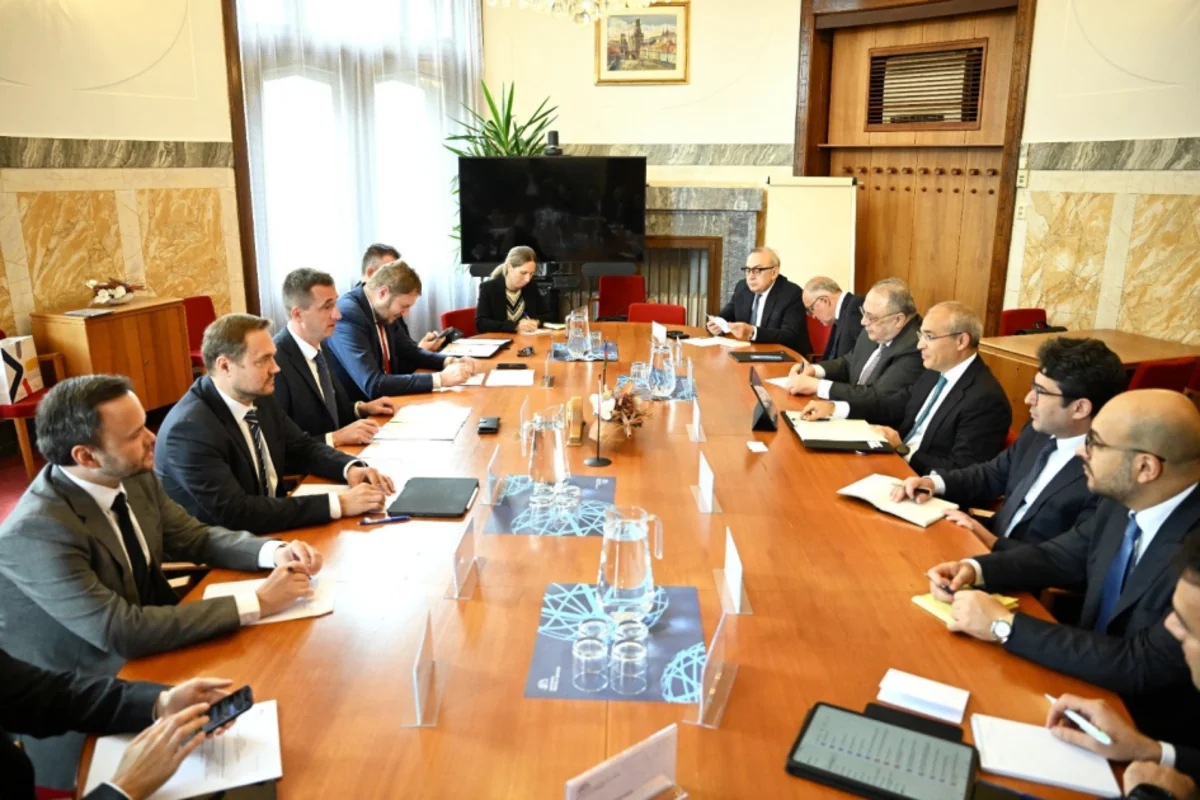
- The recent visit of Azerbaijan's Minister of Economy Mikayil Jabbarov to Prague (July, 2025) was an important stage in the development of economic dialogue. Could you tell us what specific agreements or areas of cooperation were reached during these negotiations?
- The meeting was very important, and I am glad that Minister Jabbarov travelled tothe Czech Republic to discuss the most important areas of our cooperation. As such, one of the main topics was, of course, the cooperation in the field of energy, both hydrocarbon and renewable, in which there are many Czech companies with extensive expertise. We have also stressed the important role of your country in the worldwide energy security as a reliable partner in diversifying gas and oil imports to the EU. Another sector that was discussed was transportation. I hope we will follow up on these discussions and move forward with some of the projects discussed during the meeting in the aforementioned sectors.
- The energy sector is traditionally one of the key areas of interaction. How do you assess the prospects for Czech companies' participation in Azerbaijan's energy projects, including renewable energy sources and green technologies? Is the Czech Republic considering joint projects in energy efficiency and industrial decarbonization?
- Yes, I am convinced that the area of renewable energy is one of the most promising areas of cooperation, and I know a number of companies that are ready to enter Athe zerbaijani market. We support initiatives that promote environmental sustainability and are in line with global climate goals, such as renewable energy projects, energy efficiency improvements, and the adoption of smart, clean technologies. Together with the experts at my ministry and those aforementioned companies, we are discussing the issue and the way forward.
- The Czech industry has strong positions in mechanical engineering, chemical, and defense industries. Is there interest in joint production projects or localization of Czech technologies in Azerbaijan?
- We are interested in exploring different possibilities and projects in these sectors, and we will discuss them with my colleagues and counterparts in the future.
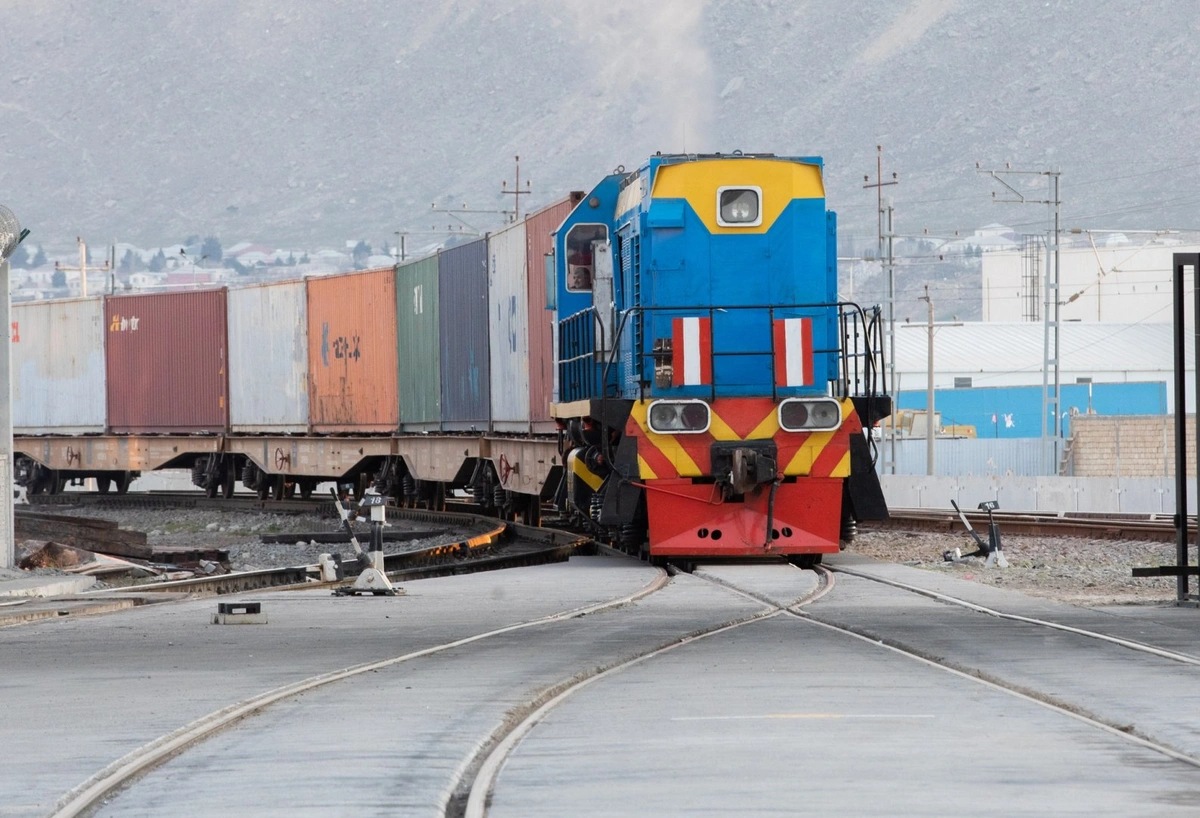
- Azerbaijan is actively strengthening its role as a transport and logistics hub in the South Caucasus. How does the Czech Republic assess the potential for Czech companies to participate in projects related to the development of international transport corridors, including the Middle Corridor and Baku-Tbilisi-Kars?
- Successful and timely completion of the Middle Corridor is essential, given the current geopolitical situation, as it will help to further develop our ties and deepen our economic cooperation. As already mentioned, this is one of the most promising areas of cooperation and me and my colleagues will work hard to participate in the ongoing efforts. In the past, Czech companies were involved in major projects in Azerbaijan, including the Baku–Tbilisi–Kars railway, and we are looking forward to following up on this cooperation. In this regard, I would also like to mention that we, as the Czech Republic, are ready to support our companies in participating in the Global Gateway initiative of the EU, which, among others, focuses on this precise topic.
- The Zangazur Corridor project is of interest in the context of Eurasian logistics. What is the Czech Republic's position regarding its possible impact on trade routes between Europe and Asia? Could this project influence the EU's strategy in transport policy and sustainable supply chains?
- We support all the initiatives that have the potential to strengthen our economic ties and help fulfil the potential of the Middle Corridor and that promote cooperation in the whole region.
- Investment cooperation between the countries is also gaining importance. What measures is the Czech Republic taking to attract Azerbaijani investments? In which sectors of the Czech economy could they be most effective? And, in turn, are Czech investors showing interest in projects in Azerbaijan - for example, in infrastructure, tourism, or industry?
- As the Czech economy is very open and export-driven, supporting Czech companies in their efforts to succeed abroad is naturally one of our key priorities. Just as well, we are more than happy to welcome foreign investors in Czech Republic. Thus, our activities focus on both the promotion of Czech investors and exporters and on raising the attractiveness of the Czech Republic as a destination. Our focus is on making it easier for companies to navigate international markets by offering them guidance and practical support at various stages of their expansion, whether they are exploring opportunities, seeking partners, or preparing larger projects abroad.
Our embassies and the network of CzechTrade offices abroad, export financing and insurance institutions, the CzechInvest institution, and others at home all play a vital role. Together, these organisations provide companies with up-to-date market insights, verified contacts, and risk management tools. At the same time, we are placing more emphasis on higher-value sectors and on building long-term partnerships rather than supporting one-off export contracts. With regards to Azerbaijan specifically, as mentioned, transportation and energy are two of the most promising sectors, and large Czech companies are interested in entering the Azerbaijani market, and I hope they will succeed and follow up on the past successes.
- Tourism is an important tool of public diplomacy. What steps are being taken to increase tourist flows between the Czech Republic and Azerbaijan? Are there plans to simplify visa procedures or develop direct air connections?
- I agree with the importance of tourism, and in this regard, I am quite happy that we already have direct flights between our countries that help in this regard. Though not under the purview of my section, or ministry for that matter, specifically, I can say that Czech embassies pay special attention to tourism, and we also have a dedicated CzechTourism agency, which helps foster tourism to and from the Czech Republic all around the world.
- Against the backdrop of global trends in digitalization and innovation, is technological cooperation between the Czech Republic and Azerbaijan being considered, for example, in the field of IT, startups, cybersecurity, or "smart" manufacturing?
- It definitely is on the agenda because, as you said, global trends are unrelenting and we cannot stay behind, and there is much to be gained from mutual cooperation. This is reflected in the shift in the sectors we promote and in the goals of the missions we carry out, with higher-value sectors and long-term partnerships being prioritized. We have other instruments to help this process on the government level, but in the end its up to the companies. Thus, we mostly focus on connecting the important players from both countries, and then once something tangible appears, we try to support this endeavour.

- What key initiatives are planned to be put on the agenda of the upcoming meeting of the Intergovernmental Commission on Economic, Industrial, Scientific, and Technical Cooperation? When is the next meeting expected to take place?
- Unfortunately, I cannot give you a specific answer right now, as it is currently being discussed by my colleagues at the ministry with their counterparts. But I have highlighted what topics and sectors are of importance to us, and we will definitely want to discuss those and promote any relevant projects or initiatives. I firmly believe that in this, we will be of one mind with our Azerbaijani partners and that the commission will mark yet another.
- Finally, what is your long-term strategy for developing the Czech-Azerbaijani partnership? In which areas do you see the greatest potential for sustainable and mutually beneficial cooperation over the next 5-10 years?
- I expect our economic ties with Azerbaijan to deepen and become more balanced over time. We already have a solid foundation to build on, and there is a clear interest on both sides in expanding cooperation beyond traditional areas.
Czech companies have previously participated in significant projects in Azerbaijan in the past, and we would welcome the opportunity to be involved in similar initiatives again. There is certainly room to take our cooperation to the next level. If we maintain an open dialogue and continue to support contacts between our business communities, I believe our partnership can evolve in a way that brings long-term benefits to both sides.
Moreover, I am glad for the increased effort of the EU to help foster international partnerships and to invests into strategic projects via the Global Gateway initiative. As such, I believe that in the coming years, Czech companies will also succeed on this level, which will mark a whole new chapter in our economic ties, as this will allow the projects to be of even greater importance and scale, while also deepening our cooperation in the value-added sectors through localization.
Author