Baku 22° C
Cities and human capital key to Azerbaijan's economy, Mikayil Jabbarov says
- 19 May, 2026
- 15:53
Stay up to date with the top news!
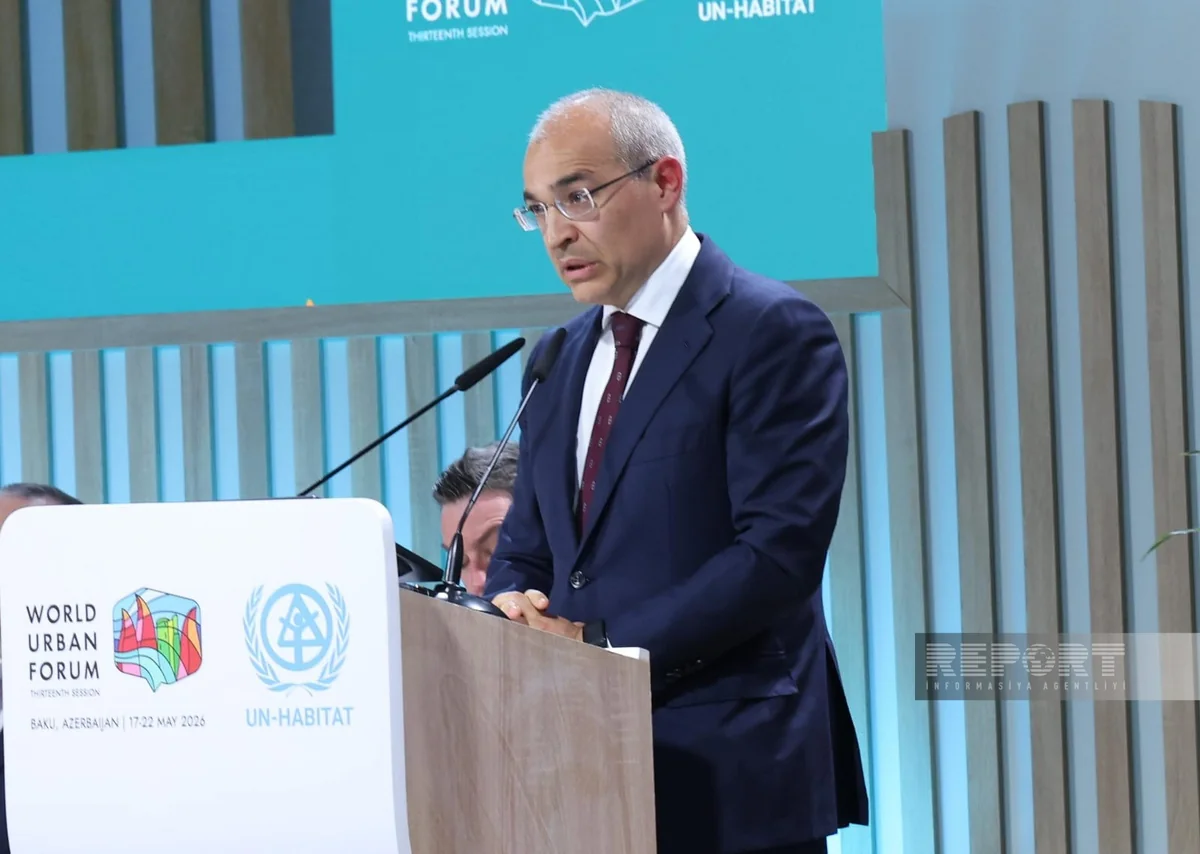
Connection to world markets, strengthening of human capital, and development of the economic potential of cities are among the main directions in Azerbaijan's economic development strategy, Azerbaijan's Minister of Economy Mikayil Jabbarov said at an event on the topic "Cities at the center of connectivity: urban reconstruction and regional cooperation" held within the framework of the 13th session of the World Urban Forum (WUF13) in Baku, Report informs.
The minister noted that for this purpose, special attention is paid in the country to the development of "soft infrastructure" and connectivity opportunities alongside automobile roads and railways: "This approach allows cities to preserve their traditional economic advantages and at the same time enables the development of new ideas. New economic models are being implemented in the territories liberated from occupation. The university city concept where Karabakh University will be located in Khankandi is the first example in modern Azerbaijani history. We considered that economic activity could be formed around academic activity."
According to Jabbarov, an economic approach based on human capital and traditional knowledge advantages is also being applied in cities such as Ganja, Nakhchivan, and Sheki: "Establishing the right balance between the role of the central government and cities is important. Strategy and planning alone are not enough. The main issue is how they are implemented and how a fair environment in economic competition is ensured. Exchange of experience in the field of urban governance is of particular importance. The signing of a cooperation document between Shusha and Trabzon is also part of this approach."
The minister stated that the successes achieved by Azerbaijan have been made possible thanks to a high-level strategic vision, sustained investment in human capital, and institutional development: "Speed and quality in decision-making directly depend on the governance and coordination infrastructure that has been established."
Author