
 Baku 25° C
Azerbaijan's mining expansion to create new demand for skilled workers
- 22 September, 2026
- 19:33
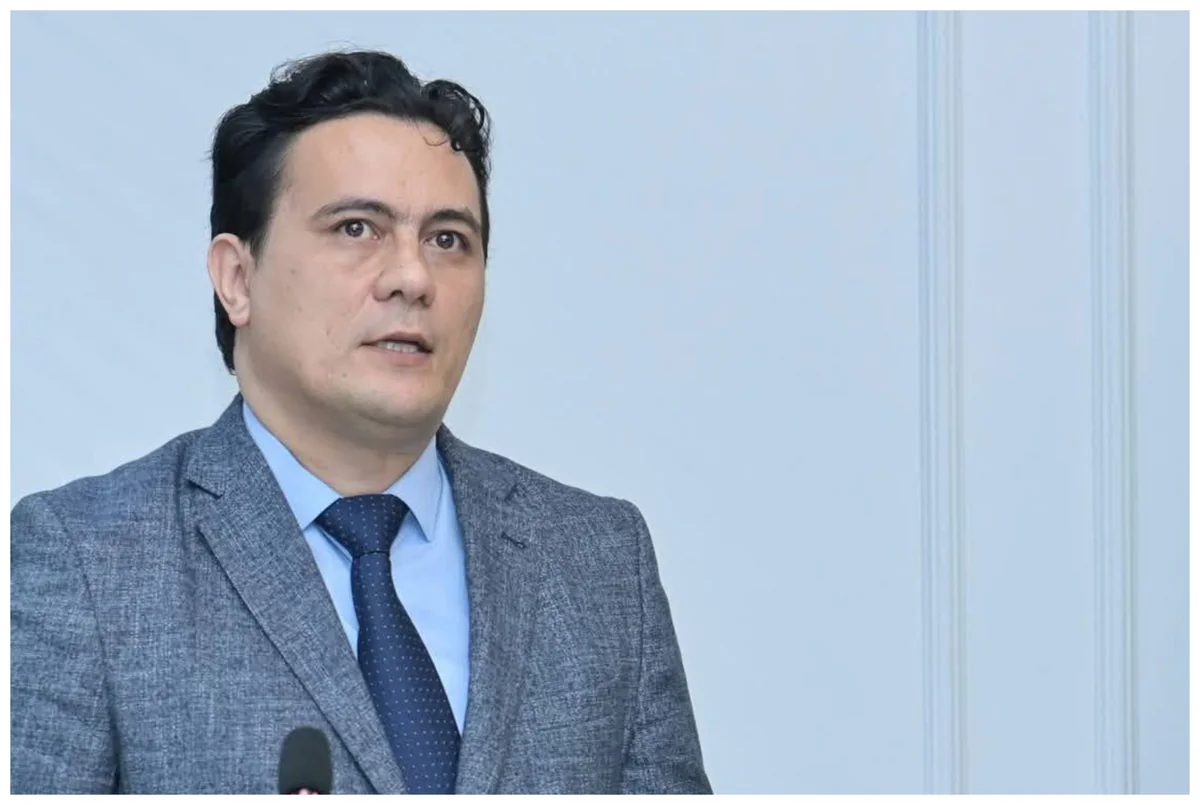
Azerbaijan's new mining and metallurgy development program is expected to create growing demand for skilled workers and require closer coordination between industry and the education system, Ilkin Gasimov, senior adviser at the Economic Analysis Department of the Center for Analysis of Economic Reforms and Communication (CAERC), said.
According to Report, Gasimov was commenting on the State Program for the Development of the Mining (Metal Ores) and Metallurgical Industries for 2027-2030, discussed at a meeting chaired by President Ilham Aliyev.
He said the program envisages not only extracting mineral resources but also deeper domestic processing and production of higher-value goods.
Gasimov noted that the planned expansion of the sector would increase demand not only for mining engineers but also for specialists in geology, metallurgy, materials science, automation, mechanics, electrical engineering, chemical engineering, industrial safety, environmental management, laboratory technologies and logistics.
He stressed that workforce planning should begin before new production facilities become operational, as both industrial projects and the training of qualified specialists require significant time.
According to Gasimov, the expansion of vocational education in Azerbaijan provides an important foundation for meeting this demand, particularly through broader use of the dual education model combining classroom learning with practical training at enterprises.
He said vocational education programs should also be aligned with the needs of new industrial projects being developed in the regions.
At the same time, Gasimov said higher education would play an increasingly important role as the industry moves from extraction toward deeper processing and finished-product manufacturing. University programs should therefore be adapted to new industrial technologies, while universities and companies should develop joint laboratories and applied research projects.
He added that regional workforce development would be especially important for projects planned in Dashkasan, Karabakh, Eastern Zangazur, Nakhchivan and other areas.
Gasimov also highlighted the need to retrain the existing workforce as automation, digitalization and modern environmental standards become more widespread.
He said short-term modular programs, micro-credentials and in-house professional development could help workers adapt more quickly to new technologies.
According to Gasimov, aligning vocational and higher education with future labor-market demand, expanding dual education, strengthening university-industry cooperation and linking regional workforce training to economic projects would create a stronger connection between industrial investment and human capital.
Author