Baku 21° C
Azerbaijan considers new primary aluminum plant with 200,000-ton capacity
- 22 September, 2026
- 14:34
Stay up to date with the top news!
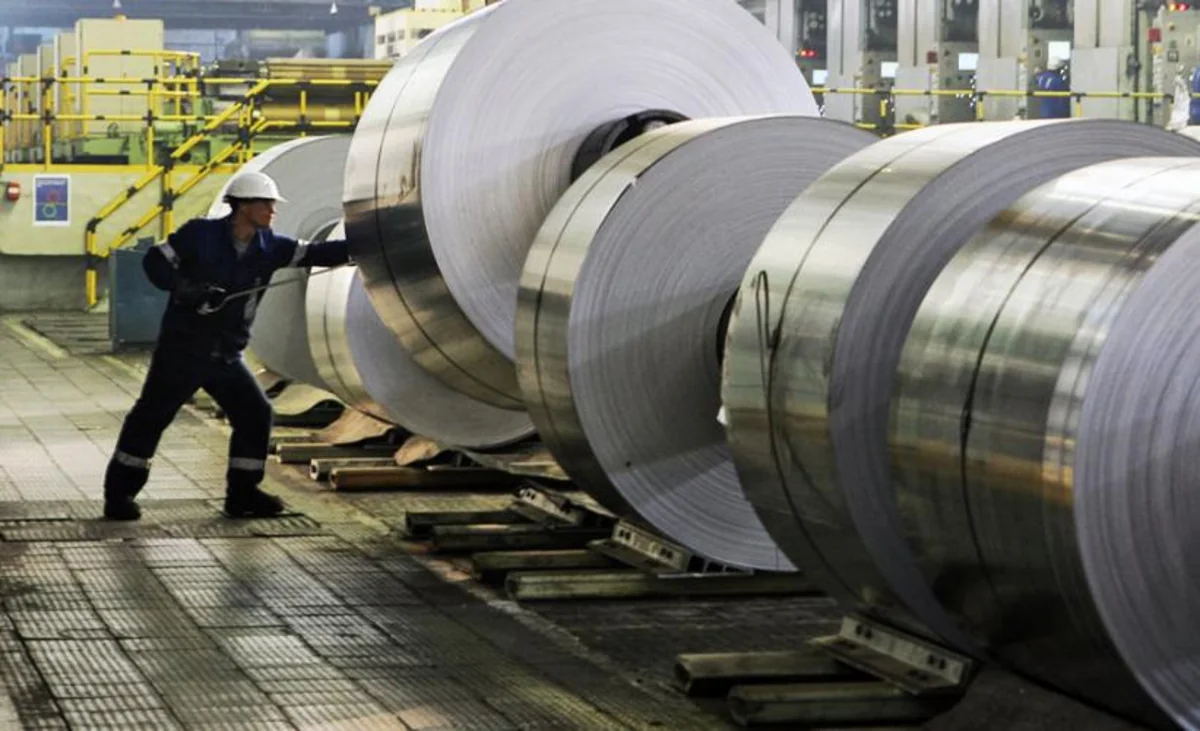
Azerbaijan is currently exploring the possibility of establishing a new primary aluminum plant with an annual capacity of around 200,000 tons, Economy Minister Mikayil Jabbarov said.
According to Report, Jabbarov made the remarks at a meeting chaired by President Ilham Aliyev and dedicated to the State Program for the Development of the Mining (Metal Ores) and Metallurgical Industries for 2027-2030.
He said geological exploration is also expected to be expanded in Karabakh and Eastern Zangezur.
"The program does not cover only the period through 2030; it also identifies major development opportunities for the subsequent stage. By then, the possibilities of bringing copper, zinc and lead reserves at the Filizchay polymetallic deposit into economic circulation will be assessed and finalized. The potential use of around 470,000 tons of additional copper reserves at the Damirli deposit will be examined. A final assessment will also be made of the possibility of using the Zaylik alunite deposits to form the raw material base for the aluminum value chain," Jabbarov said.
The minister noted that Azerbaijan has significant potential to become a regional processing hub.
"One of the long-term objectives is to assess the possibility of turning Azerbaijan into a regional processing center for strategic minerals. Prices for selected strategic metals have risen significantly over the past 10 years, while global demand is expected to increase further over the next decade. Demand is projected to rise by 23% for aluminum, 21% for copper, 15% for zinc and 10% for gold," he said.
Jabbarov added that Azerbaijan has several advantages, including its position on the Central Asia-Europe corridor, the logistics opportunities provided by Baku Port and the Baku-Tbilisi-Kars railway, the Alat Free Economic Zone and other industrial zones, competitive energy prices, and access to the raw material potential of Central Asia and the South Caucasus.
The minister said total investment needs under the 2027-2030 program are estimated at 5.3 billion manats ($3.12 billion).
Of this amount, 1.1 billion manats ($647.1 million) will come from the state budget, 2.2 billion manats ($1.29 billion) from state-owned enterprises, including credit and debt capital, and 2 billion manats ($1.18 billion) from private funds, including debt capital.
Thus, around 80% of total investment is expected to come from non-budget sources.
Jabbarov said mobilizing the investment capacity of state-owned enterprises and the private sector would therefore be a key task.
He added that the new capacities created under the program are expected to increase the sector's value added and annual export potential by 2.6 times over the next four years.
Author