Baku 16° C
Yemen's ambassador: Azerbaijan and Türkiye are important and reliable partners for our country
- 07 October, 2026
- 12:53
Stay up to date with the top news!
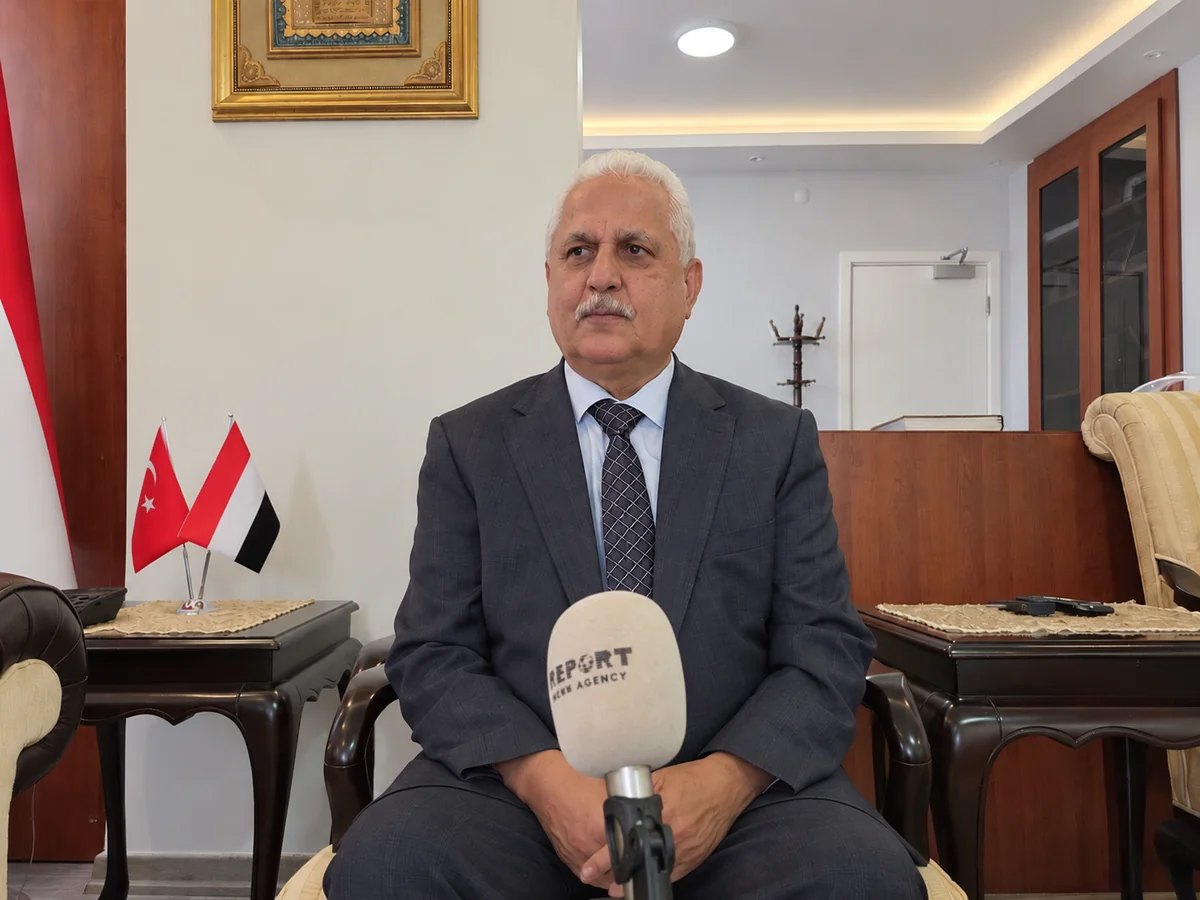
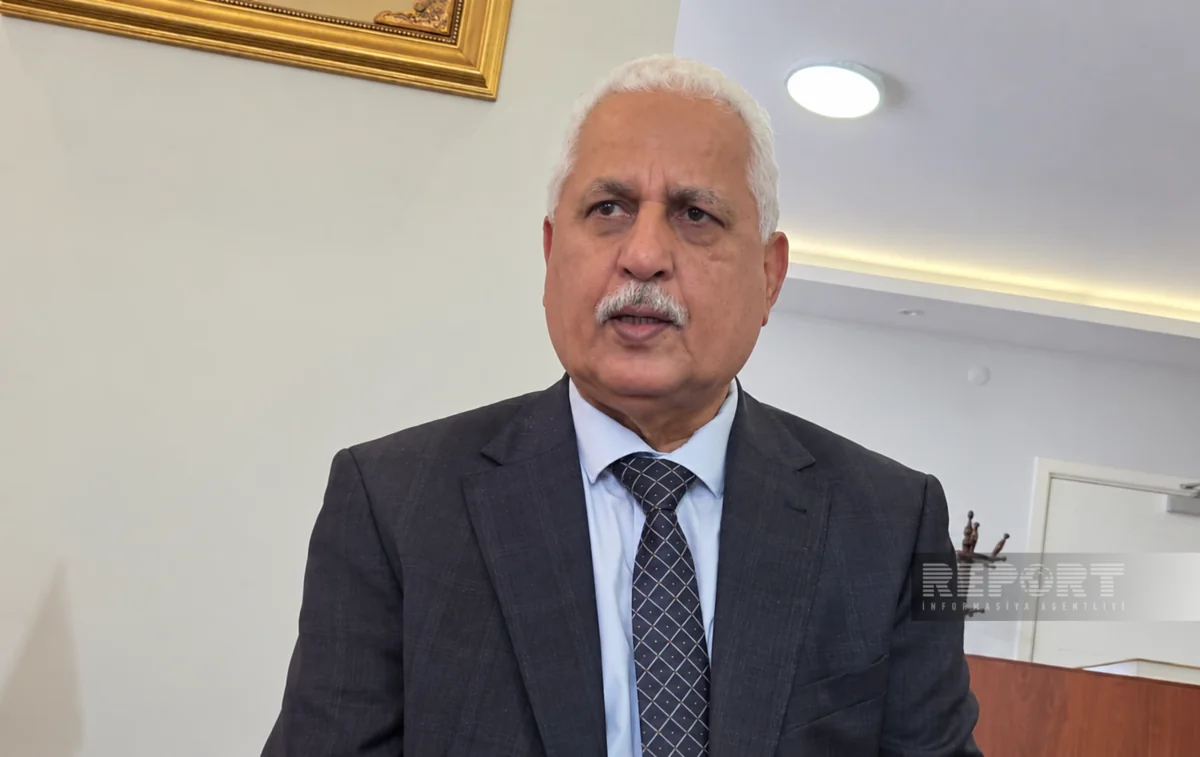
Yemen's Ambassador Extraordinary and Plenipotentiary to Türkiye and Azerbaijan, resident in Ankara, Mohammed Saleh Ahmed Turaik, spoke in an interview with Report's Turkish bureau about the prospects for developing relations with Azerbaijan and opportunities for expanding economic cooperation.
The diplomat also spoke about the security situation in Yemen and the Red Sea, the actions of the Houthis and the humanitarian crisis, as well as the changing geopolitical landscape in the Middle East.
– Mr. Ambassador, Yemen's Prime Minister and Foreign Minister Shaya Mohsin al-Zindani told Report on the sidelines of the Antalya Diplomacy Forum that he considers the development of cultural cooperation and economic and trade agreements with Azerbaijan particularly important. As ambassador, which areas do you consider priorities for developing relations between Azerbaijan and Yemen?
– First of all, I would like to say that we Yemenis have a special love and affection for the Azerbaijani state and people, and we intend to expand and develop relations between the two countries as much as possible.
Yes, as our prime minister also noted, we Yemenis consider it important to expand ties with Azerbaijan in the fields of culture, particularly education and healthcare, as well as trade.
I closely follow the economic growth and strategic position Azerbaijan has achieved today and observe with great admiration the progress made and the successes achieved in almost every area. We see that Azerbaijan has a significant position, particularly in the oil and natural gas sectors. We also observe that you attach great importance to the space sector, and I believe you will achieve successful results in this area as well.
I also participated in COP29. This international event once again demonstrated that Azerbaijan is indeed a strong state. We would be pleased and proud to cooperate with Azerbaijan.
– When presenting your credentials to the President of Azerbaijan, you also met with several ministers. What results have been achieved so far?
– It was an honor for me to present my credentials to President of Azerbaijan Ilham Aliyev. Yes, at that time we also met with several ministers and discussed the prospects for cooperation between the two countries.
We discussed various issues with representatives of Azerbaijan's Ministry of Culture, Ministry of Science and Education, and Ministry of Foreign Affairs. During our meetings, I was very positively impressed that all your ministers are young and energetic. We agreed on developing bilateral cooperation in culture and education, organizing various courses and training programs, providing scholarships, arranging student exchanges, and creating opportunities for professional development for employees of government institutions.
– Yemen had various cultural and educational ties with the Soviet Union, including Azerbaijan. For example, Azerbaijani specialists played a certain role in the development of theatre and opera in Yemen. Are there any activities aimed at developing these cultural ties today?
– That is correct. We also had very good relations during the Soviet period. At that time, Azerbaijani specialists worked in Yemen, particularly in culture and the arts. Yemeni students studied in Azerbaijan. Some of them settled in Azerbaijan, started families, and raised their children and grandchildren here. During our visit, we met with several such families. It was very interesting and pleasant for us to talk to them.
We regard all this as an important part of the historical ties between the two countries. Our main goal now is to build on these historical ties using the opportunities of the modern era and establish new areas of cooperation.
We are particularly interested in student exchanges, providing scholarships for Yemeni students to study in Azerbaijan, and involving employees of government institutions in various technical and professional courses.
In addition, I hope that we will develop cooperation particularly in oil and natural gas exploration, fisheries and maritime affairs. Yemen has abundant gold, as well as oil and gas fields. In fact, there is enormous potential in all sectors. For example, Yemen has a very ancient and rich history. Geographically, Yemen is one of the cradles of the world's and the Middle East's oldest civilizations. The remains of historical sites such as the Baran Temple and Awam Temple, associated with Queen Bilqis, who is also mentioned in the Quran, attract many tourists. In general, cooperation in every area could bring significant benefits.
In fact, our plan was that after I returned from Azerbaijan, the relevant institutions and ministers of the two countries would meet and develop a concrete cooperation program.
Unfortunately, due to the ongoing war and instability in Yemen, it was not possible for the ministers to make reciprocal visits. As a result, the process was somewhat delayed. However, this issue remains on our agenda.
– You mentioned that Yemen has an ancient history and rich culture. What is the security situation in the country currently like for tourism and travel?
– Yemen is a very rich country. It has great opportunities in every respect. Its seas, islands, deserts, location at the center of global maritime trade routes and other natural resources demonstrate the country's enormous potential. There are currently areas under the control of the legitimate government. For example, Socotra Island, with its unique nature, is completely safe. The Hadramout region, the cities of Seiyun and Tarim, as well as the city of Shibam, known for its ancient mud-brick high-rise buildings included on the UNESCO World Heritage List, are also relatively stable.
– By the way, how do you assess the security situation in the Red Sea, the problems involving the Houthis and the current situation regarding efforts to establish lasting peace in the country?
– Yemen is experiencing a state of war and internal conflict. The Houthis have managed to consolidate and establish themselves in the areas they have controlled for more than 10 years. It is well known that Yemen's Bab el-Mandeb Strait is extremely important strategically and, in some respects, has even greater geopolitical significance than the Strait of Hormuz. They are using all the means at their disposal to try to establish full control over Bab el-Mandeb.
Regardless of what happens, we hope that Yemen's territorial integrity and unity can be preserved. Yemen's geographical position is an important issue of interest not only to the country itself but to the entire world, particularly the region.
– What diplomatic steps are being taken to resolve the problem peacefully and ensure lasting peace in Yemen?
– We want this problem to be resolved peacefully. Yemen's legitimate government has extended the hand of peace many times over the years, particularly recently. It has proposed resolving the problem through negotiations and political means. However, the Houthis have avoided this for various reasons.
They have a famous slogan: "Death to America, death to Israel..." But ultimately, through these policies, the Houthis are bringing great devastation and death to the people of Yemen. Our country is currently experiencing major humanitarian tragedies. Large-scale displacement from Yemen has taken place over the past 10–15 years. In recent years, migration both within the country and abroad has increased further. People have been forced to move to different cities in Yemen or seek refuge in neighboring countries.
– How do you see Yemen's prospects for the near future?
– If countries in the international community and the region do not provide the necessary support to Yemen, if they fail to demonstrate unity on this issue and the international community does not take an active position, very serious problems could arise. The legitimate government of Yemen must be supported. If a firm position is not taken against these armed groups and their activities are not prevented through cooperation with the legitimate government, the consequences could be very severe both for Yemen and for the entire region.
Author