Baku 21° C
Sites of memory in Western Azerbaijan: History of Abilkend village
- 24 September, 2026
- 14:40
Stay up to date with the top news!
Western Azerbaijan is a geographical region where hundreds of thousands of Azerbaijanis historically lived. Despite attempts to erase the traces of compatriots in these territories today, it is considered a duty to remember their ancient places of residence in Western Azerbaijan and to stay informed about them.
The purpose of the Sites of Memory of Western Azerbaijan project is precisely to convey information to the younger generation about the native lands of compatriots expelled from their historical homeland.
Sites of Memory of Western Azerbaijan is a joint project by AZfront and a Ukrainian historian working under the pseudonym Kuzari. The project is based on the historical research titled "The Perished Civilization."
During field research conducted between 2021 and 2024 on the territory of modern Armenia, photo and video materials were collected about nearly 600 villages where the ancestors of modern Azerbaijanis originally lived. Information regarding the history of these settlements, their population, and surviving objects of Turkic cultural and historical heritage - such as cemeteries, shrines, mosques, and other monuments - has been systematized.
As part of the project, video materials in Azerbaijani, Russian, and English have been prepared for each village, along with a separate text based on historical sources. The materials will be presented in stages for each settlement.
The authors of the project first presented the history of the Azerbaijani village of Sheki (now Shaki), located in the territory of Armenia.
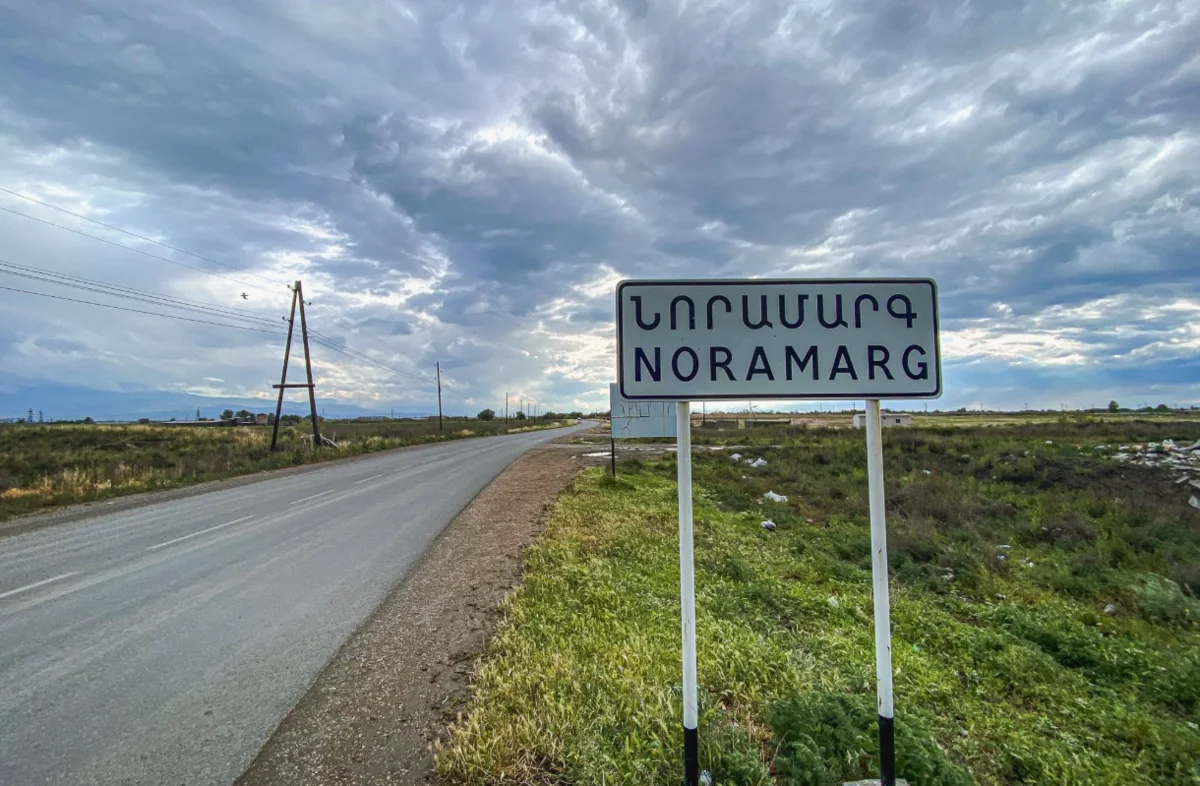
The new episode recounts the history of the Azerbaijani village of Abilkend (now Noramarg) in Armenia, whose population was subjected to expulsion and deportation on three occasions.
In documents of the Russian Empire and other written sources from the 19th century through the first third of the 20th century, the ancestors of present-day Azerbaijanis were referred to as "Tatars," "Caucasian Tatars," "Tiurks," or "Muslims," Report informs.
Some of the sources referenced in this project also use the terms "Turks," "Tiurko-Tatars," "Islams," or "Myugammedans." Hereafter, "ancestors of the Azerbaijanis" will be used when referring to the period before 1920, while "Azerbaijanis" will be used for the subsequent period.
The names of Abilkend in historical documents:
● during the Tsarist period – Abil-kend, Abul-kend, Abyul-kend
● during the Soviet period – Abilkend, Ablkend, Bulakhly, Bulagli, Bulakhlar, Kalinin Settlement, Kalinin.
In Russian imperial-era sources, the village appeared under the name Abilkend. It was renamed Bulakhly in April 1946 and Kalinin Settlement in the early 1960s. In April 1991, the village was renamed Noramarg as part of a policy of Armenianization and the erasure of Azerbaijani heritage in Armenia.
Since 1995, the village has been part of the Ararat Province of the Republic of Armenia.
From the mid-18th century until the Russian conquest, the territory of the village formed part of the Zangibasar mahal of the Iravan Khanate.
Russia occupied the territory of the Iravan Khanate in 1827, and its incorporation into the Russian Empire was formalized by the 1828 Treaty of Turkmenchay. During the Tsarist period, the village formed part of the Erivan Uyezd of the Erivan Governorate.
Historical population statistics
Between 1829 and 1832, an administrative census of the territories of the former Iravan and Nakhchivan khanates was conducted at the direction of the Russian authorities. According to the census, Abilkend had 85 inhabitants, all of whom were ancestors of the Azerbaijanis.
Tsarist-era statistical records, also cited in Armenian sources, indicate that at various times before 1914 the village was inhabited exclusively or predominantly by ancestors of the Azerbaijanis.
According to the collection of Information about the Caucasus, in 1873, the village had 183 inhabitants, all of whom were ancestors of the Azerbaijanis. Also, according to the Summary of Statistical Data on the Population of the Transcaucasian Krai, Extracted from the 1886 Family Lists, in 1886, the village had 222 inhabitants, all of whom were ancestors of the Azerbaijanis.
Z. Korkotyan, in his book "The Population of Soviet Armenia over the Last Hundred Years (1831–1931)," writes that in 1897, the village had 234 inhabitants, all of whom were ancestors of the Azerbaijanis.
Caucasian Calendar for 1909 says that in 1906, the village had 256 inhabitants, who were predominantly ancestors of the Azerbaijanis. Memorial Book of the Erivan Governorate for 1908 says that in 1908, the village had 256 inhabitants, all of whom were ancestors of the Azerbaijanis.
Caucasian Calendar for 1912 notes that in 1911, the village had 272 inhabitants, who were predominantly ancestors of the Azerbaijanis. Caucasian Calendar for 1915 says that in 1914, the village had 376 inhabitants, who were predominantly ancestors of the Azerbaijanis.
Events of 1918
On May 29, 1918, the government of the Azerbaijan Democratic Republic (ADR) ceded Erivan, present-day Yerevan, and several surrounding territories to the Armenians. The First Republic of Armenia was thereby established on territory that had historically been inhabited by ancestors of present-day Azerbaijanis. Within the first few months of its existence, it began to make territorial claims against its neighbors: Azerbaijan, Georgia, and Türkiye (the Ottoman Empire at the time).
Between 1918 and 1920, Dashnaktsutyun, the nationalist party that held power in the Republic of Armenia, carried out ethnic cleansing of the Turkic population in the Erivan Governorate and in other areas, particularly in Zangezur, Karabakh, and Nakhchivan.
On October 20, 1919, the residents of Abilkend appealed to the government of the ADR in a letter in which they reported atrocities committed by the Dashnaks against the Muslim population and asked the government to take them under its protection and accept them as its subjects.
The consequences of the ethnic cleansing are reflected in the 1922 Soviet Armenian census, which recorded the village as destroyed.
Following the proclamation of Soviet rule in Armenia in late 1920, the communist regime fully consolidated its power over the country in 1921. The Azerbaijani population then began returning to the village.
During different periods, the village formed part of the Gamarli and Zangibasar districts (later the Artashat and Masis districts, respectively). During the Soviet period, the territories of the abolished Azerbaijani villages of Reyhanli, Seyidkend, and Gulujan were incorporated into Abilkend.
Azerbaijanis continued to live in Abilkend during the Soviet period as well.
Armenian sources indicate that Azerbaijanis inhabited the village until the late 1980s.
Z. Korkotyan, in his book "The Population of Soviet Armenia over the Last Hundred Years (1831–1931)," writes that in 1926, the village had 40 inhabitants, 36 of whom were Azerbaijanis.
In 1931, the village had 75 inhabitants, all of whom were Azerbaijanis.
Between 1948 and 1953, the Soviet authorities carried out the deportation of Azerbaijanis from the Armenian SSR to the Azerbaijan SSR. As a result, part of Abilkend's population was forcibly resettled to the territory of Azerbaijan.
A. P. Manvelyan and G. M. Martirosyan, in their book "Settlements and Population of the Armenian SSR over the Period 1831–1959," note that in 1959, the village had 413 inhabitants, who were predominantly Azerbaijanis.
T. Kh. Hakobyan, St. T. Melik-Bakhshyan and H. Kh. Barsegyan, in their "Dictionary of Toponymy of Armenia and Adjacent Territories," say that in 1970, the settlement had 741 inhabitants. In 1979, the settlement had 1690 inhabitants.
During the Soviet period, the organized resettlement of Armenians from abroad to Armenia took place. This is also confirmed by former residents of the village.
Sulduz Khalilov, who was born in Abilkend in 1965 and lived there until November 1988, recalls: "Armenians accounted for 38 percent of the population of Masis, and the rest were Azerbaijanis. At the time, we were told that the law required the secretary to be Azerbaijani. Later, Armenians from Lebanon and elsewhere were brought to Masis … in 1982–1983 so that they would make up the majority."
In the late 1980s, as a result of Armenian territorial claims to Karabakh and escalating tensions between the two republics, Azerbaijanis were permanently driven out of the territory of the Armenian SSR.
Sulduz Khalilov: "Thus, in 1988, we were all driven out… We were openly told to leave. During the last two months [September–October 1988], the village was subjected to nighttime raids. No one was specifically responsible for protecting us. The troops had either been disbanded, or something else had happened, but it went as far as armed raids."
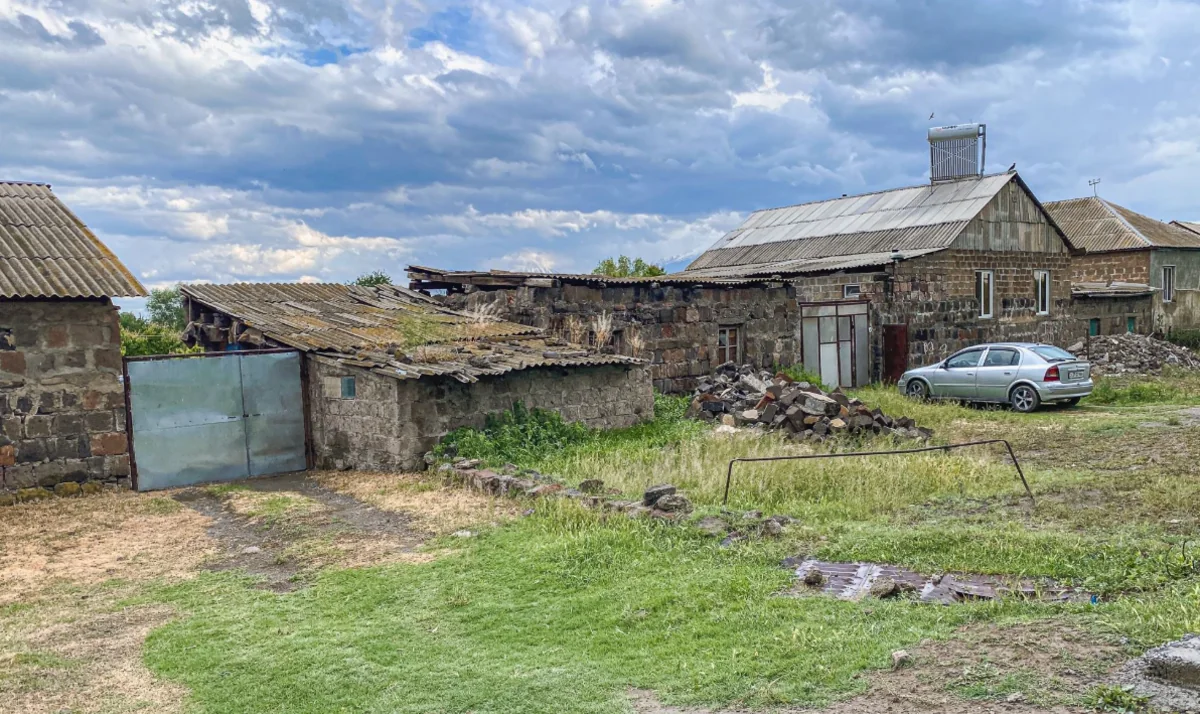
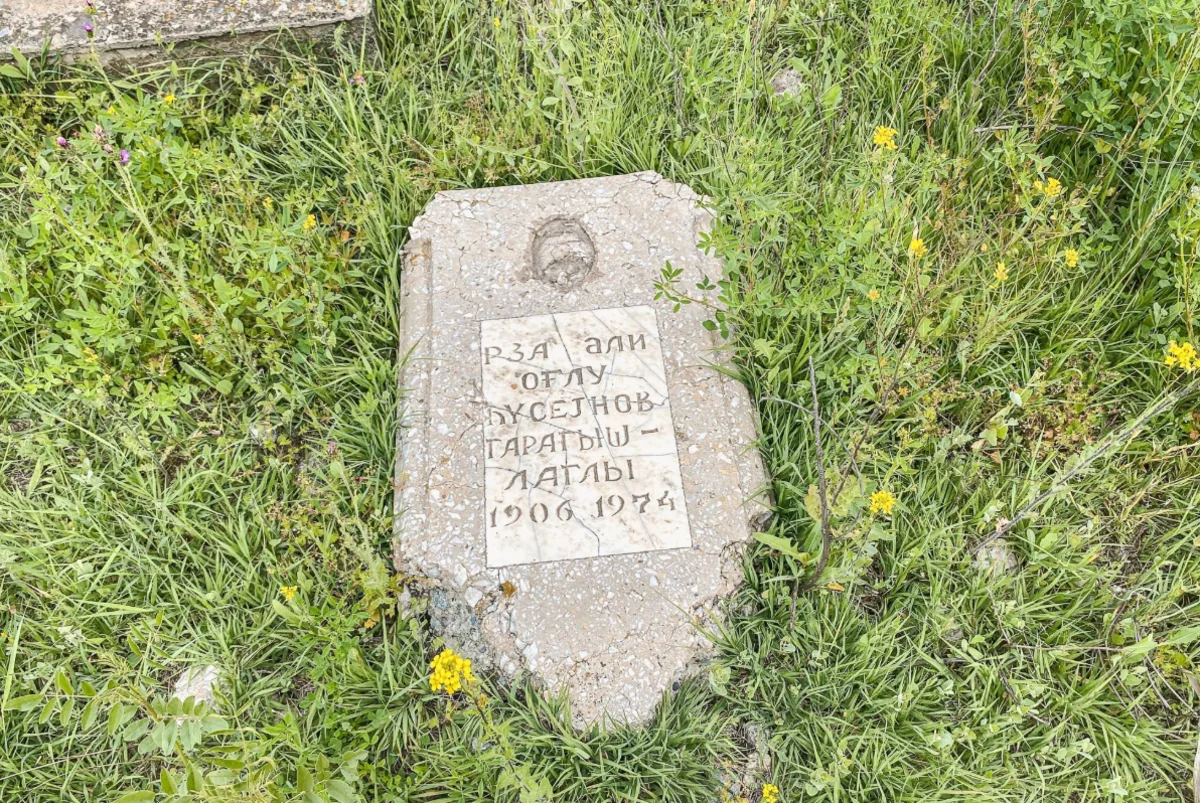
Between 2021 and 2024, extensive fieldwork was conducted across the territory of Armenia, including in remote mountainous regions. The research was undertaken in preparation for the book The Perished Civilization and focused on identifying and documenting surviving Azerbaijani heritage sites. During the fieldwork, an Azerbaijani cemetery containing several dozen damaged tombstones was discovered in Abilkend.