Baku 20° C
Shlapachenko: Azerbaijan demonstrates readiness to participate in addressing global issues
- 23 October, 2026
- 12:56
Stay up to date with the top news!
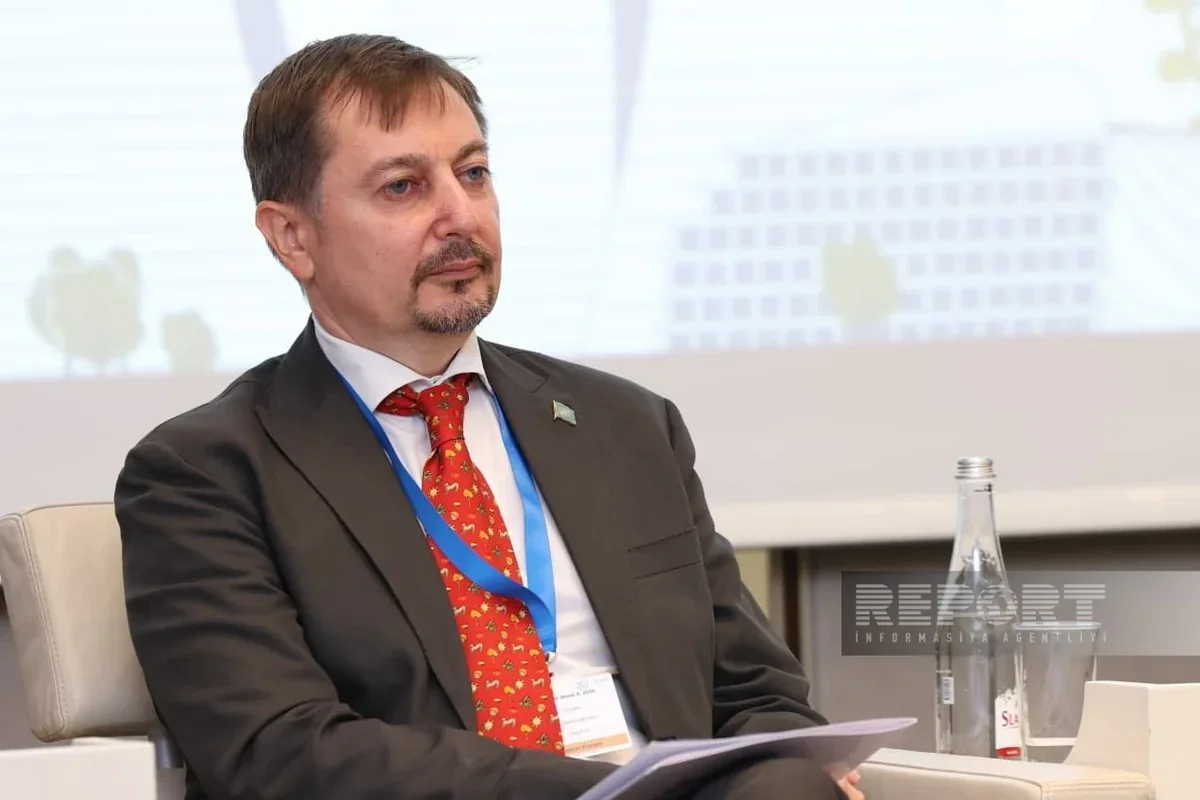
Azerbaijan's interaction with the United Nations, including hosting COP29 and the 13th World Urban Forum (WUF13), demonstrates its readiness to participate in solving common global problems, UN Resident Coordinator in Azerbaijan Dmytro Shlapachenko said at a high-level strategic dialogue organized on the eve of UN Day, October 24, Report's correspondent informs from Khankandi.
"I'd like to note Azerbaijan's commitment to multilateral cooperation and the achievement of the Sustainable Development Goals. The country's interaction with the UN, including hosting COP29 and WUF13, demonstrates its readiness to participate in addressing common global challenges," he said.
Shlapachenko noted that almost a year ago, the Azerbaijani government and the UN signed the Sustainable Development Cooperation Framework for 2026–2030, and now the task of the parties is its practical implementation, taking into account the country's changing priorities and the areas where joint actions will bring the greatest benefit.
According to him, this cooperation takes on special significance in the context of the restoration of Garabagh and East Zangazur, where the Azerbaijani government is carrying out large-scale work to restore infrastructure and public services, expand economic opportunities, and facilitate the return of former internally displaced persons.
"Behind this work are families rebuilding their lives and communities looking to the future. Their safety, dignity, and well-being must remain at the center of our cooperation," the UN Resident Coordinator stressed.
He also noted that the Azerbaijani government is completing the preparation of a new socio-economic development strategy and the next phase of the Great Return program for 2027–2030. This, in his estimation, opens up opportunities to identify areas where the UN's expert potential can most effectively assist in the implementation of national priorities.
Shlapachenko pointed out that the UN can complement Azerbaijan's institutional capabilities and resources with specialized expertise, international standards, policy recommendations, and the experience of other countries.
He added that the Cooperation Framework envisages two main directions: inclusive socio-economic growth and human capital development, as well as ecosystem protection, improving climate resilience, green growth, and a just transition.
Special attention in his speech was paid to humanitarian demining, which the Resident Coordinator called one of the key conditions for restoration.
"Every territory cleared of mines opens up opportunities for housing construction, agriculture, infrastructure development, and public life. Azerbaijan's recognition of demining as its 18th national SDG underscores this interconnection," he stated.
According to him, sustainable recovery also involves the development of climate-resilient agriculture, the efficient use of water resources, ecosystem restoration, and the implementation of sustainable urban planning principles.
In conclusion, the UN Resident Coordinator declared the readiness of the UN Country Team to work with Azerbaijani partners on implementing the agreed priorities in 2027.
Author