Baku 19° C
Rok Khaokas: Paris doesn't hide colonial nature of its policy towards New Caledonia
- 21 May, 2026
- 10:57
Stay up to date with the top news!
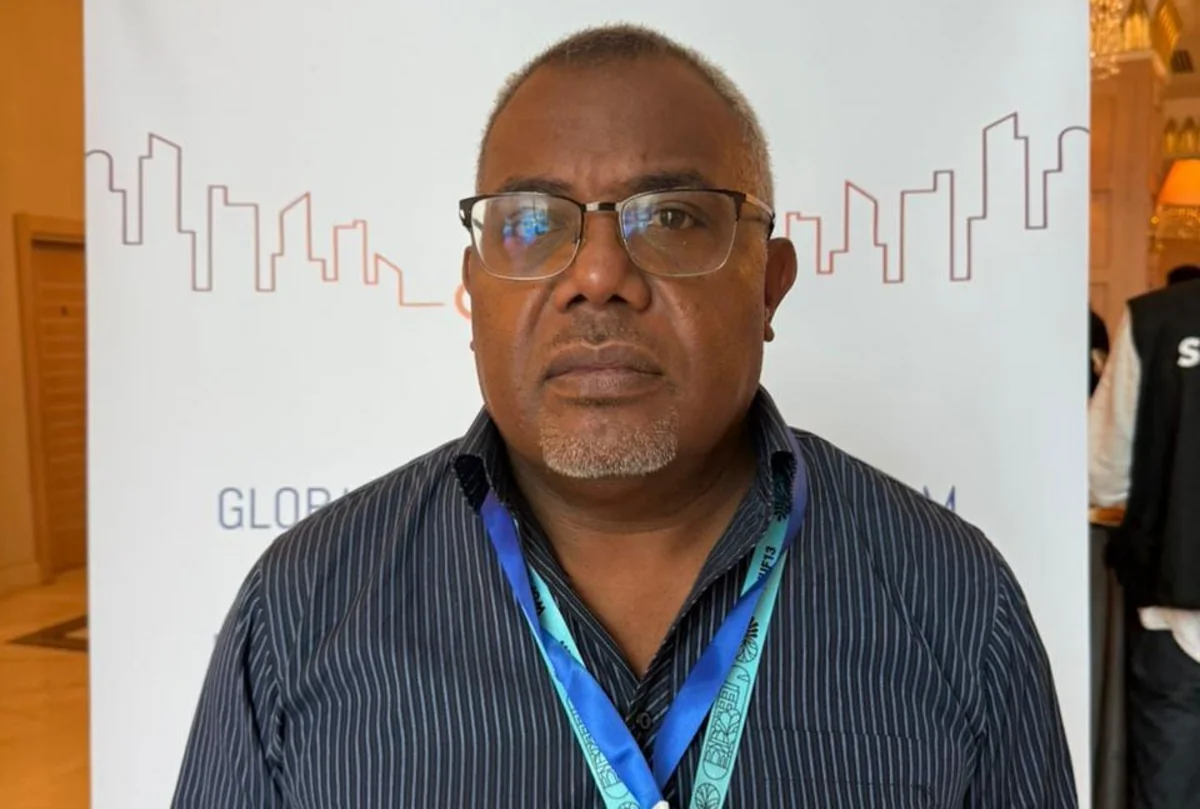
For the Kanak people, decolonization is not a matter of political bargaining; it is a right enshrined in international law, Rok Khaokas, a New Caledonian political figure, an active member of the Kanak national liberation movement and a supporter of the territory's independence from France, and the international coordinator of the Union of Kanak Workers and Exploited People (Union Syndicale des Travailleurs Kanaks et des Exploités/USTKE), said in an interview with Bakinsky Rabochiy, Report informs.
"First of all, it's important to remember one fundamental thing: New Caledonia remains officially on the UN list of territories subject to decolonization, meaning that the future of our country is not an internal matter for France, as the French authorities are trying to portray it. According to international law, France is obligated not to impede the self-determination process, but to support it, remaining an impartial party and ensuring conditions for the free expression of the people's will. However, the problem is that Paris has long ceased to be a neutral participant in the process and has effectively become a party to the conflict, openly defending its own geopolitical and economic interests in the Pacific," Khaokas said.
According to him, the particularly cynical aspect of the situation is that France, while demonstrating openly biased behavior and systematically violating the spirit of the Nouméa Accord, simultaneously accuses other states, particularly Azerbaijan, of interfering in its internal affairs whenever the Kanakia issue is raised in international forums.
"This reaction from Paris only confirms how sensitive the French leadership is to the very idea of an international discussion of the colonial issue," he noted.
Khaokas emphasized that "for us, decolonization is not a matter of political bargaining. It is a right enshrined in international law."
"That's why we want the UN to go beyond formal statements and truly support our people at every stage of this process. We understand perfectly well that an extremely difficult and tense phase of negotiations lies ahead. And that's why the UN's presence with us during this period will be crucial, as only genuine international engagement can at least partially curb further pressure and attempts to impose on the Kanak people a future chosen not by them but by the French political elite," he said.
The activist added that the Kanaks continue to actively work within various UN bodies, seeking international recognition for the crimes and repression that occurred after the May 2024 events: "In particular, the Committee Against Torture has already criticized France's actions related to the harsh, forceful measures and treatment of independence activists. This is an extremely important point for us, as Paris has long sought to present itself as a model of humanism and the rule of law, while simultaneously using methods in Kanakia that increasingly resemble classic colonial practices of suppressing dissent. We also continue to work to ensure that the New Caledonia issue is considered by the International Court of Justice, as we believe that the violations committed by the French authorities require not only a political but also an international legal assessment."
According to him, the events of May 2024 in New Caledonia testify to a "deep political crisis" rooted in the very essence of France's colonial policy, which for years concealed itself behind talk of democracy, human rights, and the freedom of peoples, while simultaneously doing everything possible to deprive the indigenous Kanak population of any real right to determine their own destiny.
"The May events were motivated by Paris's desire to alter the electoral balance by artificially expanding the electoral pool at the expense of French voters who are not indigenous to this land. The French state understood perfectly well what it was doing: it was a deliberate political operation aimed at diluting the Kanak vote and completely burying the prospect of independence," he noted.
Khaokas emphasized that France is systematically pursuing a policy of demographic pressure, diminishing the influence of the indigenous population in New Caledonia while simultaneously increasing the French electorate loyal to Paris.
According to him, New Caledonia's independence activists had warned in advance of the consequences of such actions by Paris: "Back in April 2024, at an international conference organized by the Baku Initiative Group (BIG) at the UN Vienna office, our delegation openly stated that an attempt to change the electoral body would inevitably lead to a grave crisis. (…) But Paris chose to listen to no one but its own colonial administration."
Khaokas also expressed gratitude to the BIG for its consistent and extensive work in support of people continuing to fight against contemporary forms of colonialism.
"This is of fundamental importance to us. We are talking about a fundamental right, enshrined in international law and recognized by the UN. However, for many years, Paris has tried to isolate our struggle and prevent the Kanak issue from reaching a broader international arena. This is precisely why the work of the BIG has become so important and visible. Conferences and meetings organized by the BIG allow us not only to inform the world about what is happening in Kanakia but also to learn from the experiences of other territories facing similar problems of pressure, discrimination, and attempts to maintain external control," the activist added.
Author