
 Baku 20° C
Marie-Line Sakilia: Issue of colonial legacy can no longer be ignored today
- 19 February, 2026
- 15:43
Stay up to date with the top news!
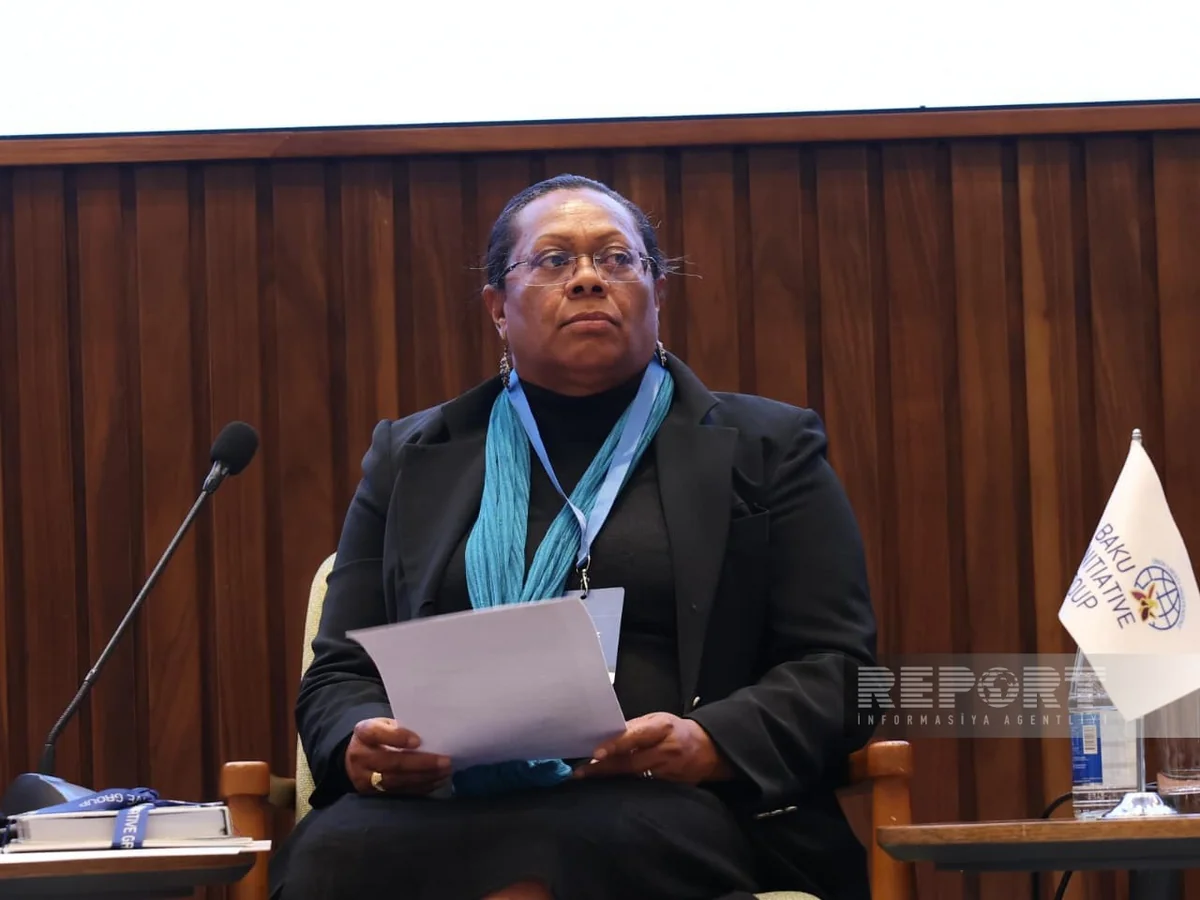
As part of the international conference "Neocolonialism and Global Inequality," a panel discussion was held on the topic "How French Assimilation Policy Changed Identity."
According to Report, participants discussed the impact of France's colonial policy on Corsica, New Caledonia, Réunion, and other territories, emphasizing the systemic nature of its destructive consequences in education, the economy, and social structure.
François Benedetti, a representative of the Corsican party Nazione, spoke about how French colonization not only worsened the socio-economic situation but also dealt a serious blow to the island"s education system.
"At that time, Corsica was more educated than France itself. Thanks to the efforts of families and access to higher education, Corsicans were able to preserve their heritage. However, French policy provided for key positions to be given to people not connected with the local society. This practice became part of a controversial imperial policy," he stated.
Marie-Line Sakilia, Deputy Chair of the Committee on Family and Women"s Affairs of the Parliament of New Caledonia, stressed the destructive impact of colonialism on the economic, social, and cultural foundations of society, noting that the issue of colonial legacy can no longer be ignored today.
"In the modern world, a process of transformation is beginning, aimed at overcoming the colonial past. The time has come to recognize that justice, equality, and genuine strength are possible only through a profound reassessment and restructuring of our societies. Transformation begins with acknowledging past mistakes and respecting the right of peoples to independently shape their own future," Sakiya noted.
Romain Katambara, Chairman of the Ka Ubuntu movement, stated that in his homeland, the island of Réunion, French assimilation was carried out through cultural domination. According to him, the people of Réunion possess a unique identity expressed in their language, history, and traditions. However, colonial policy was aimed at suppressing this distinctiveness.
"To subjugate a people, it is necessary to deprive them of their identity. That is why a policy of assimilation was pursued. In Réunion, attempts were made to displace local culture and impose a French identity. In particular, traditional maloya music was banned," Katambara emphasized.
Sania Assoumani, President of Mabedja Panafricanistes, stated that her organization's mission is to deconstruct the mechanisms of assimilation and build the capacity for independent political self-determination.
"This struggle is not directed against any people, but against systems of inequality and colonialism that continue to exist today in the form of neocolonialism. Understanding how assimilation policies shape the identity of indigenous peoples allows us to recognize how mechanisms of domination penetrate social structures and public consciousness," she concluded.

